The Acheulo-Yabrudian (A-Y, 400–200 ka)
The Acheulo-Yabrudian (A-Y) period represents the passage between the Acheulean and the Middle Palaeolithic. Using Qesem Cave as a reference, whose first occupation dates back 400,000 years, the last Acheulo-Yabrudian transitional period would roughly correspond to a 26,000-year interval between 220,000 and 194,000 BC. It should be noted, however, that while Qesem shows no traces of subsequent occupation in the Middle Palaeolithic, Pyrgos/Mavroraki shows a continuity of occupation and settlement that ends towards the end of the Middle Bronze Age.
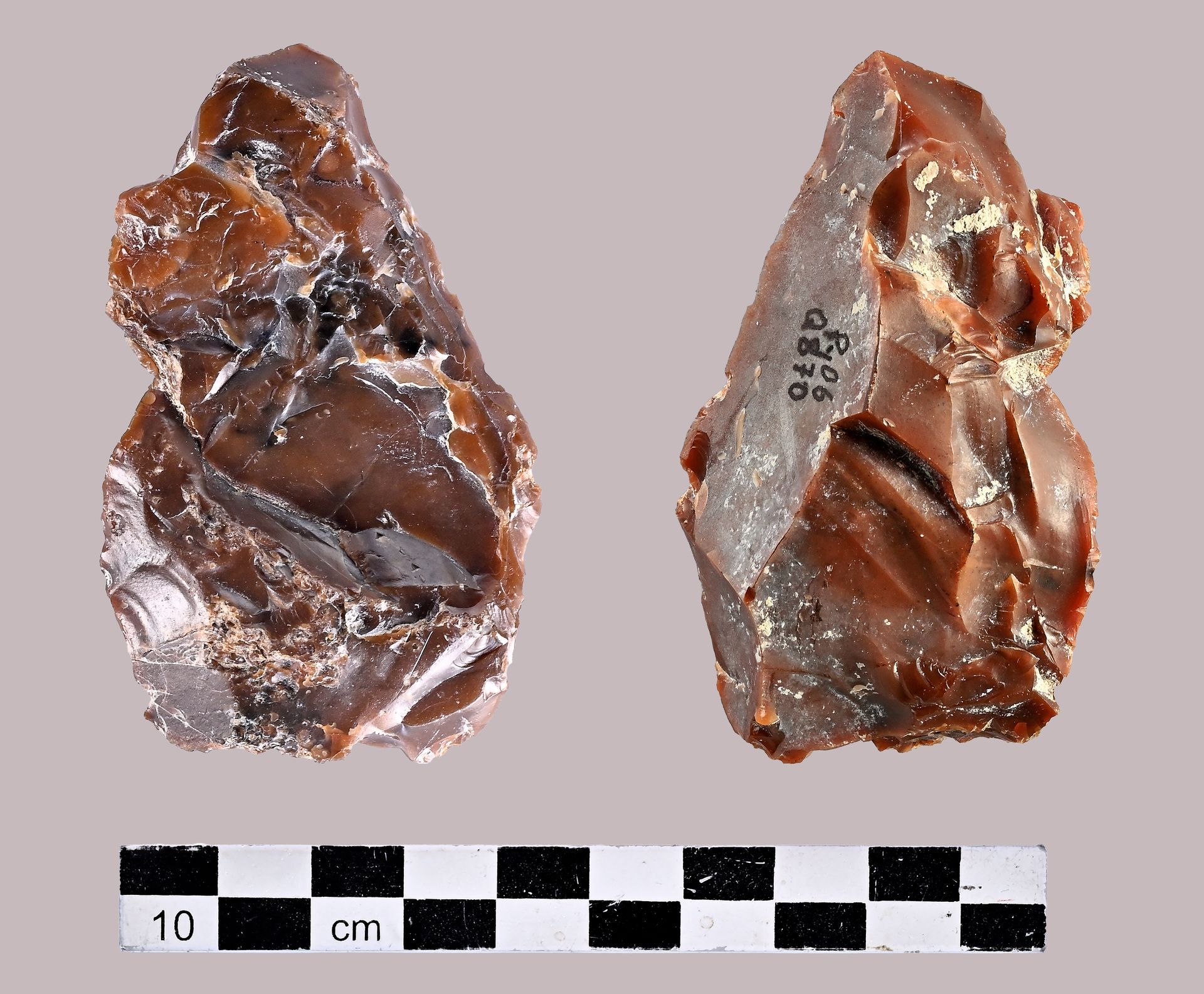
In the A-Y, the Acheulean tradition is still present in the production of smaller, yet squat and massive, artefacts, including small hand axes that retain the essential flaking technology of the Lower Palaeolithic (Culley, Popescu, Clark: 2013). However, the main characteristic of this phase is the recycling of older artefacts characterized by morpho-technical attributes centred on retouched edges, indicating the preservation of distinct morphologies with a reduction in size and an increase in edge functionality. Most of the production is associated with the Quina technology, characterized by the reduction through scalar and multidirectional retouching of thick patinated nucleoid flakes.
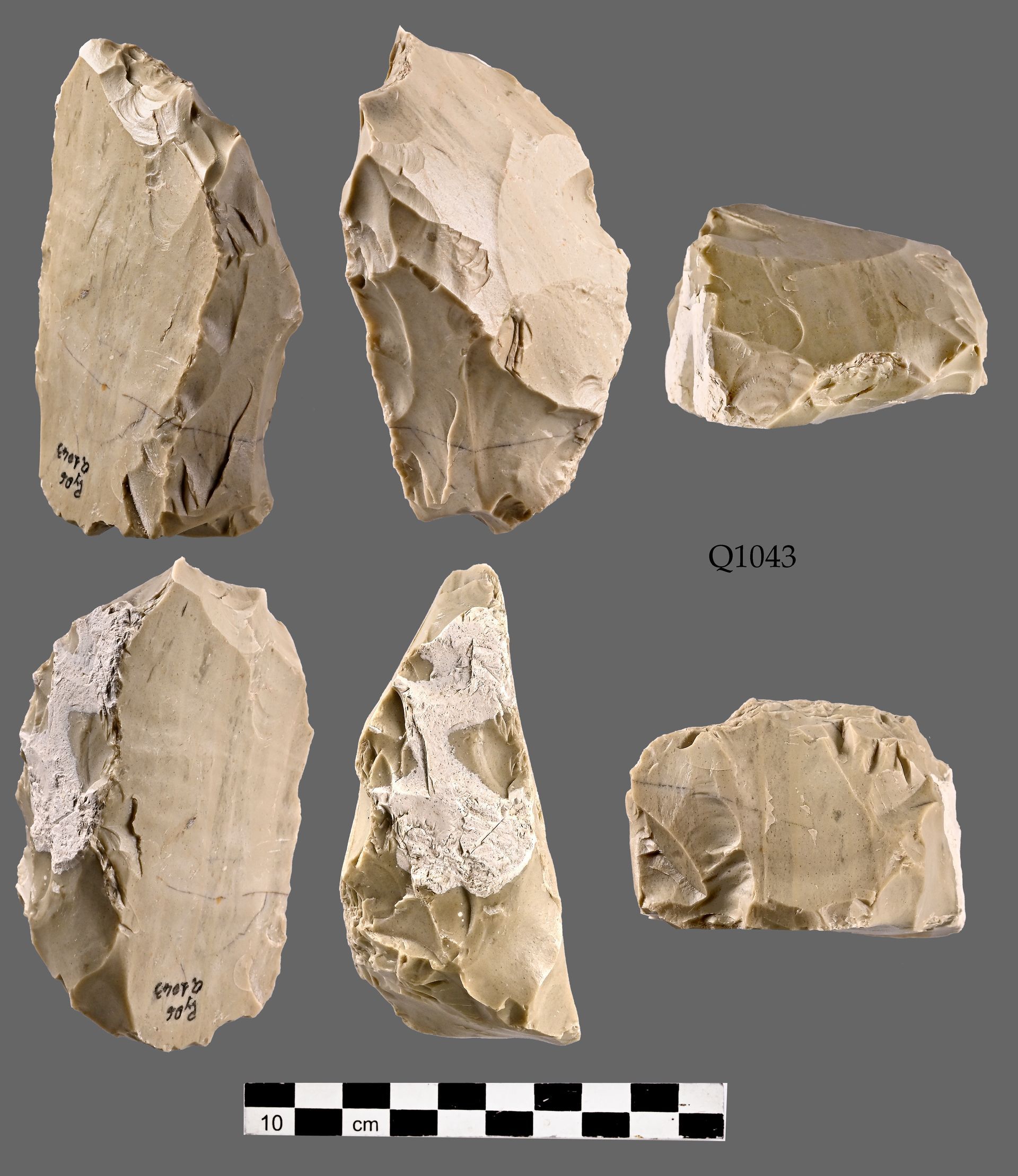
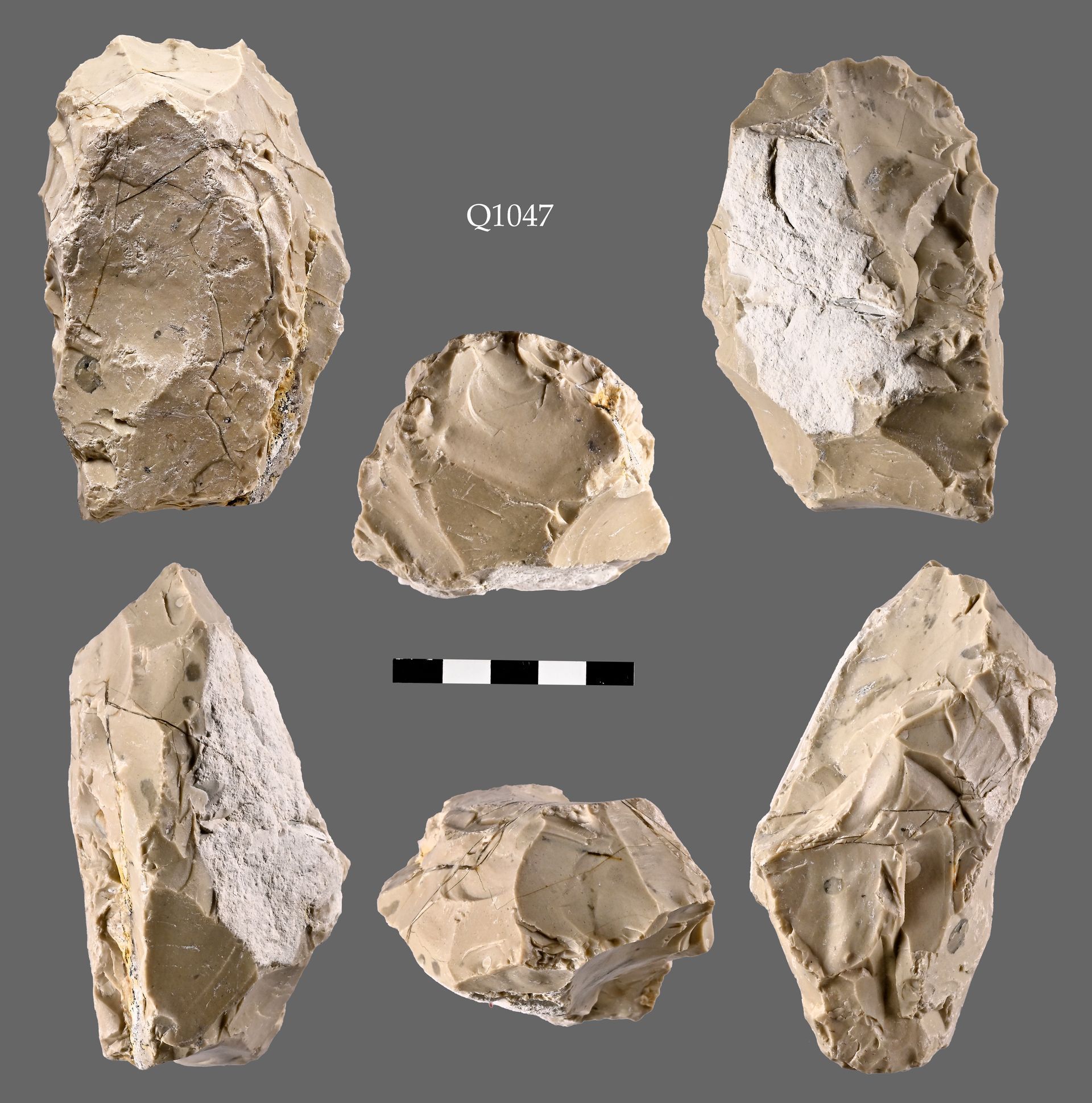
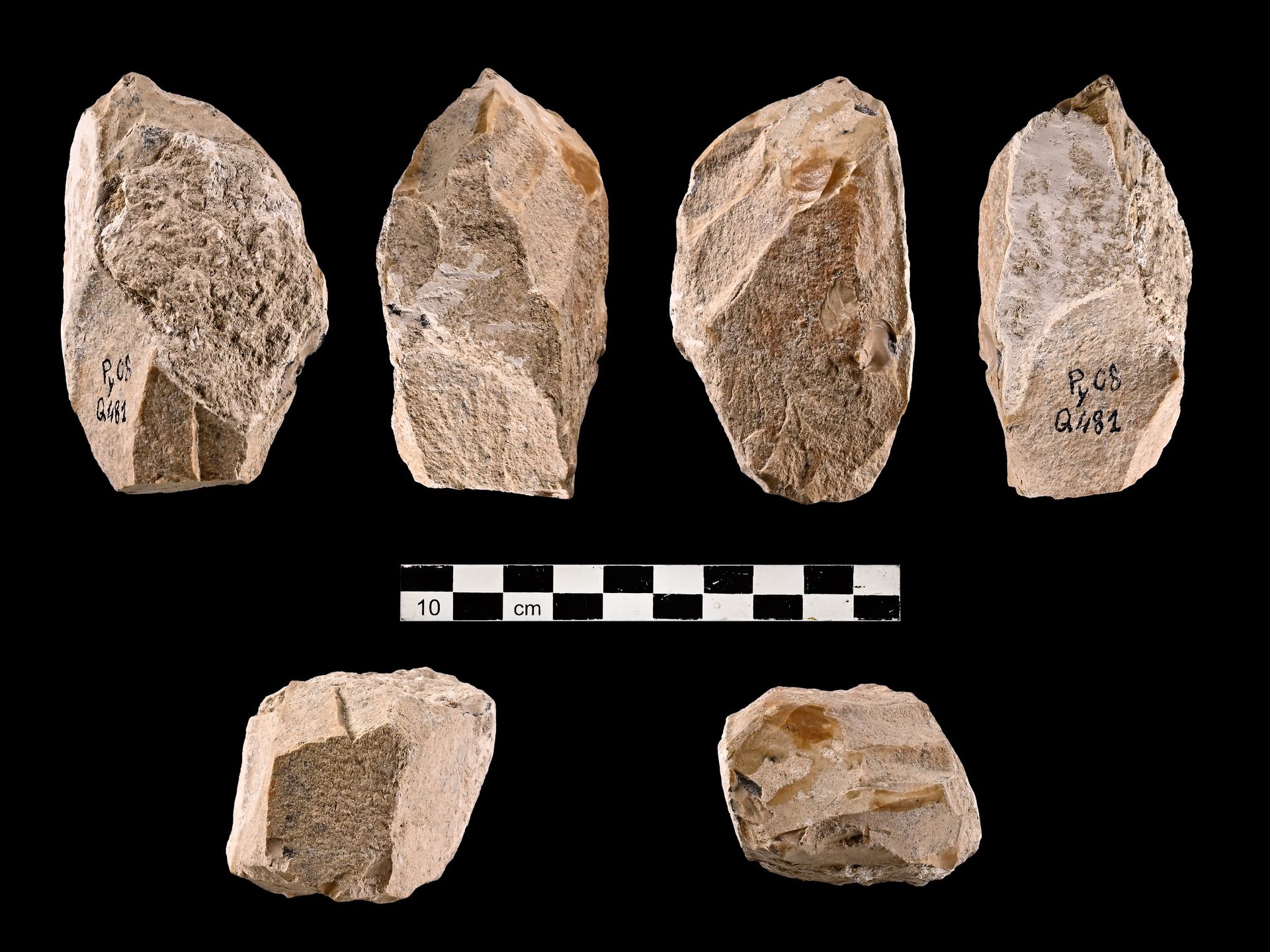
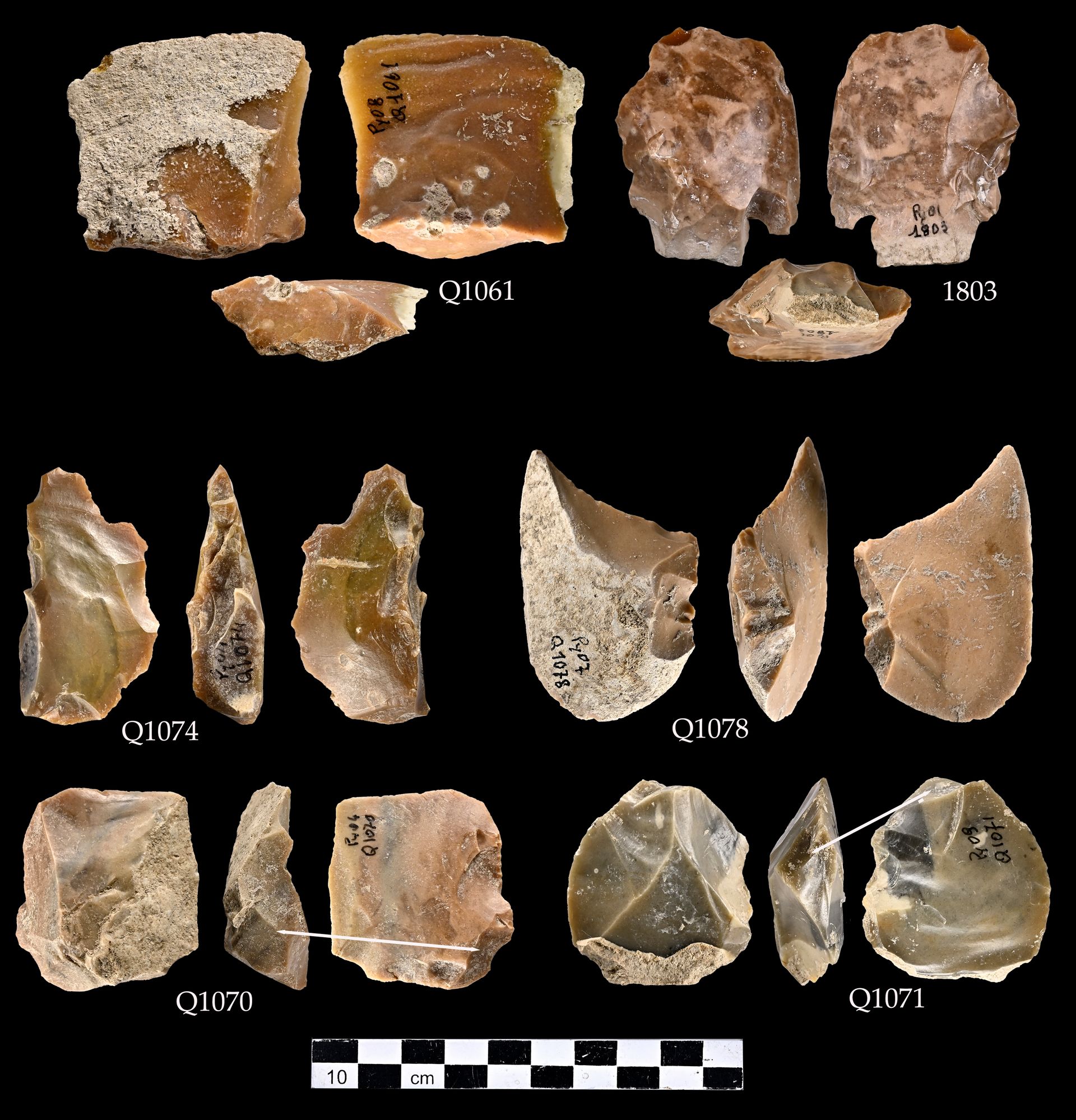
The use of primary cortical flakes for scraper production in the Late Acheulean is also documented by the Kombewa technology, used for the extraction of flint pebbles. The flakes have two convex faces with sharp edges and a broad oval heel, produced in two successive phases (Assaf, Parush, Gopher, Barkai: 2014). Scrapers from the first flaking phase retain a cortical face, while those from the second phase exhibit only a few cortical areas on the edges or heel. These scrapers lack secondary retouching on the edges, a feature that suggests advanced planning in selecting the pebble and the most suitable striking point (nos. Q1061, 1803, Q1074, Q1078. Q1070, Q1071).
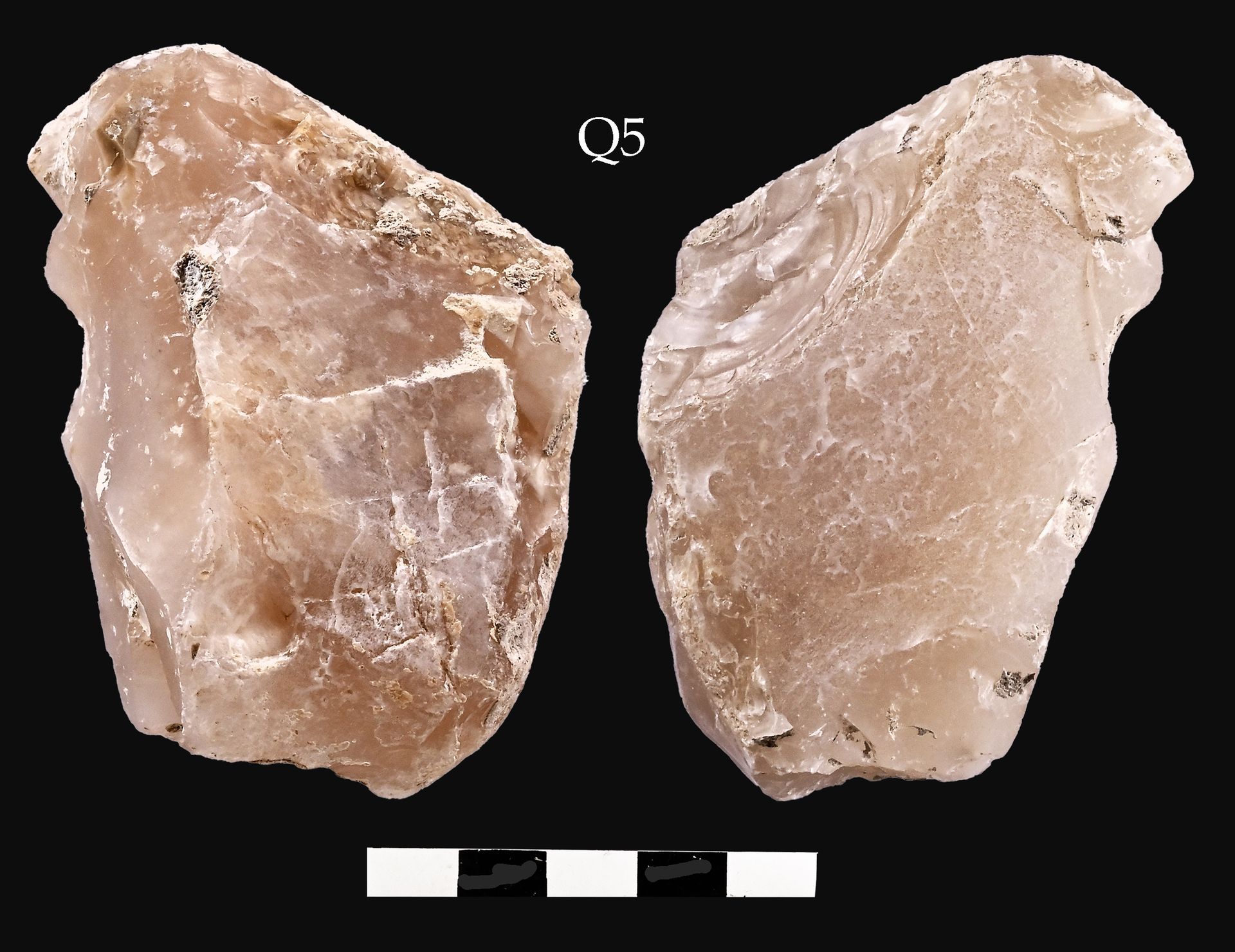
The characteristic Quina retouch is executed through successive, often overlapping, scale-like removals arranged in variable or radial orientations, resulting in an intensely incised surface, sometimes accompanied by fine micro-hammering to remove irregularities. At Pyrgos/Mavroraki, the massive back scrapers (as n. Q5 and n. 2207) display the typical scale and transverse retouch, with double edge retouching and dorsal hammering (Litov, Marinelli, Lemorini, Barkai: 2025), highlighted by a thick waxy patina.
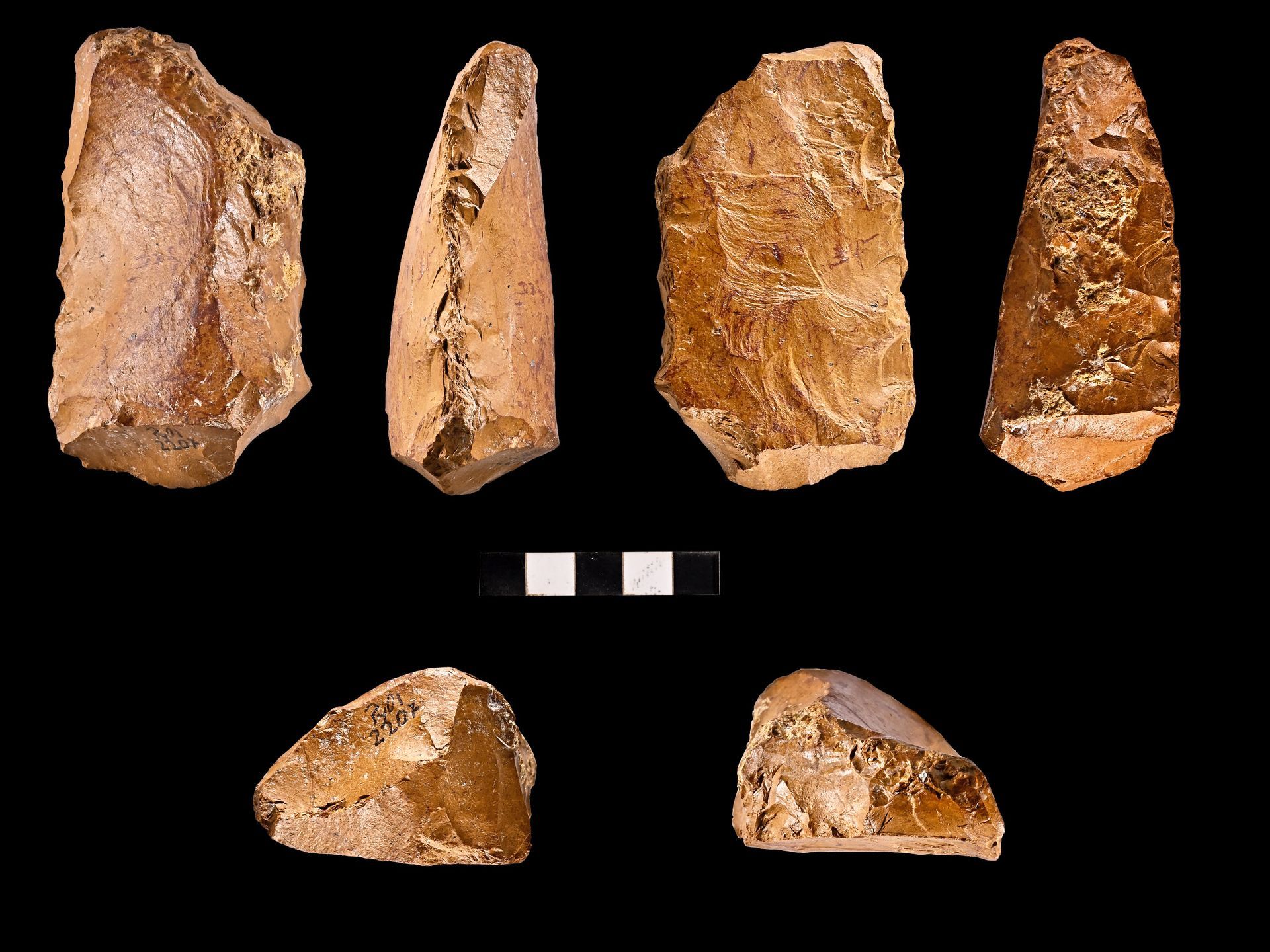
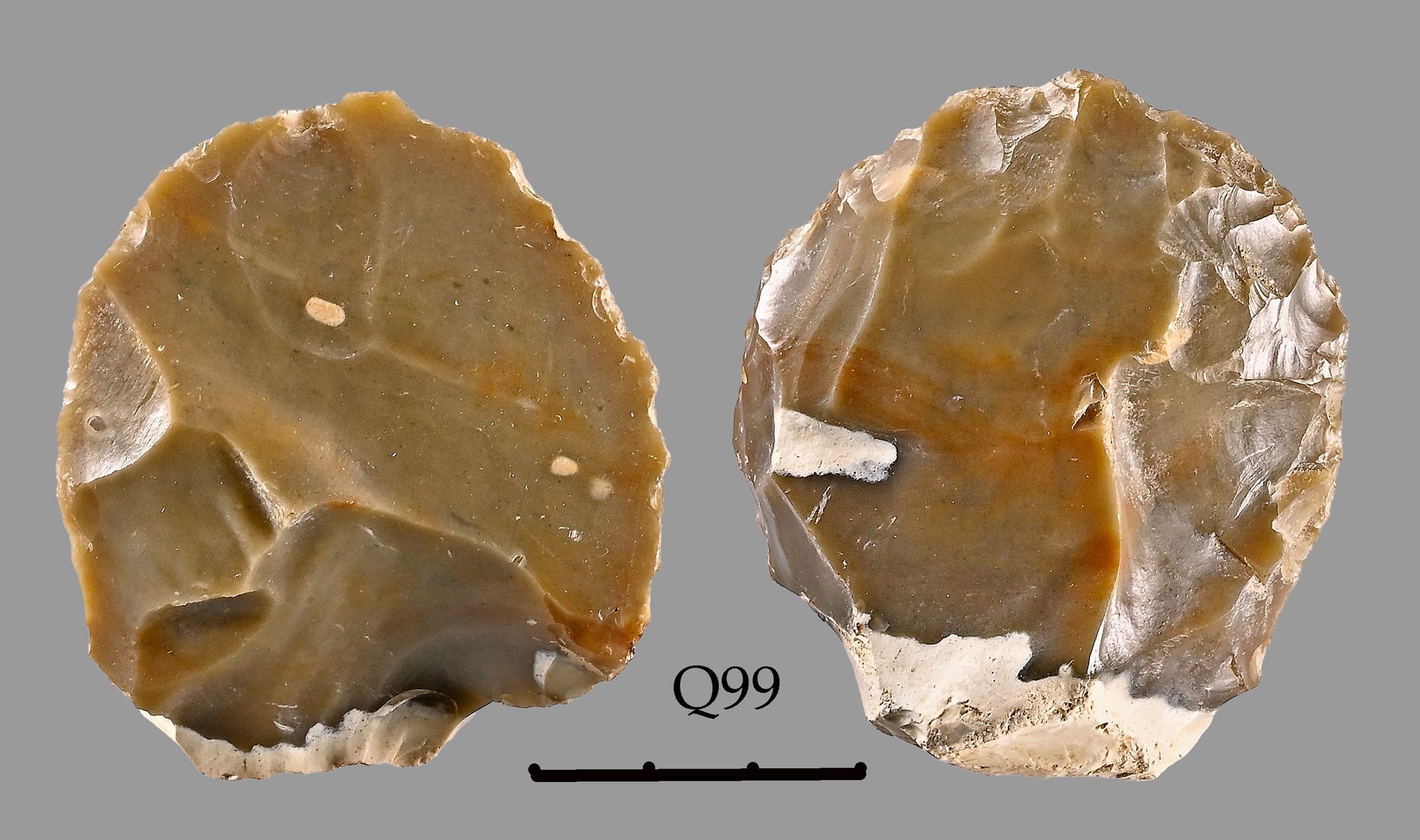
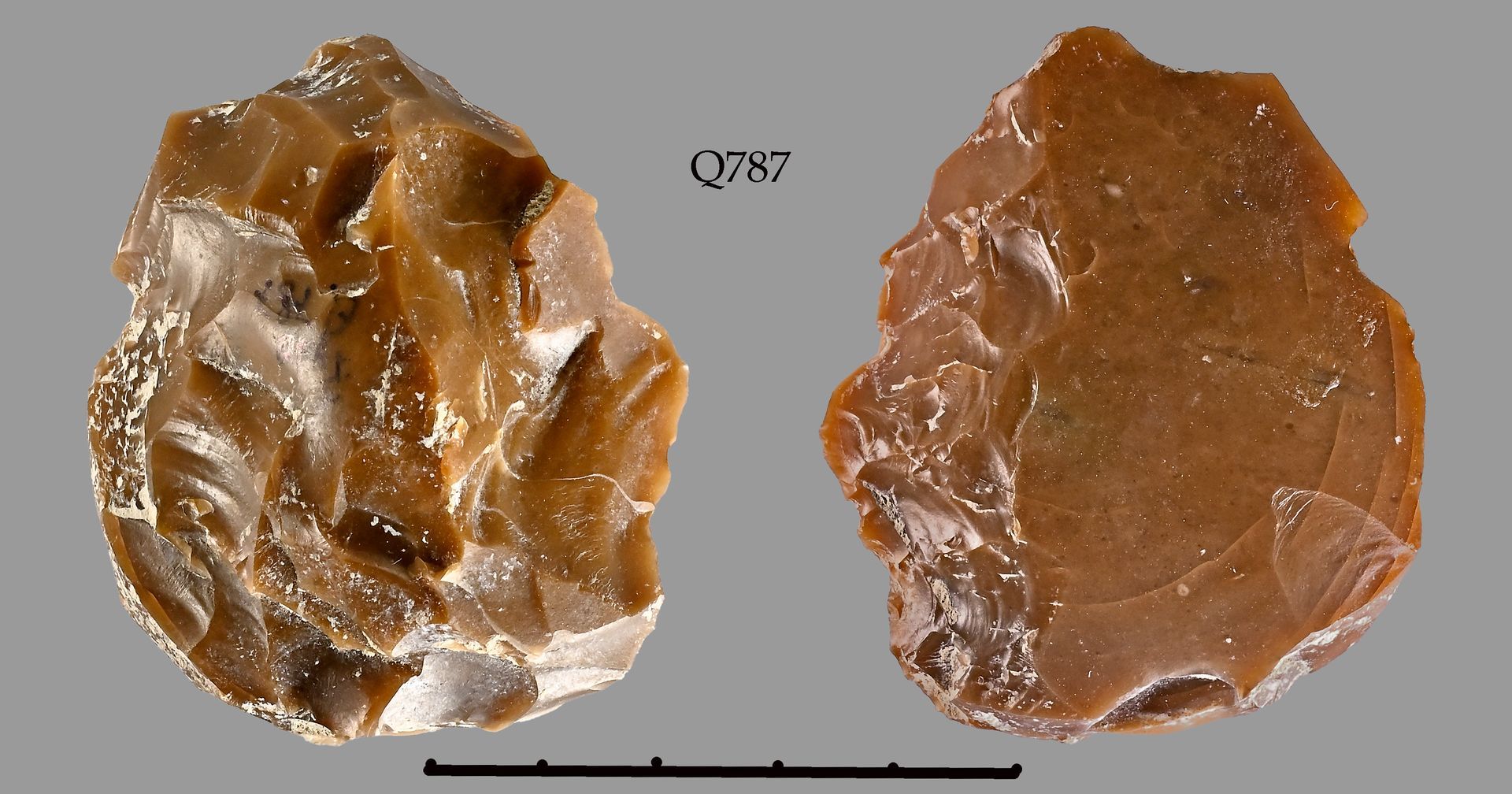
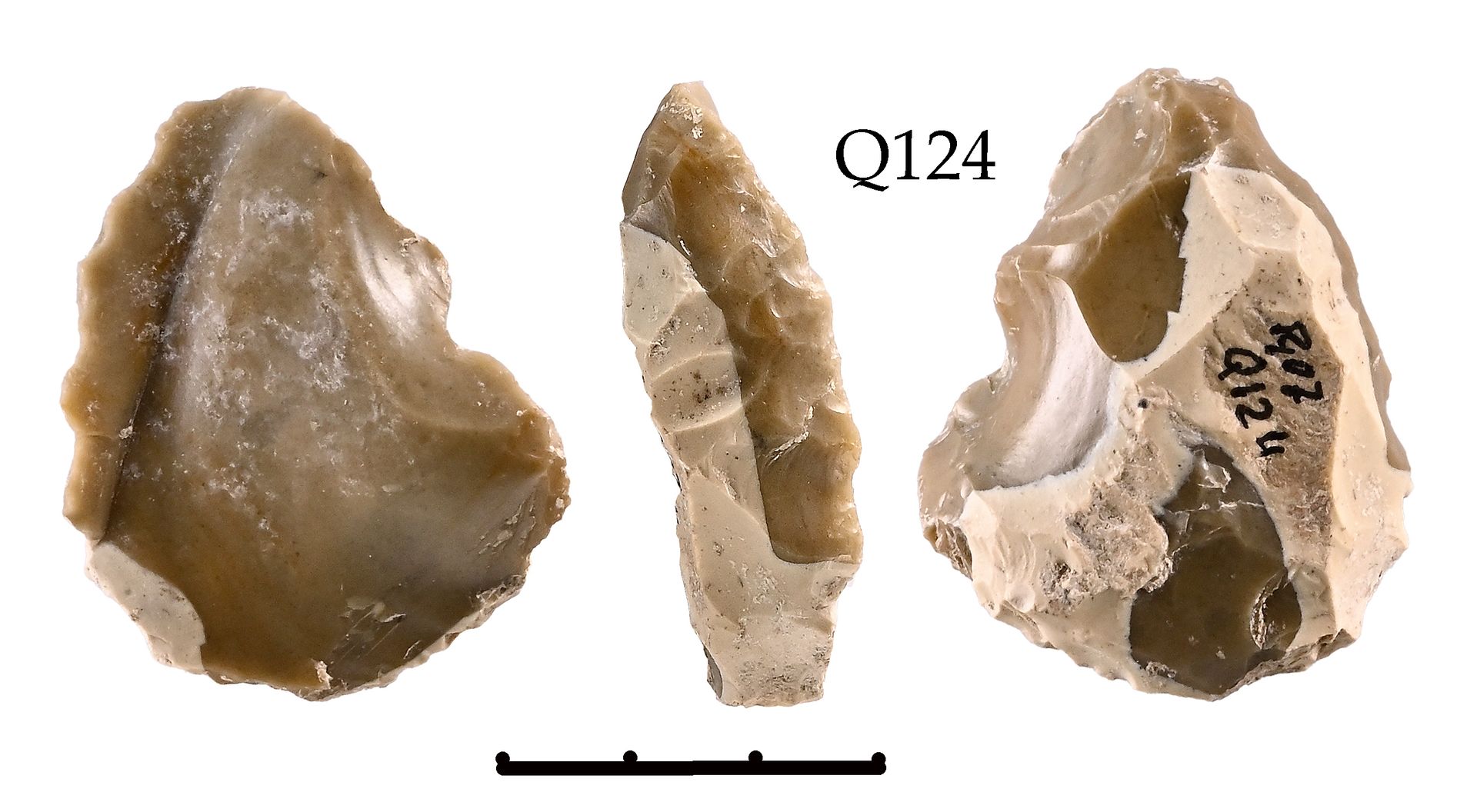
The areas most affected by the recycling process, besides the cutting edge, are the parts slightly raised from the dorsal or ventral surface, such as the ridges, curves, and bulb of the proximal part, which is sometimes removed and transformed into a finely retouched cutting edge. The modification, fully visible where the original patina has been removed by the new retouching, nevertheless preserves the dimensions and morphology of the original artefact, especially in the case of bifacial tools. Quina tools are a well-known category within the Middle Palaeolithic Mousterian cultural complex in Europe, called "La Quina" after an archaeological site in the Charente region of France. However, findings over the past 50 years have demonstrated the earliest onset of their production in the Levant, at the end of the Lower Palaeolithic, and their presence is considered a key marker for the identification of the Acheulo-Yabrudian cultural complex (Shimelmitz, Kuhn, Bisson, et al.: 2021). In the Levantine landscape, the Quina bifacial scraper is considered a specialized late Lower Palaeolithic lithic tool for butchering and processing small game, characterised by intense stepped retouching on every available edge.
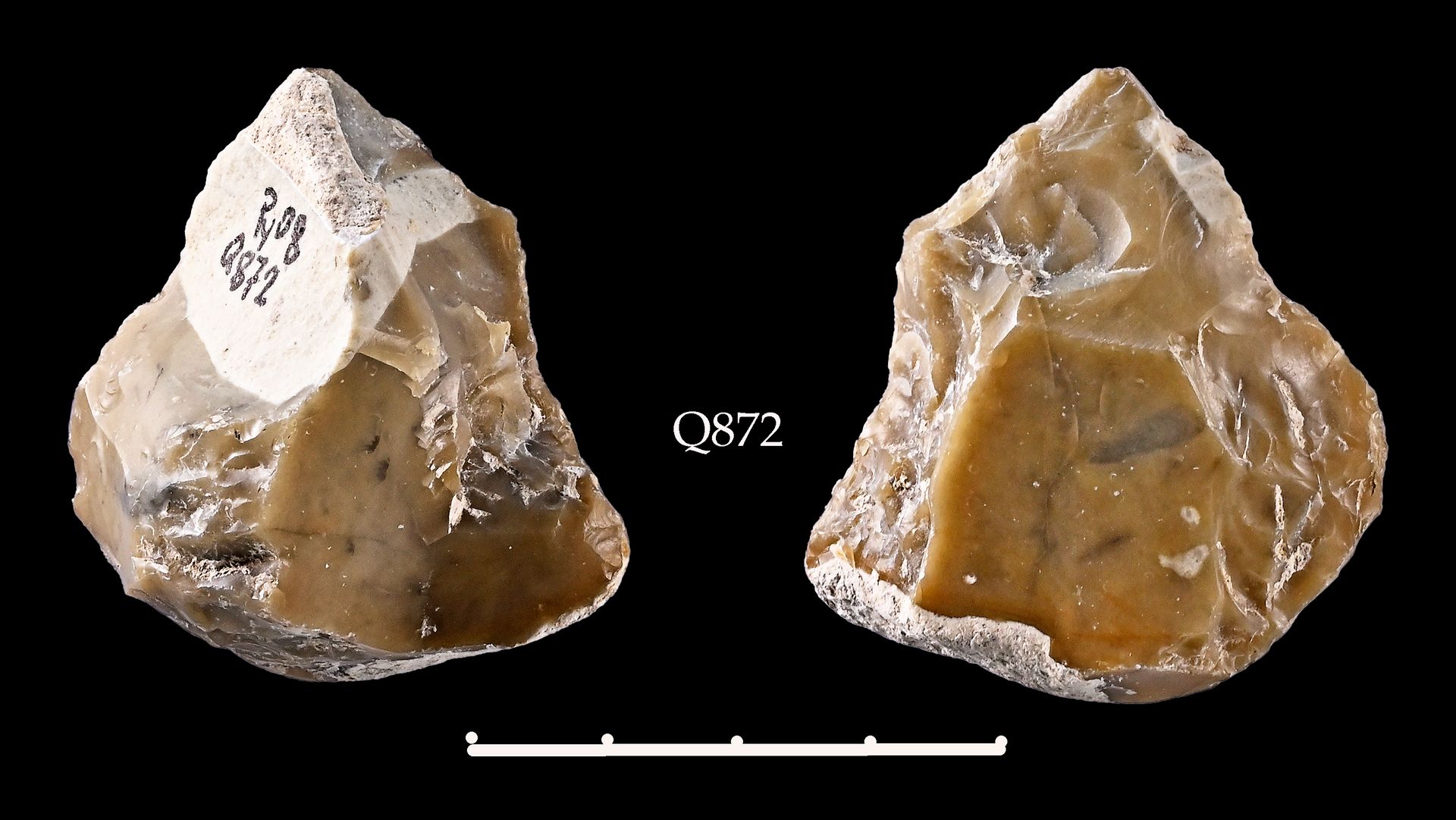
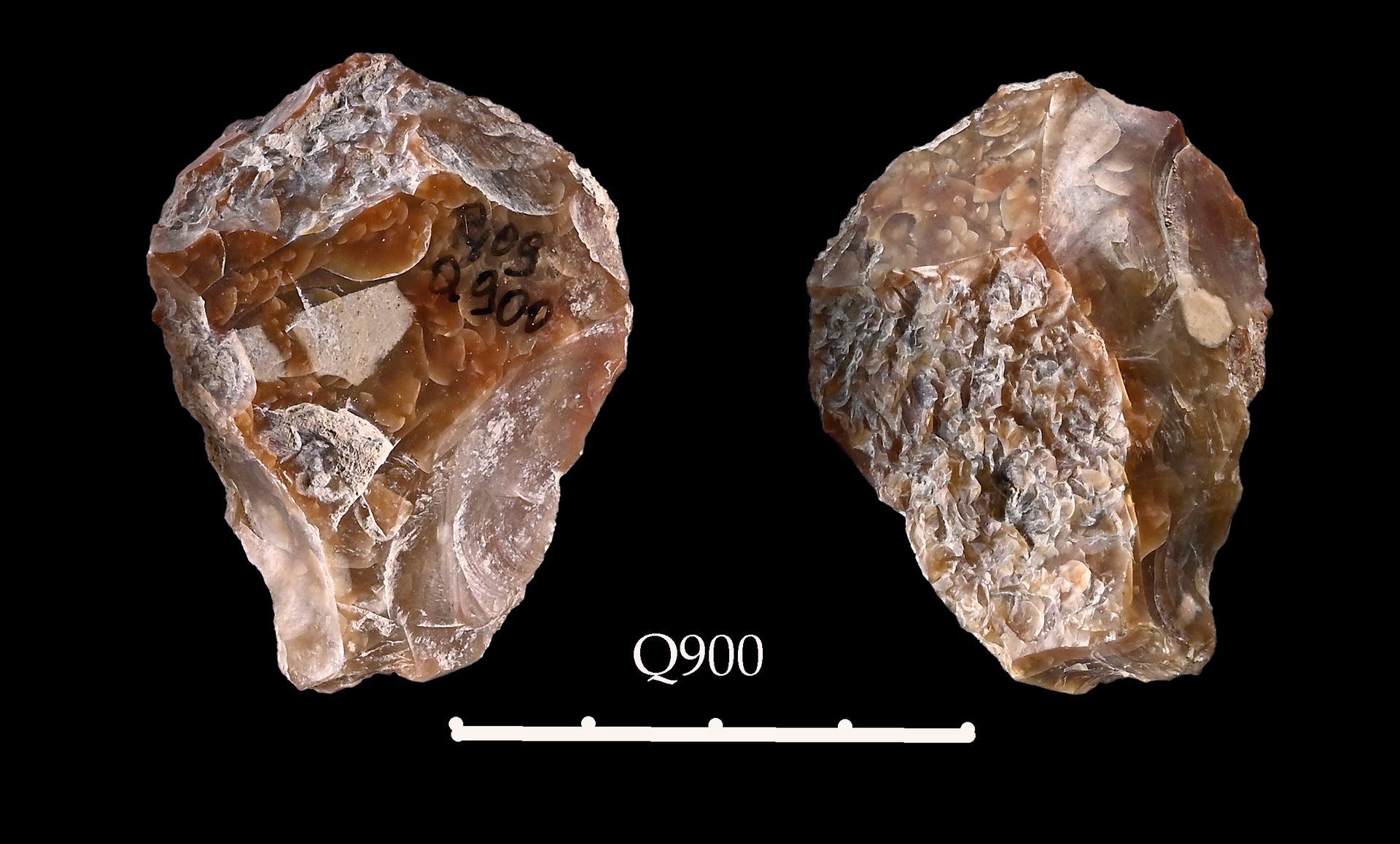
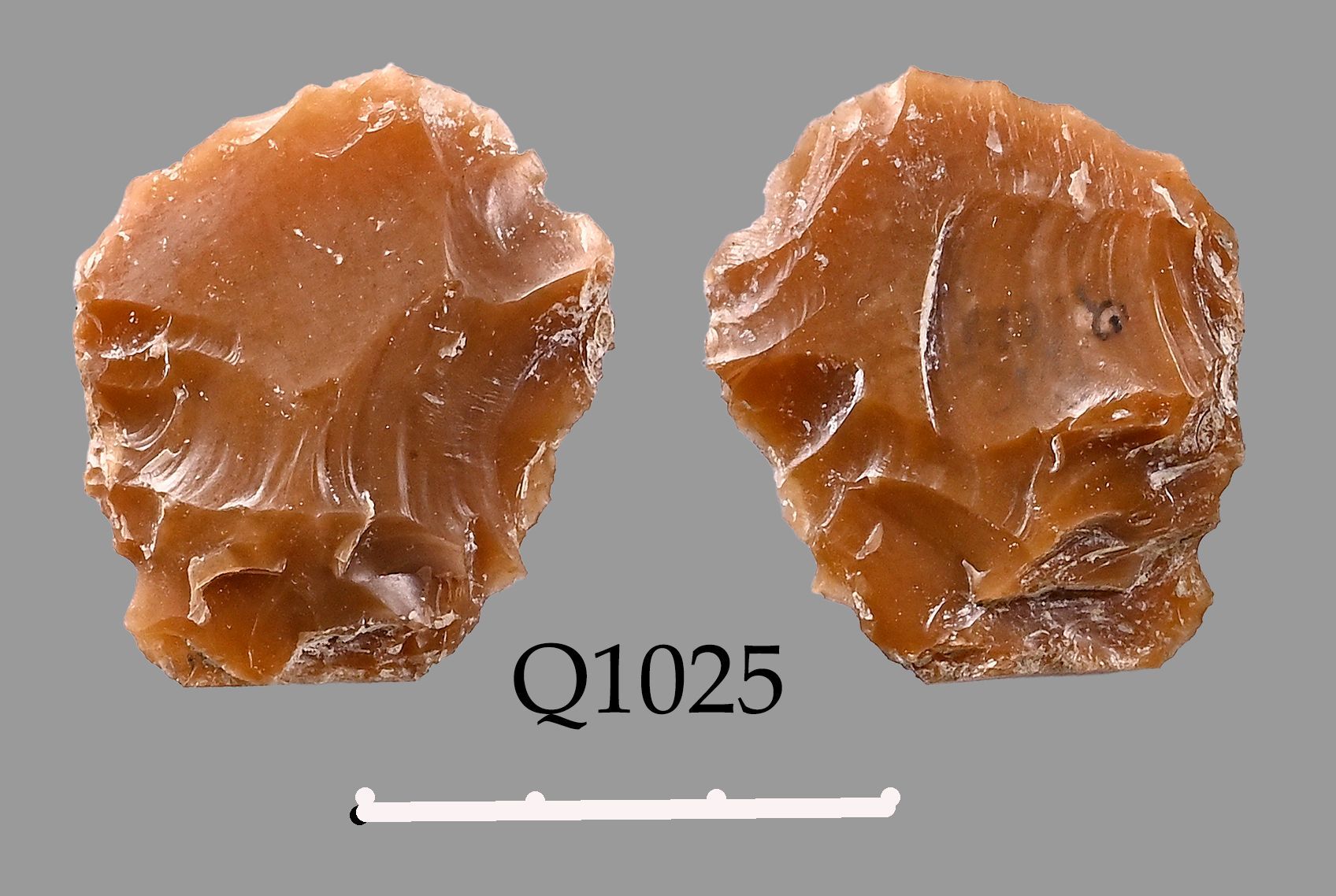
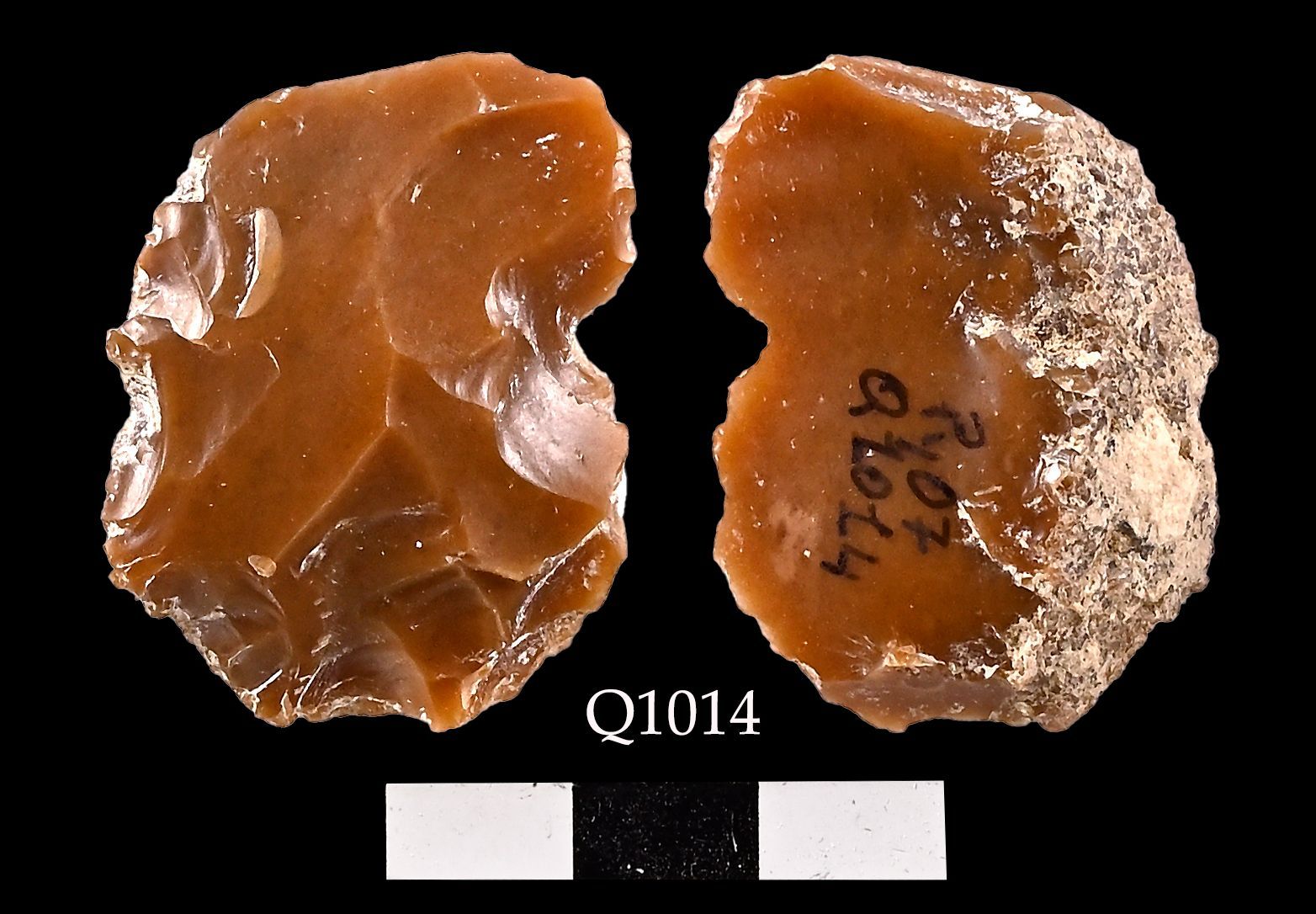
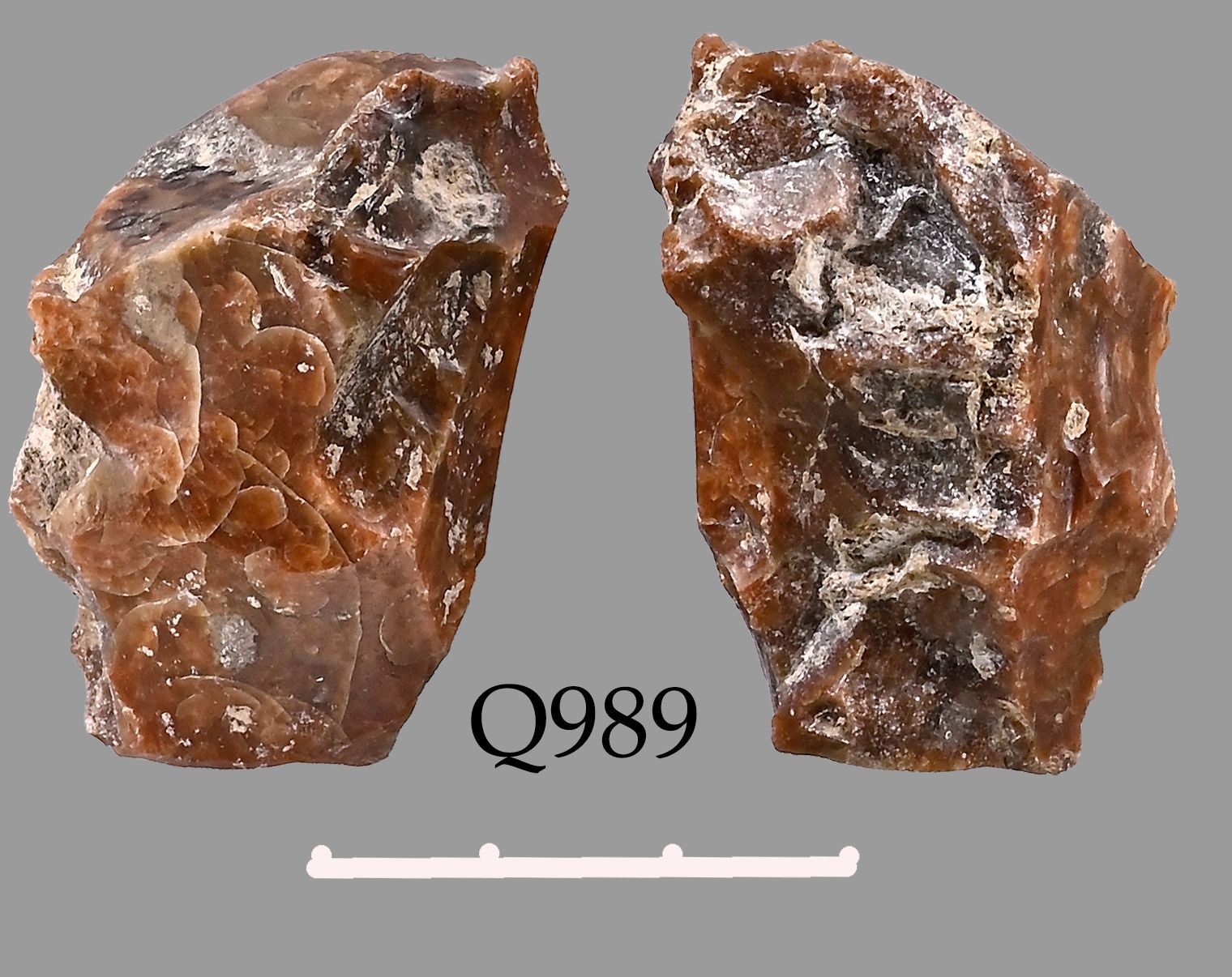
The Quina biface, which preserves the Acheulean bifacial system, is likely the first type of scraper developed at the beginning of the Acheulo-Yabrudian period (Gopher, Barkai: 2017), although thinner "demi-quina scrapers"(often dejeté) with graduated and stepped retouching on one face and part of one edge are also present. This process made them functionally more versatile, and their introduction may have been influenced by the need for more efficient tools for processing smaller prey (Lemorini et al., 2016; Litov, Marinelli et al., 2025).
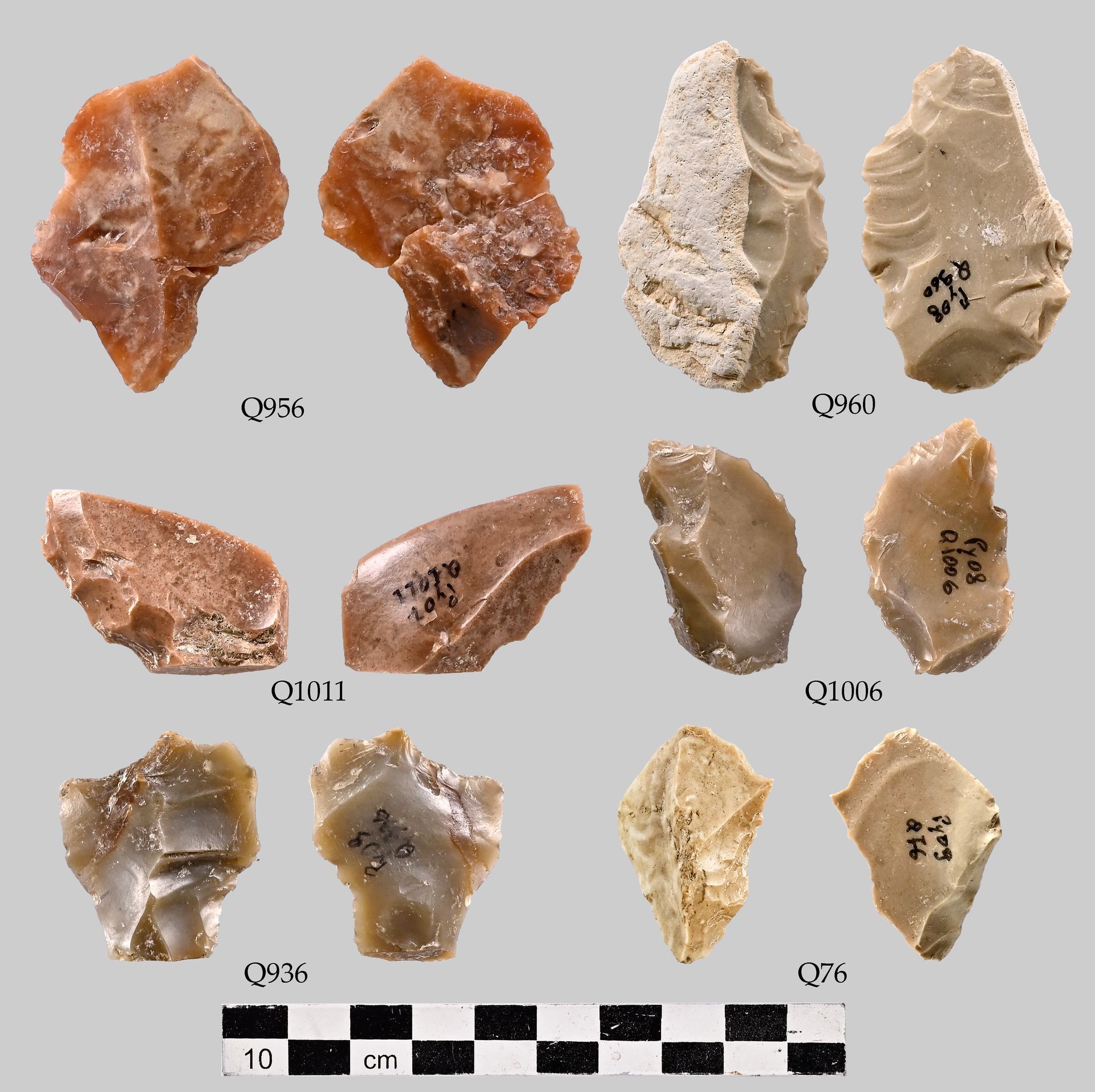
Also typical are the combined Quina scrapers, which have a thick, irregular, or prismatic body, with sharp opposing edges and burin tips that allow the tool to be used on a variety of materials and for various tasks
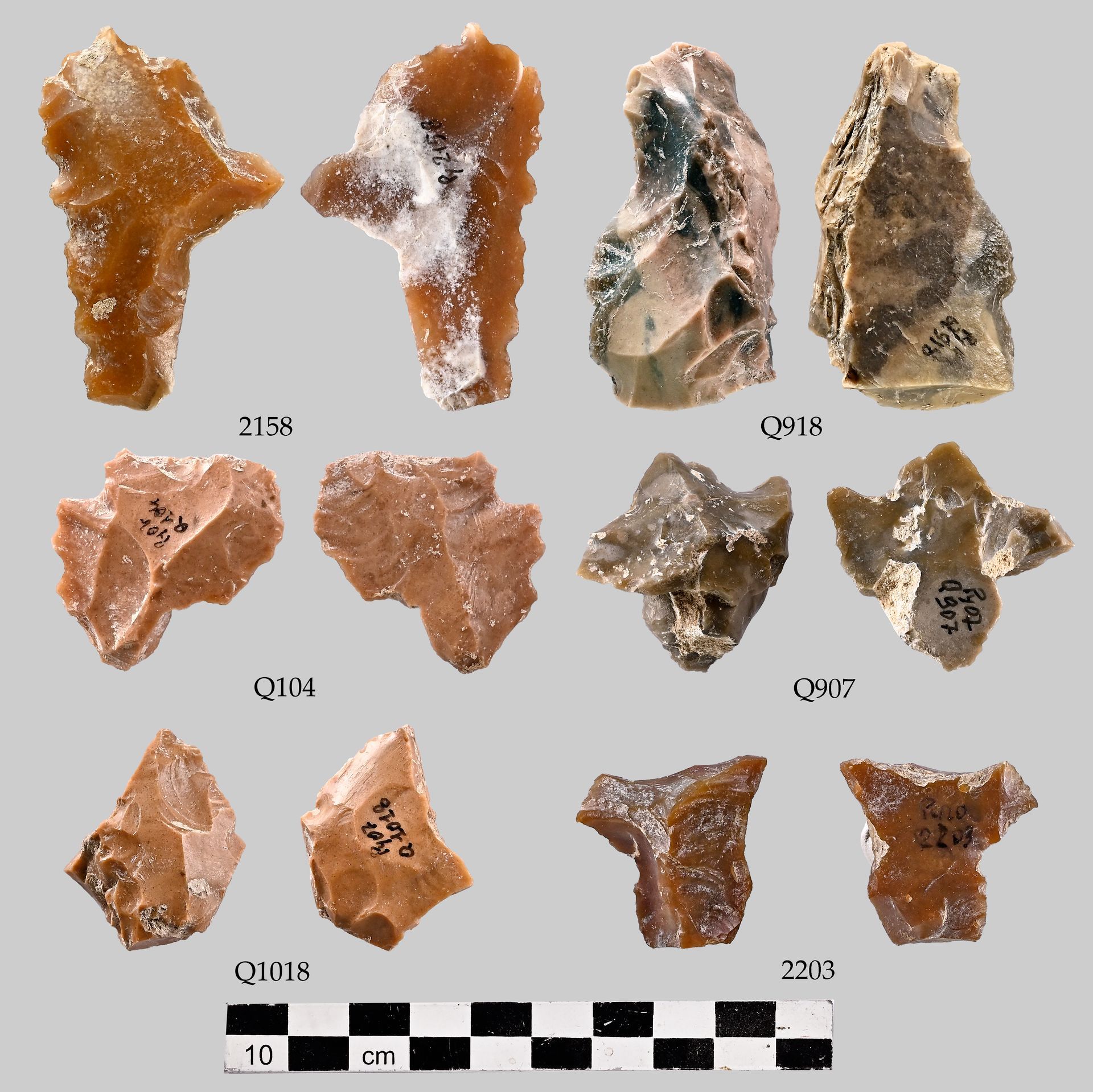
The first examples of bifacial knives linking the Quina retouching technique with the characteristics of a back knife also appear in the Acheulean-Yabrudian production. These tools have a sharp cutting edge opposite a thick back created using the specific Quina method of sharp, deep retouching that forms a steep edge.
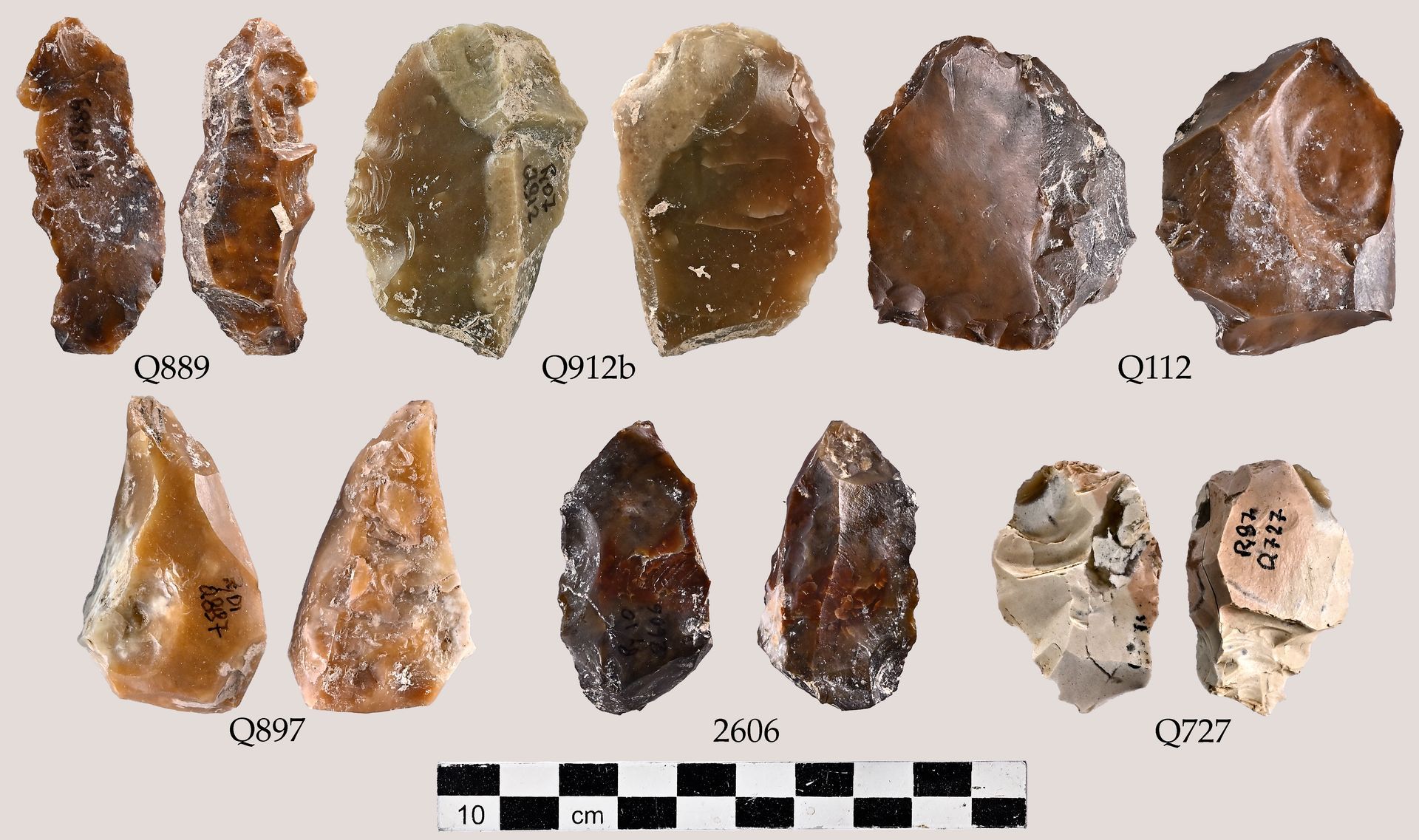
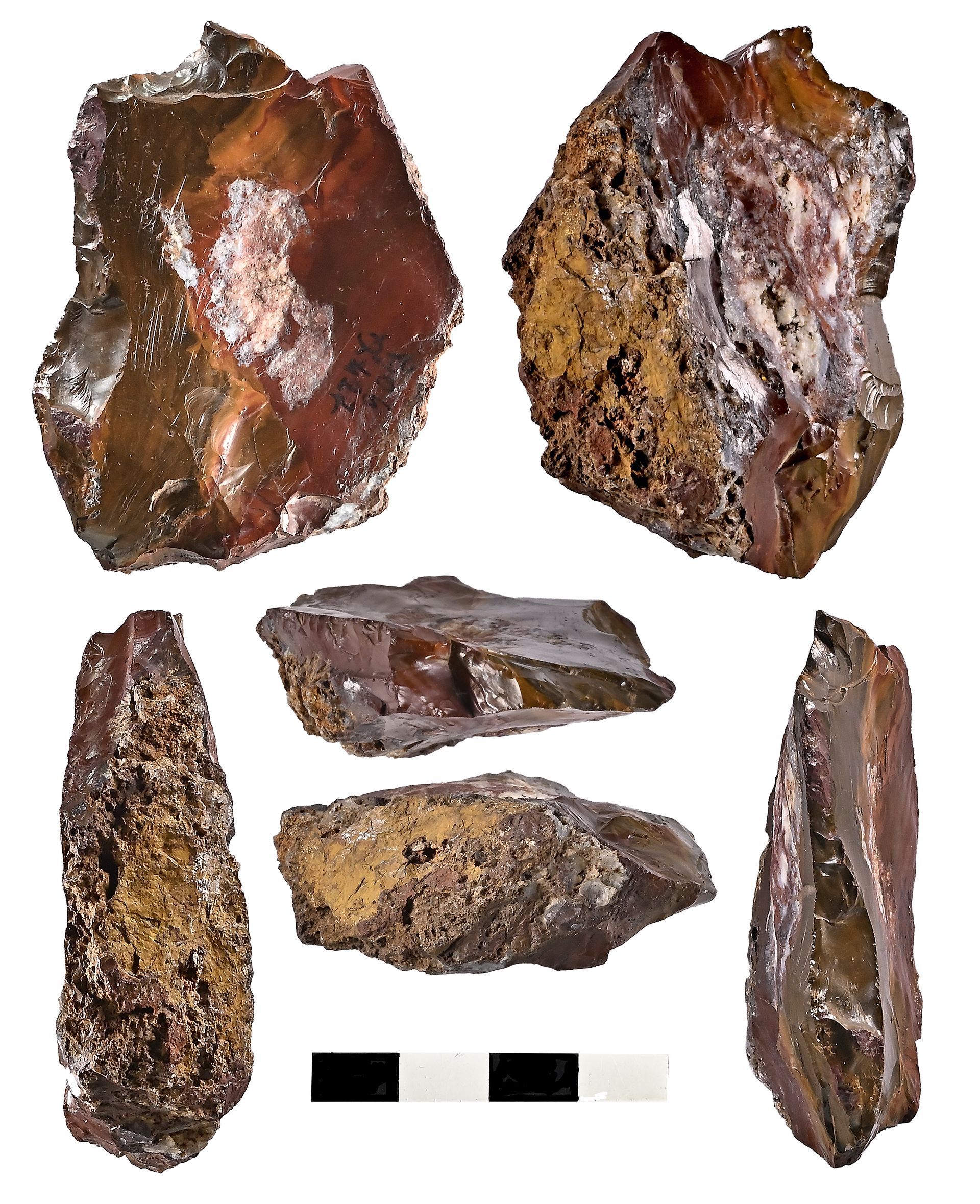
The red obsidian scraper n°Q427 found at Pyrgos/Mavroraki is a surprise addition to the assemblage of the chipped stone tools dating from the late Lower Palaeolithic to the Early Bronze Age. It is the only mahogany-red obsidian artefact found in Cyprus to date. Its origin is likely Armenian, a region which holds a unique and underappreciated role in the deep history of obsidian exploitation, according to the Lower and Middle palaeolithic sites, where many assemblages of red and black obsidian tools have been found (Moutsiou: 2014). Furthermore, recent studies report the production in the Middle Palaeolithic in the Caucasian regions of obsidian tools in assemblages also containing quartz and quartzite tools (Doronicheva, Golovanova, et al.: 2017; and 2023), which constitute a parallel with Pyrgos/Mavroraki.
However, while some black obsidian blade fragments found at Pyrgos/Mavroraki are fully comparable to those imported to Cyprus in the pre-Neolithic period, the unique red obsidian scraper is of a typology difficult to compare with Middle and Upper Palaeolithic artefacts, while it does find parallels in the production of the Late Acheulean Levantine (Shimelmitz, Mina et al.: 2016) and Armenian (Moutsiou: 2014) sites. Nevertheless, the lack of red obsidian tools throughout the Levantine area prevents us from hypothesising that the object was produced in those regions starting from an imported pebble and then modified, or that it was passed from “hand to hand” through a much larger communication network whose existence we were unaware of until now.