The Late Acheulean (LA, 780–400 ka)
The Late Acheulean of the Levant is characterised by spheroids, choppers, bifaces, refined flint workmanship, and hierarchical flaking strategies. Detailed analyses of key open-air sites such as Kefar Menahem West, Revadim, and Holon demonstrate substantial intra-assemblage variability in raw material procurement, reduction sequences, and tool types. Contrary to the traditional view of the Acheulean as a phase of cultural stasis, the Levantine evidence reveals significant local experimentation and technological flexibility, suggesting small, low-density population capable of innovation, albeit with limited intergroup transmission.
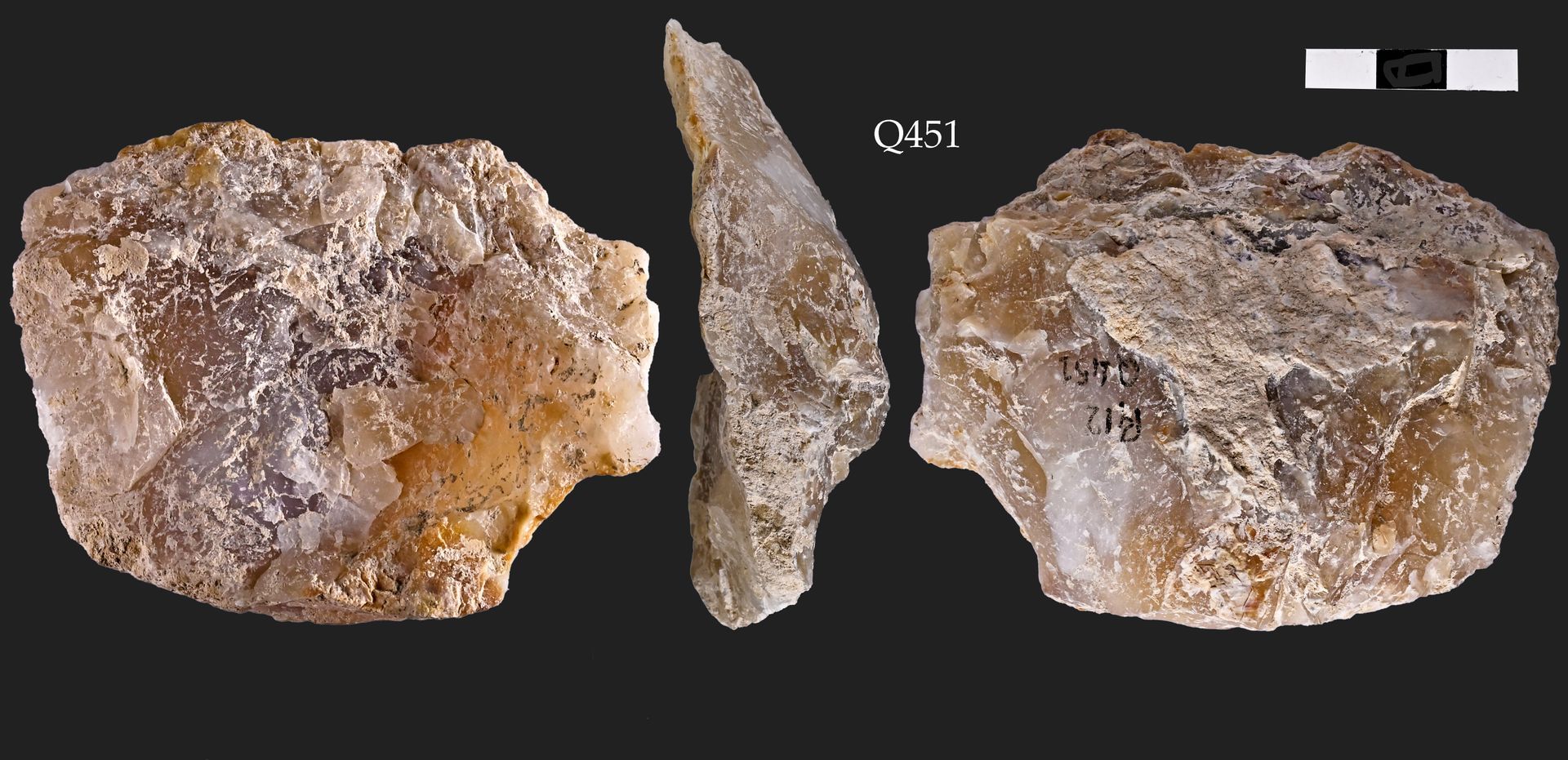
Three items among the 40 spheroids from modified quartz pebbles
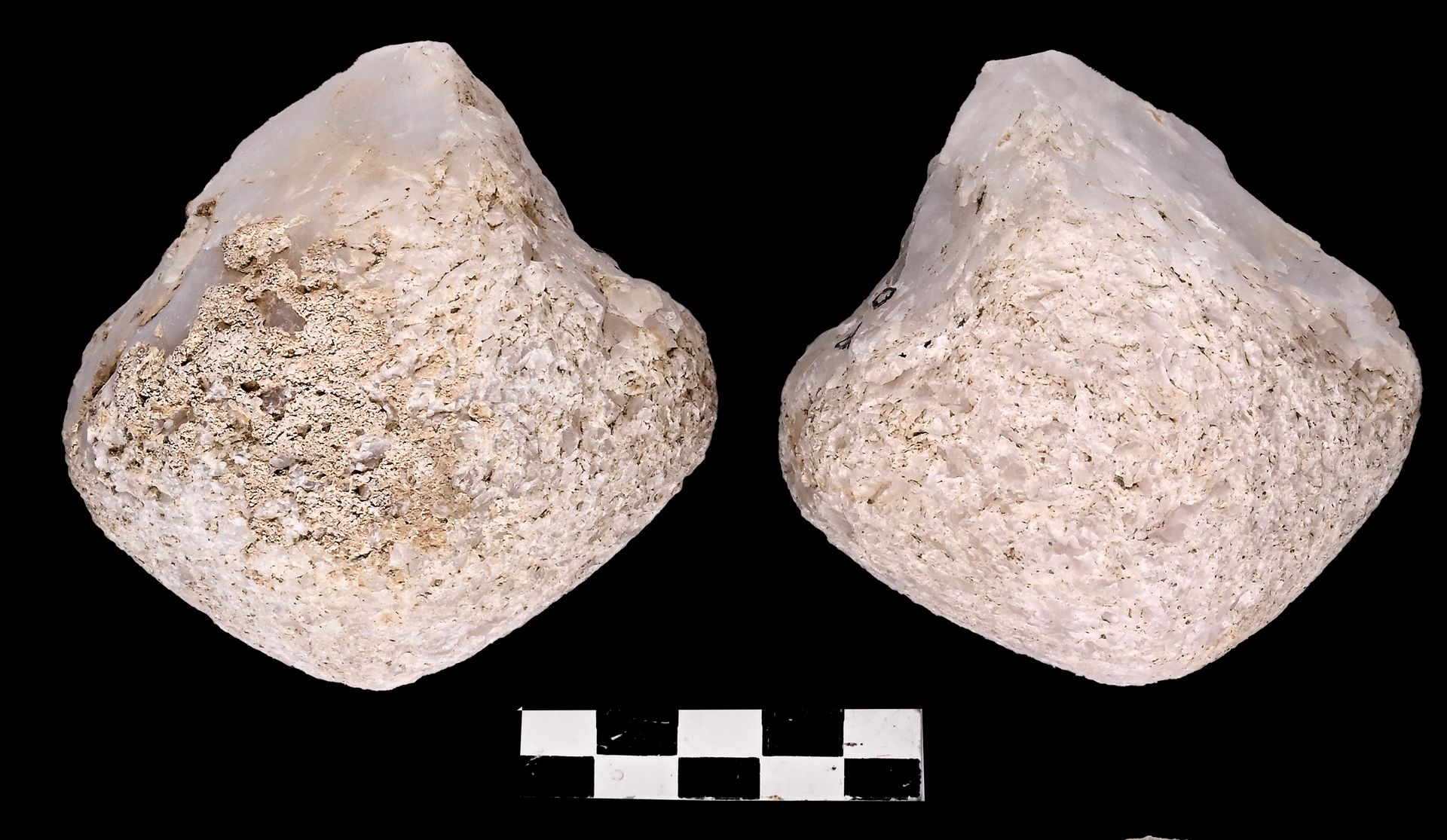
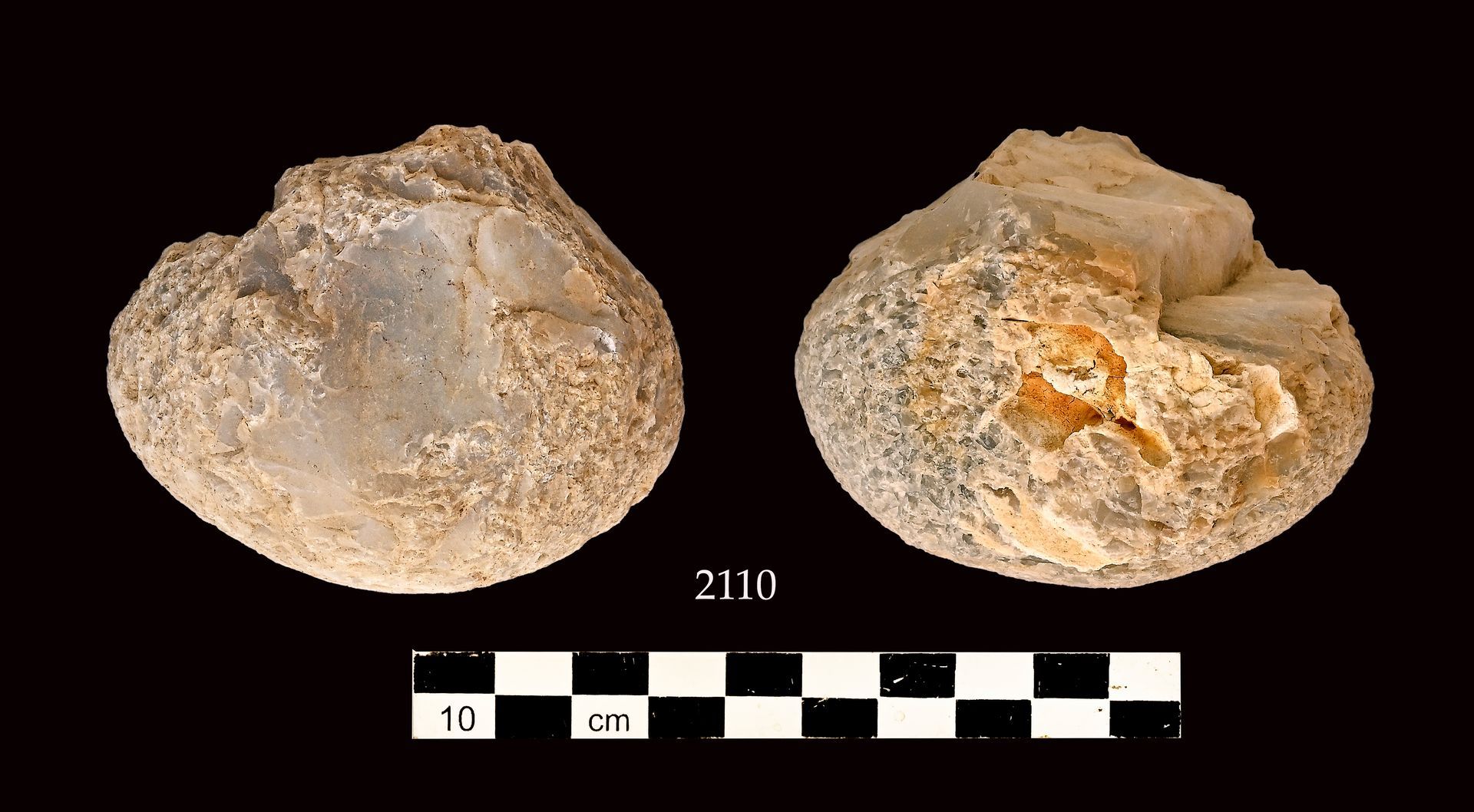
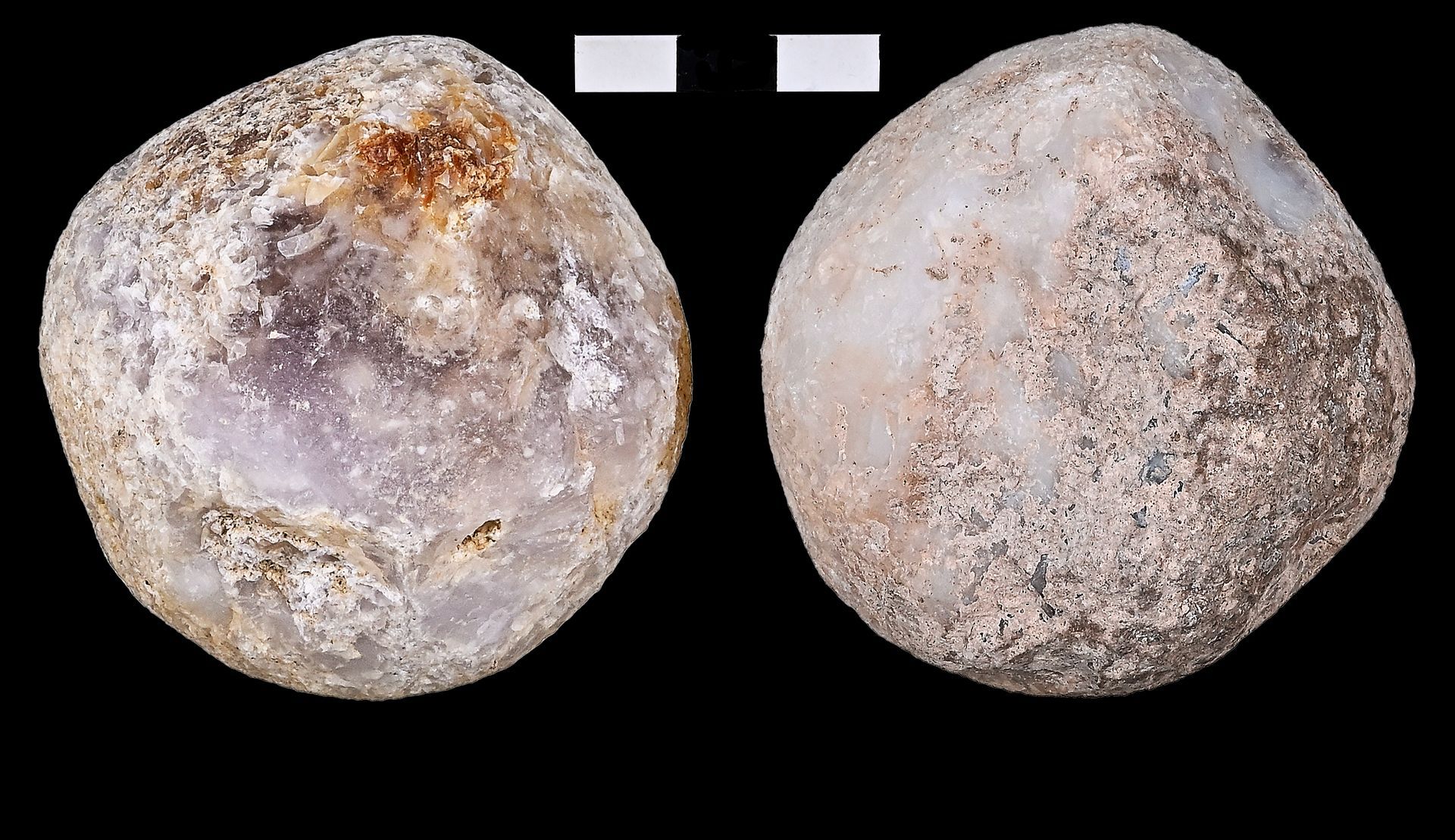
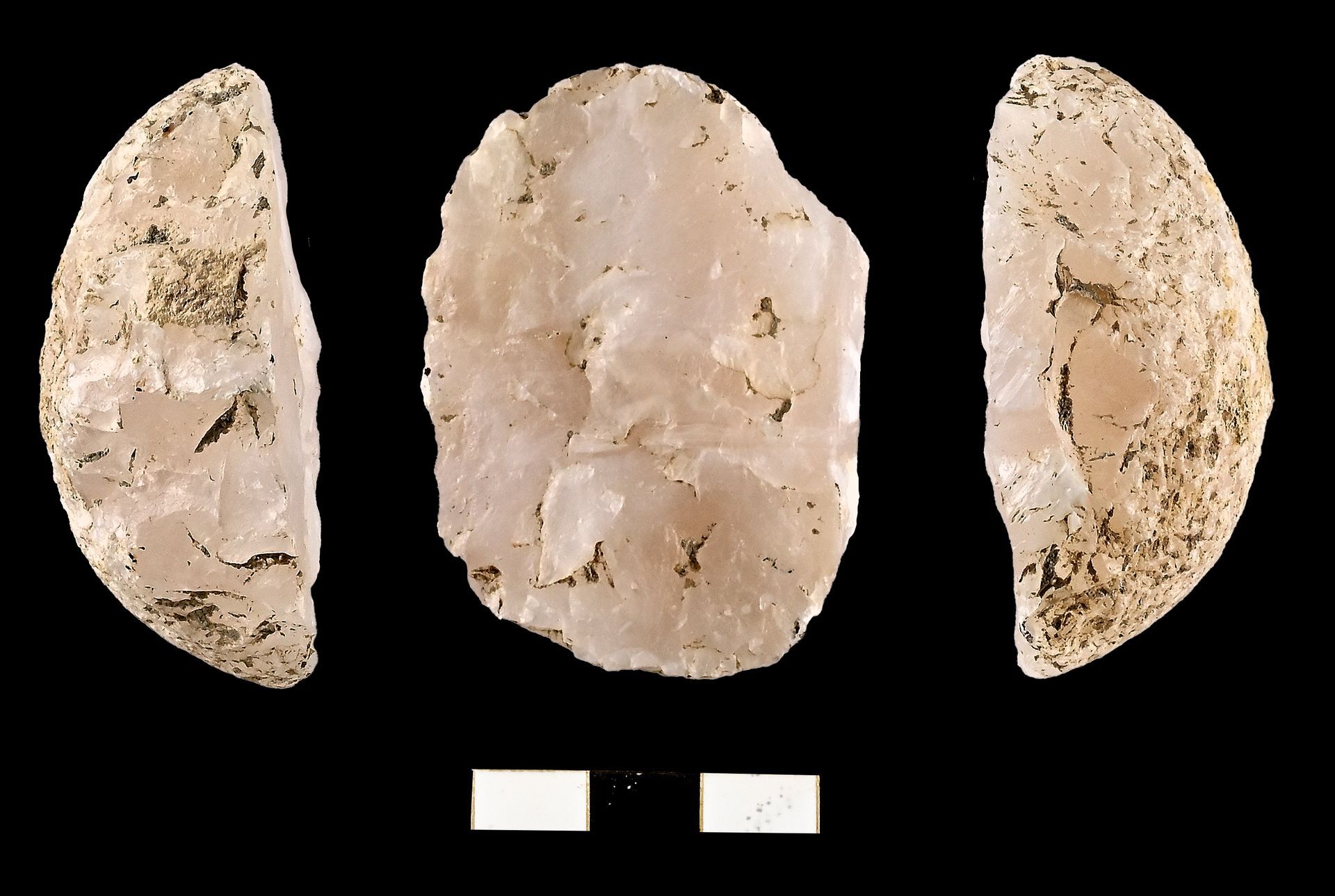
Three items of Quartz core scrapers
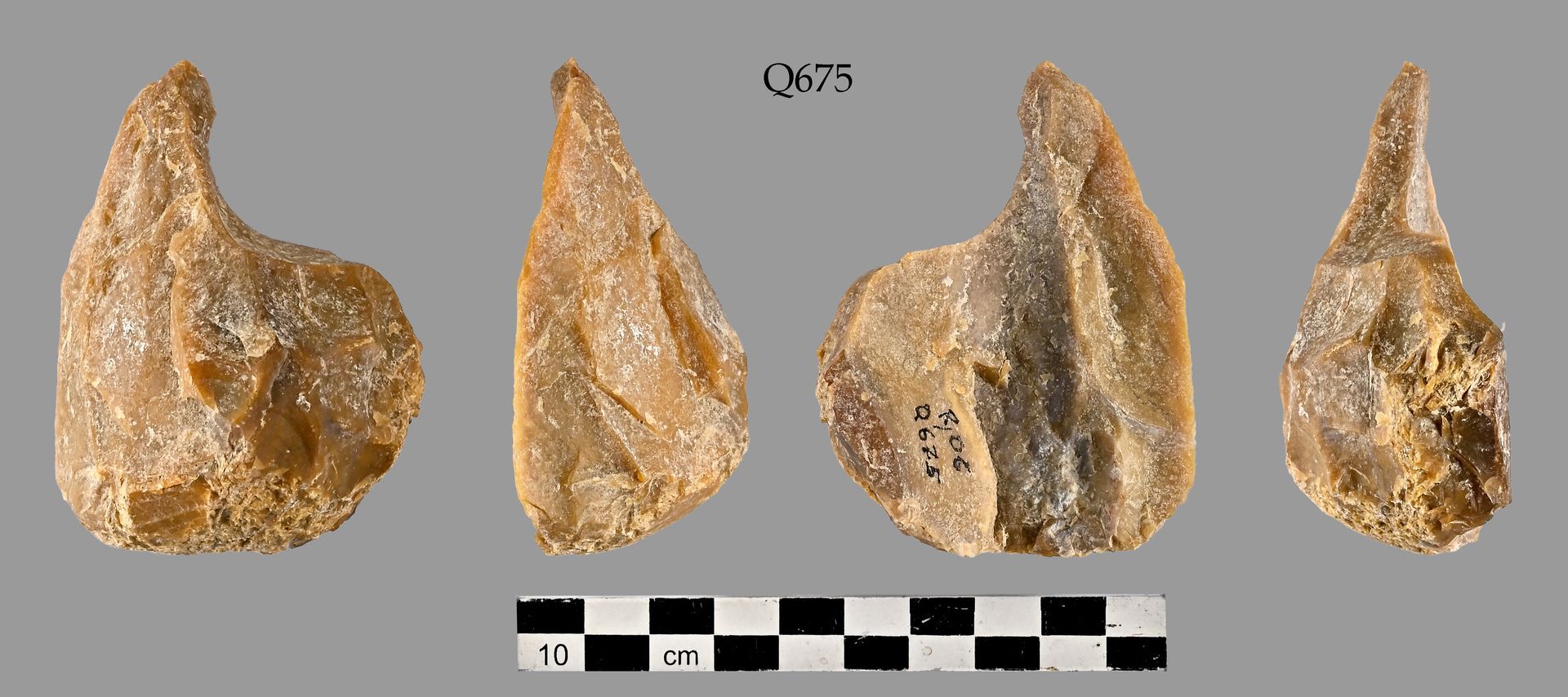
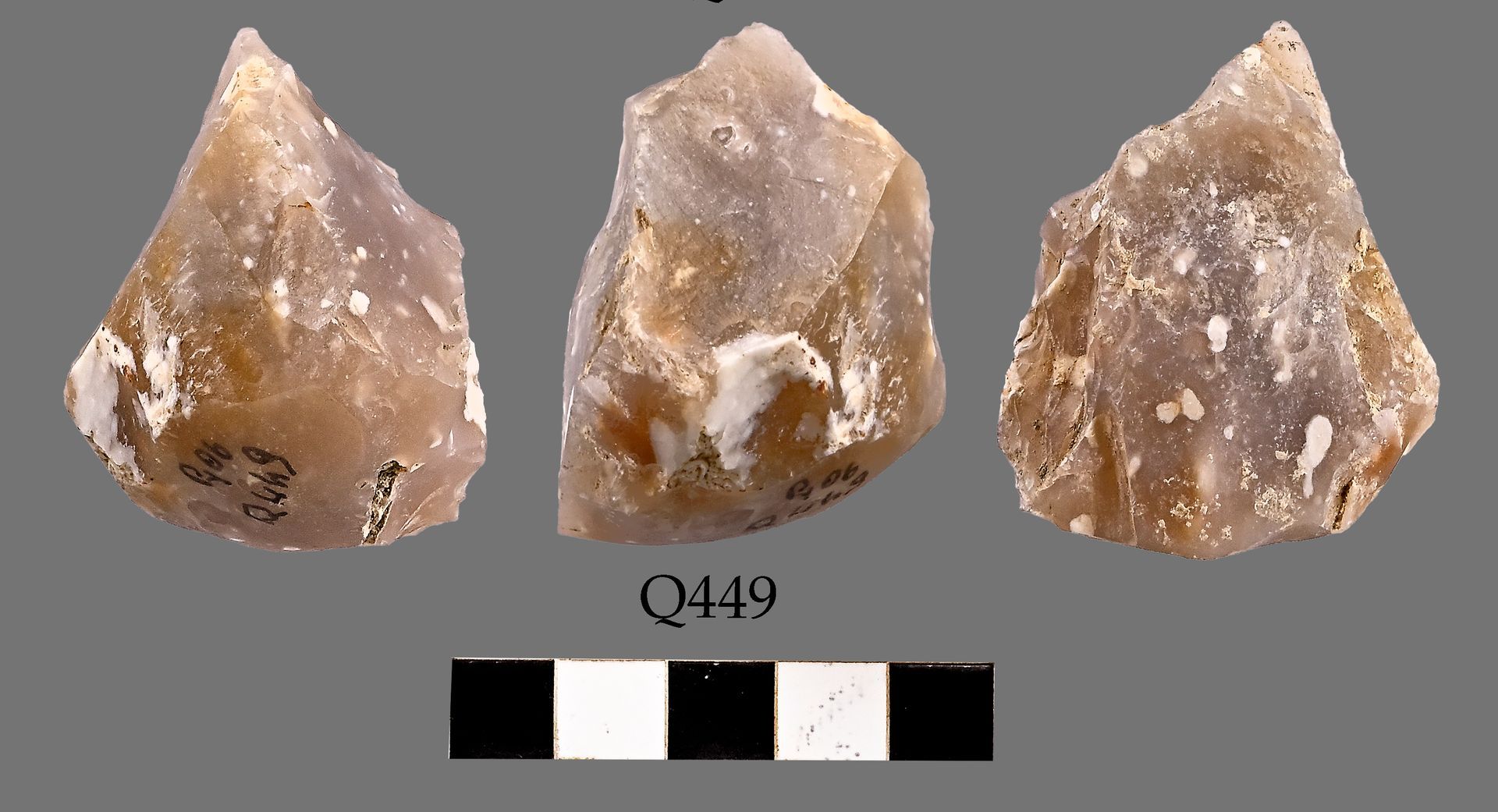
Three flint choppers with a thick waxy patina
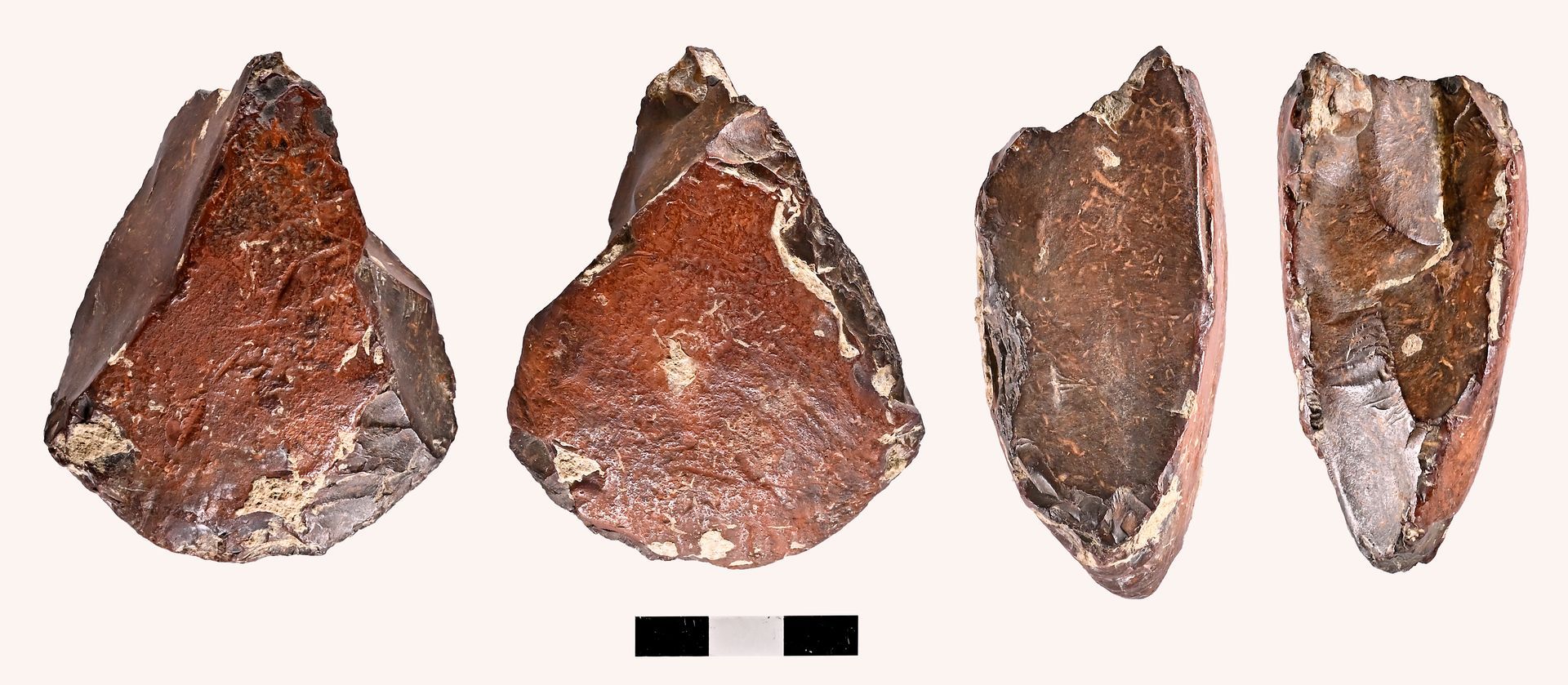
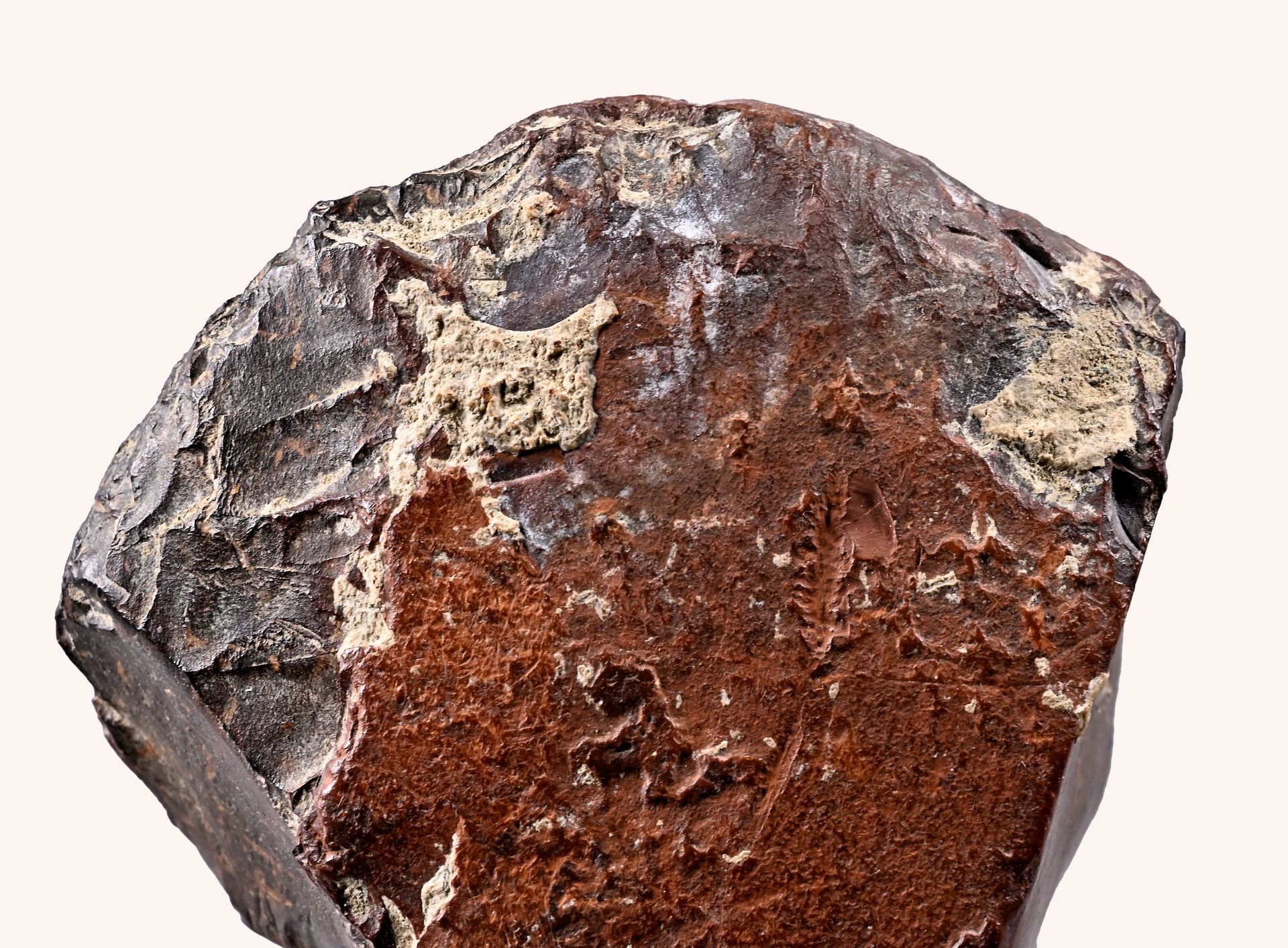
Quina reclycled bifacial chopper ( n. Q477)- 🔎
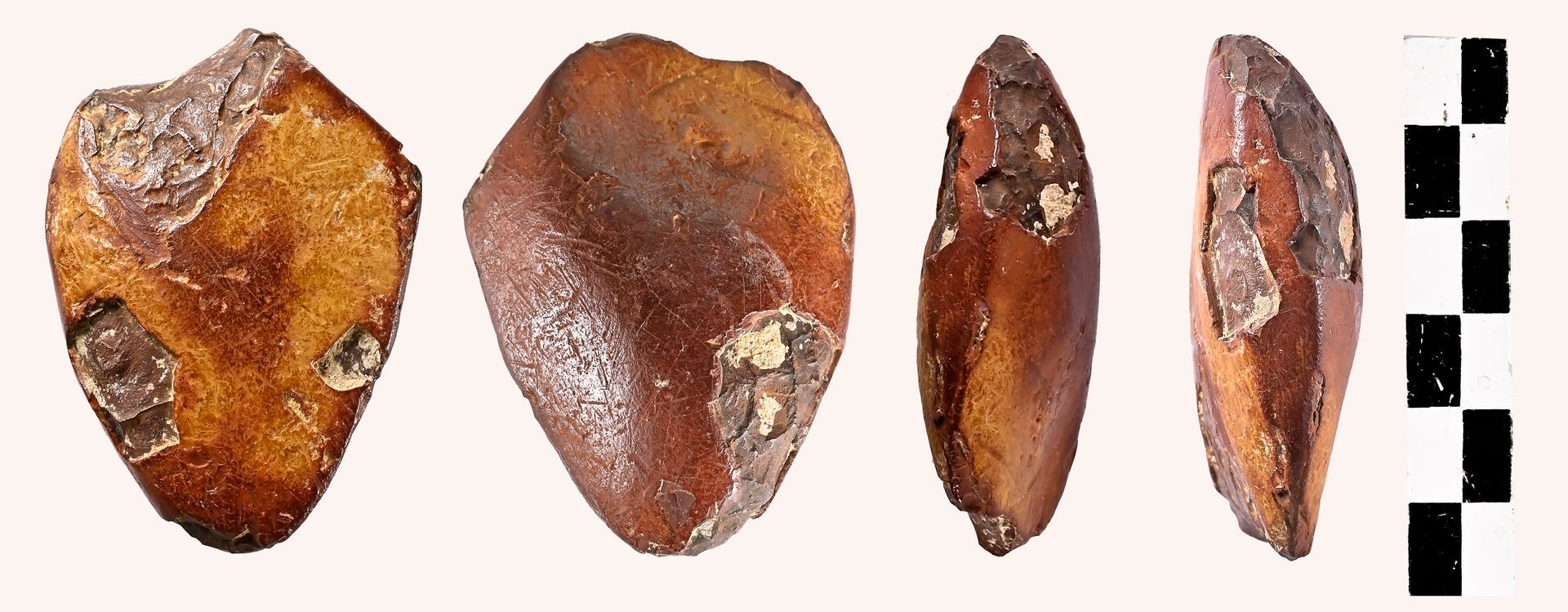
Bifacial hand axe of variegated ivory lamellar quartzite with flint inclusions (n. 2065)- 🔎
The Qesem Cave in Israel has yielded 29 limestone and dolomite spheroids dating to the Late Lower Palaeolithic (Assaf, Baena Preysler: 2022), where they were used to extract marrow from bones (Assaf, Caricola, Gopher, et al.: 2020). However, Louis Leakey hypothesized in 1931 that the oldest examples of quartz, quartzite, and lava from Olduvai may have been used as hunting bolas, thrown at moving animals. Indeed, like the Pyrgos/Mavroraki specimens, they weigh no more than 500 grams. However, unlike the Levantine sites, the primary quartz selection from Pyrgos/Mavroraki includes the production of pointed spheroid choppers (no. Q460), hemispherical scrapers with retouched and sharp edges, characteristic of the Upper Acheulean (Méndez-Quintas, Serodio, et Al. 2025), as well as sphere segments and flakes used as tools. Among the oldest tools found at Pyrgos/Mavroraki is hand axe n. 2065, made of flint-variegated quartzite, symmetrically worked, fully conforming to the Acheulean canons of the late Lower Palaeolithic. The preservation of the tip and cutting edge, free of chipping, suggests that the tool was used for butchering.
Also found at Pyrgos are flint choppers characteristic of Lower Palaeolithic Acheulean production. All have a thick patina that covers the rough, slightly cortical surface of the original pebble, evidenced in two examples by recycling episodes, reminiscent of the Nilotic examples from the Abassieh plain (Bakry, Saied, and Ibrahim 2020).
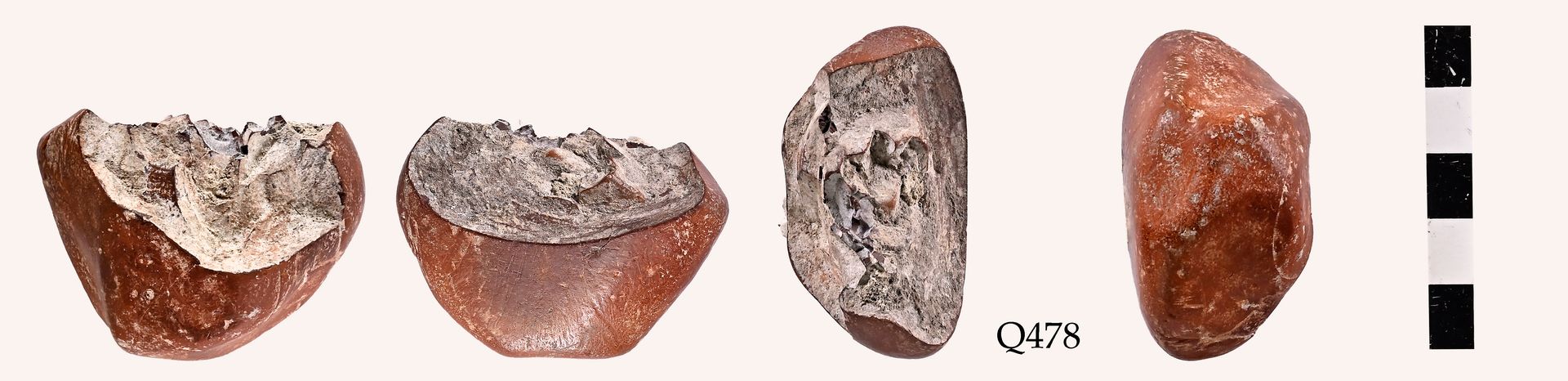
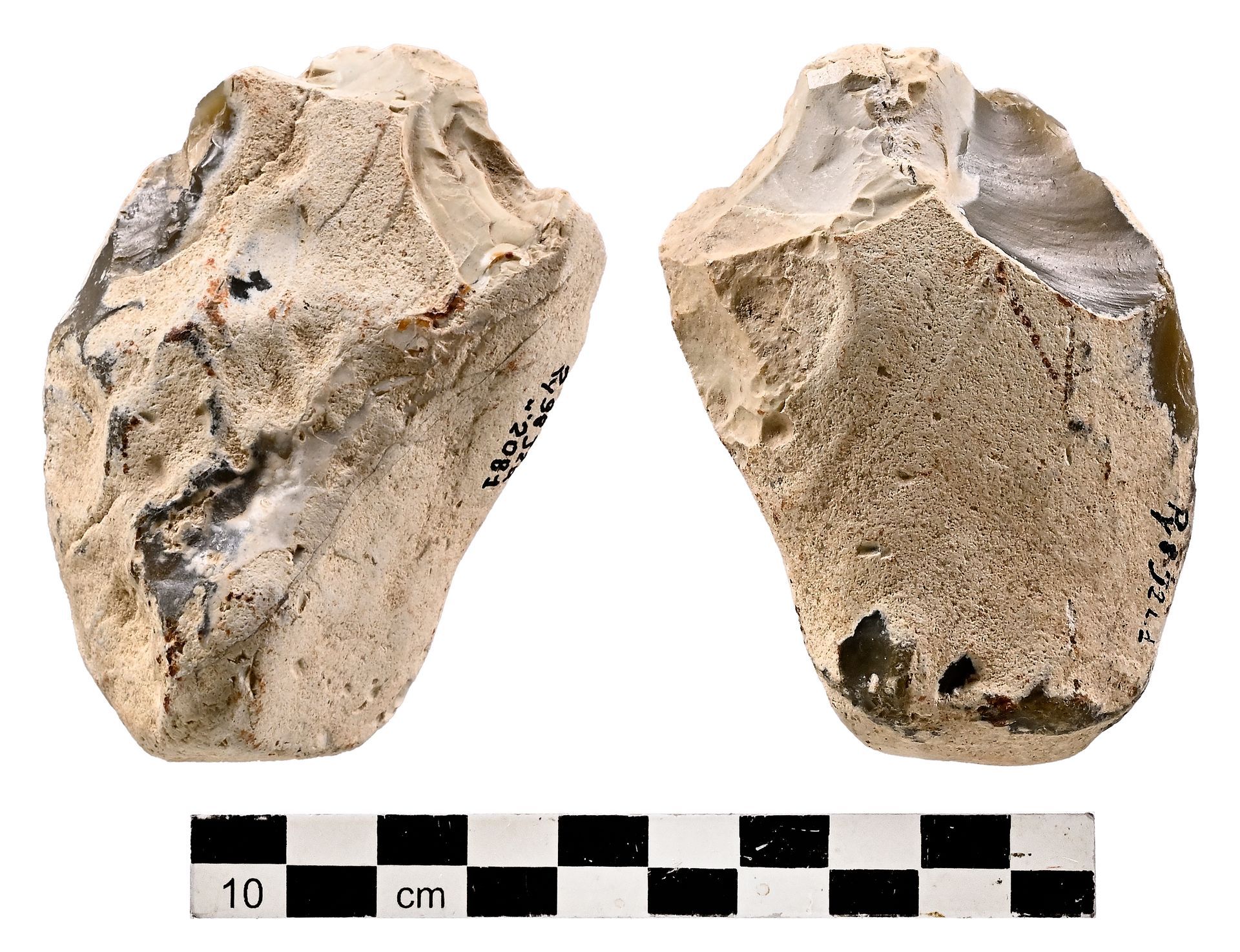
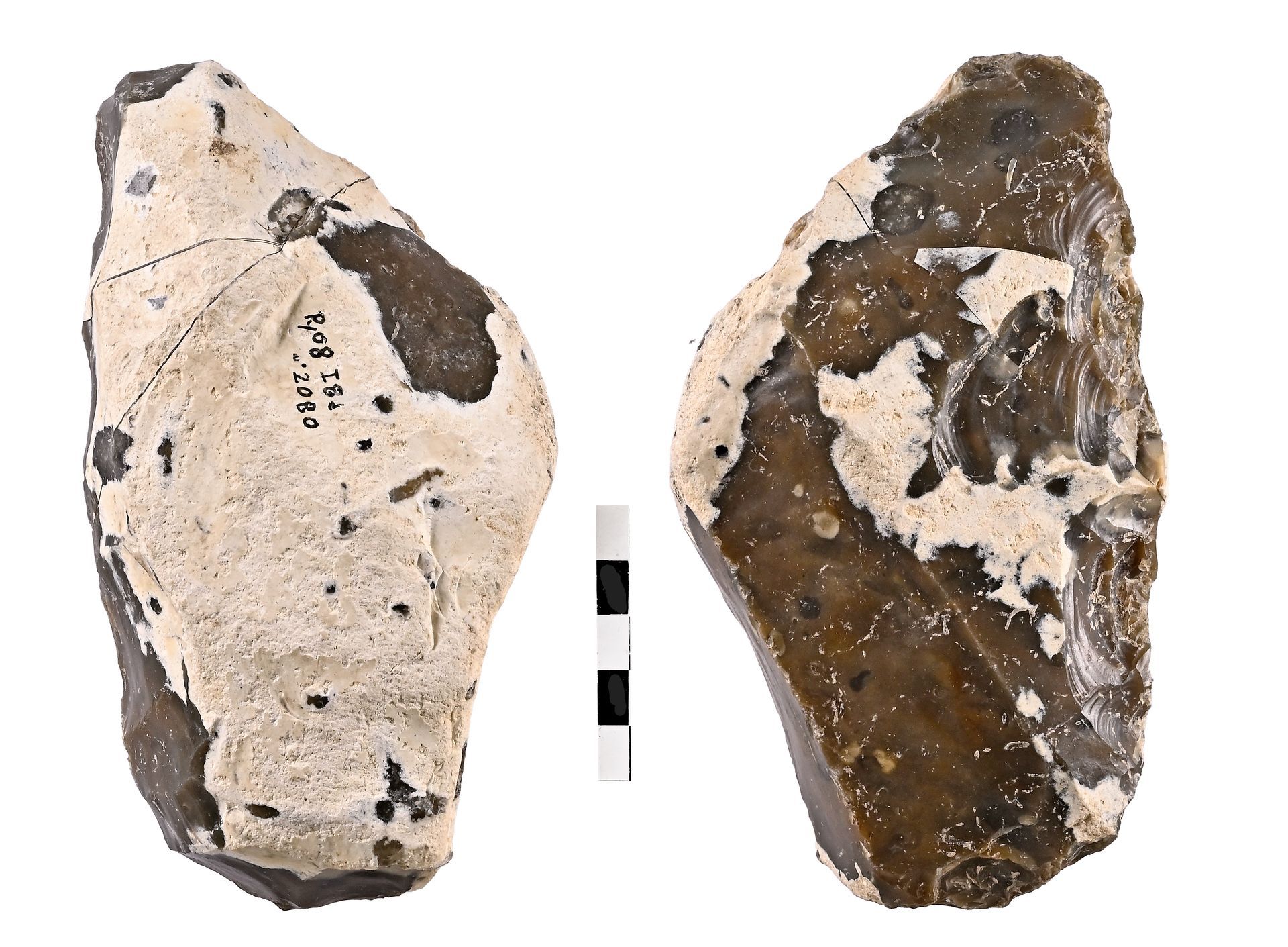
Two of the Pyrgos/Mavroraki red flint bifacial choppers (n.Q477 and n.Q479) show evidence of recycling, with the patina removed to retouch the edge using the Quina technique. Besides, n. 2081 is a typical Late Acheulean bifacial chopper with flaking on both faces intended to shape the crested central edge. The large hand axe scraper N.2080 is also part of a coblestone finished with graduated retouching and faceting towards the apex, with a smooth cortex towards the handle of the tool.
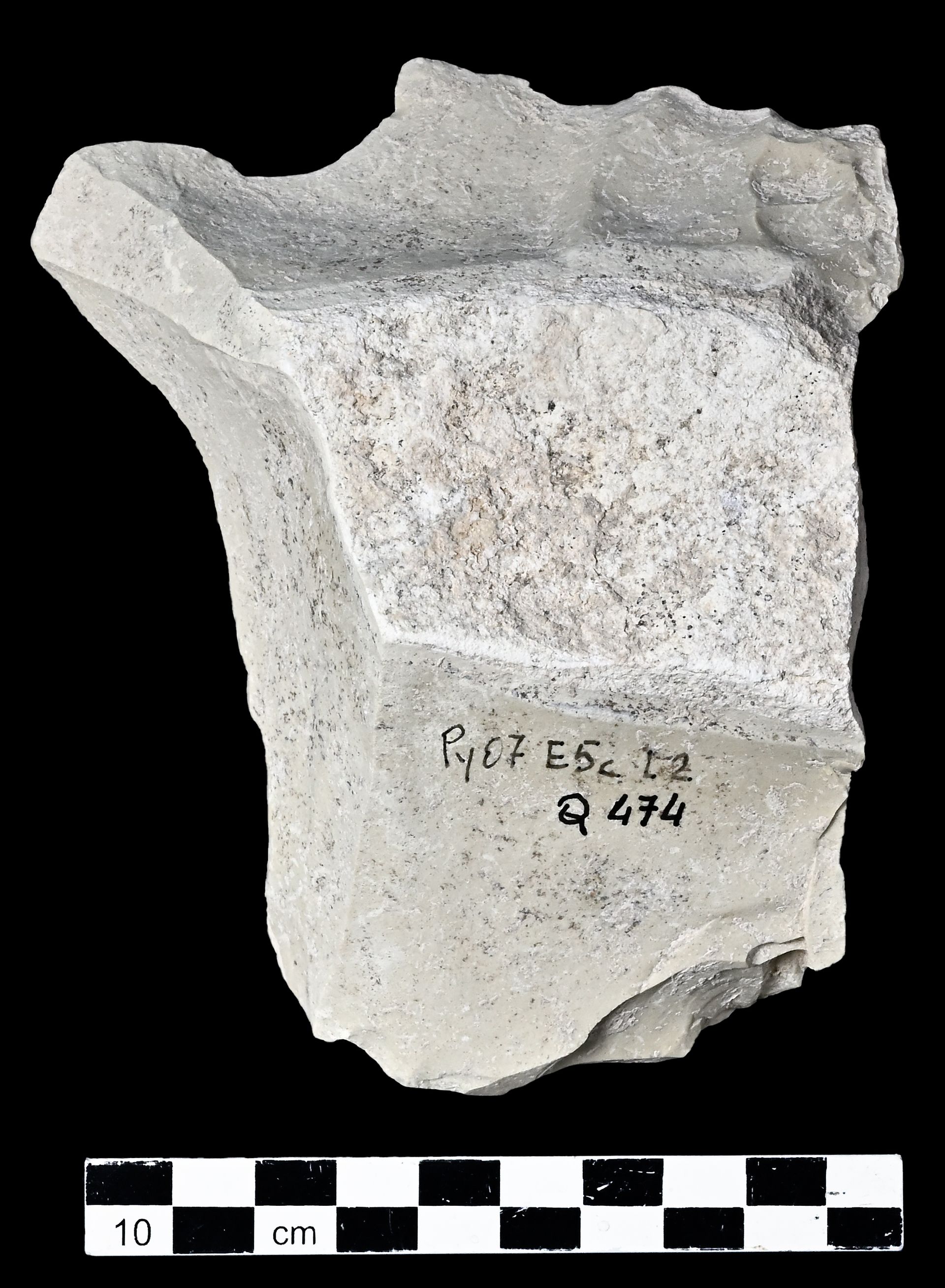
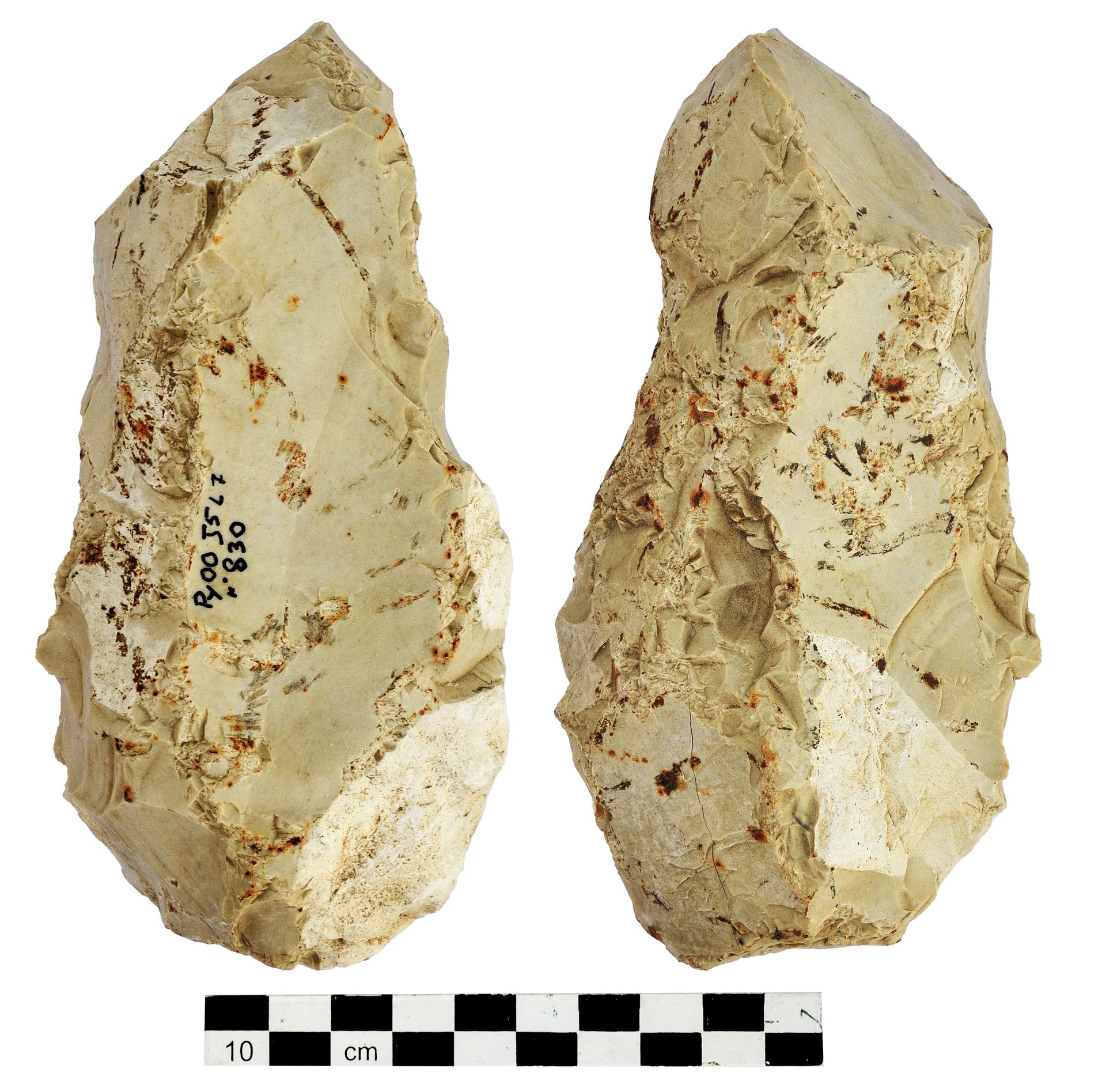
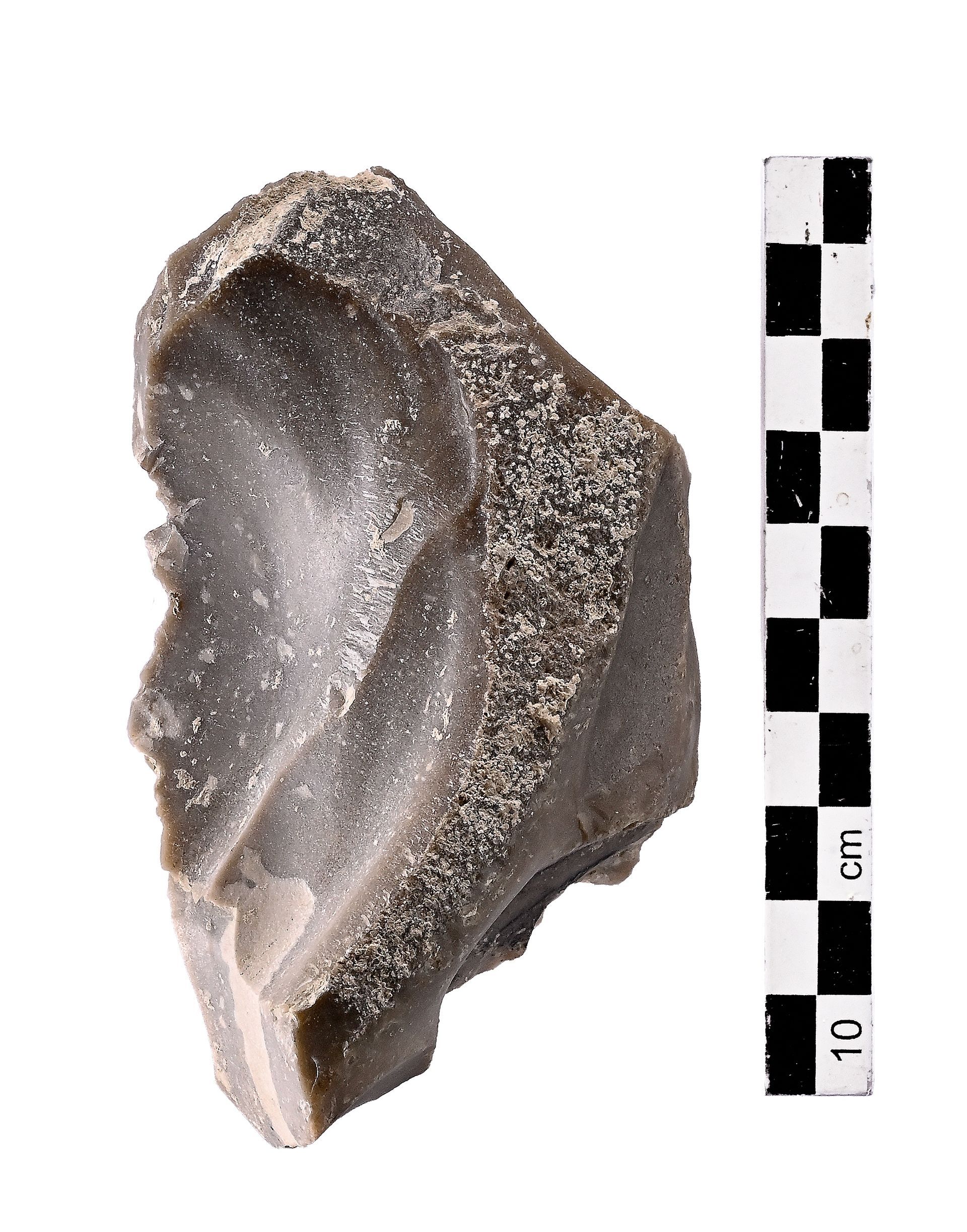
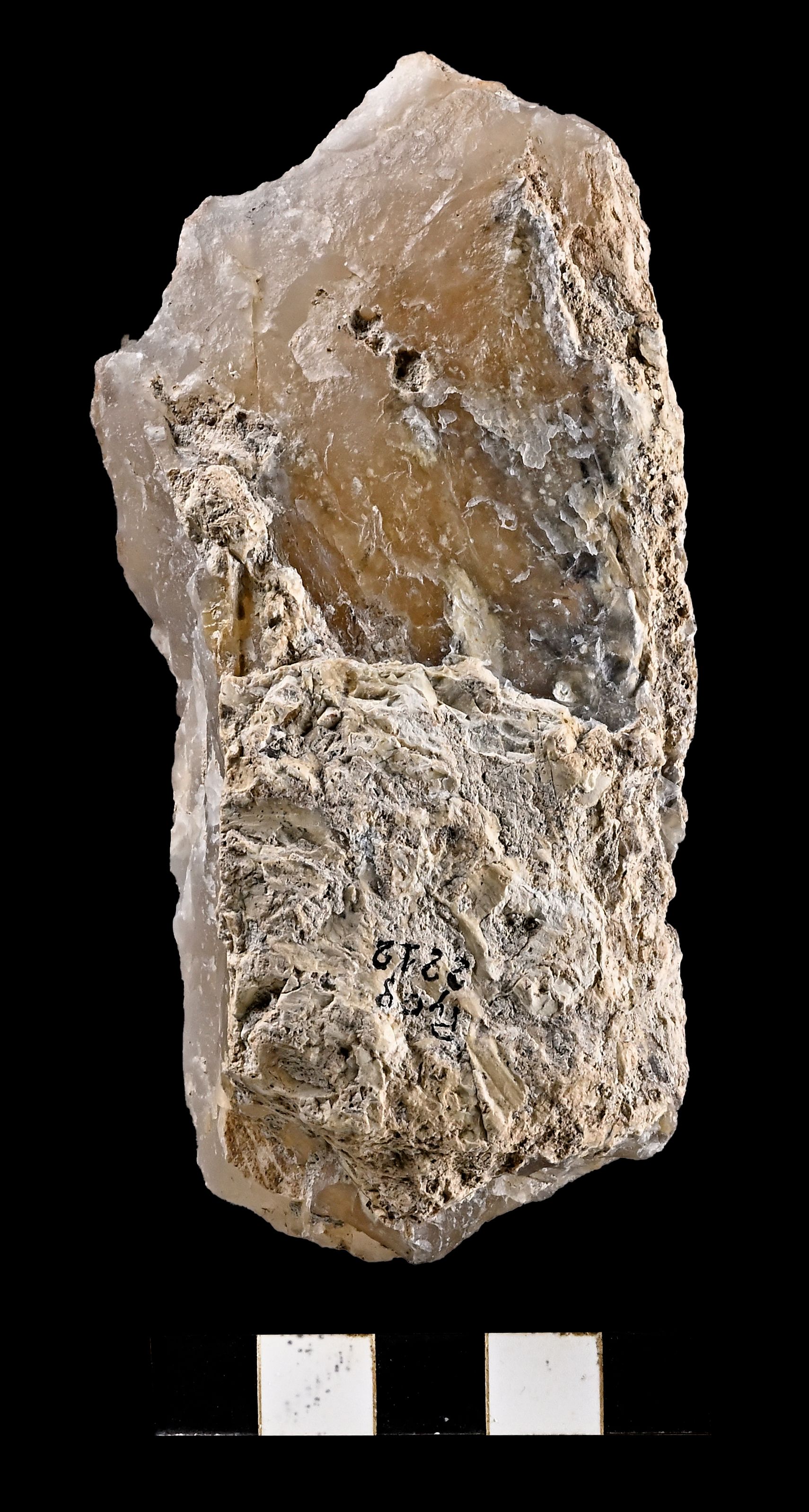
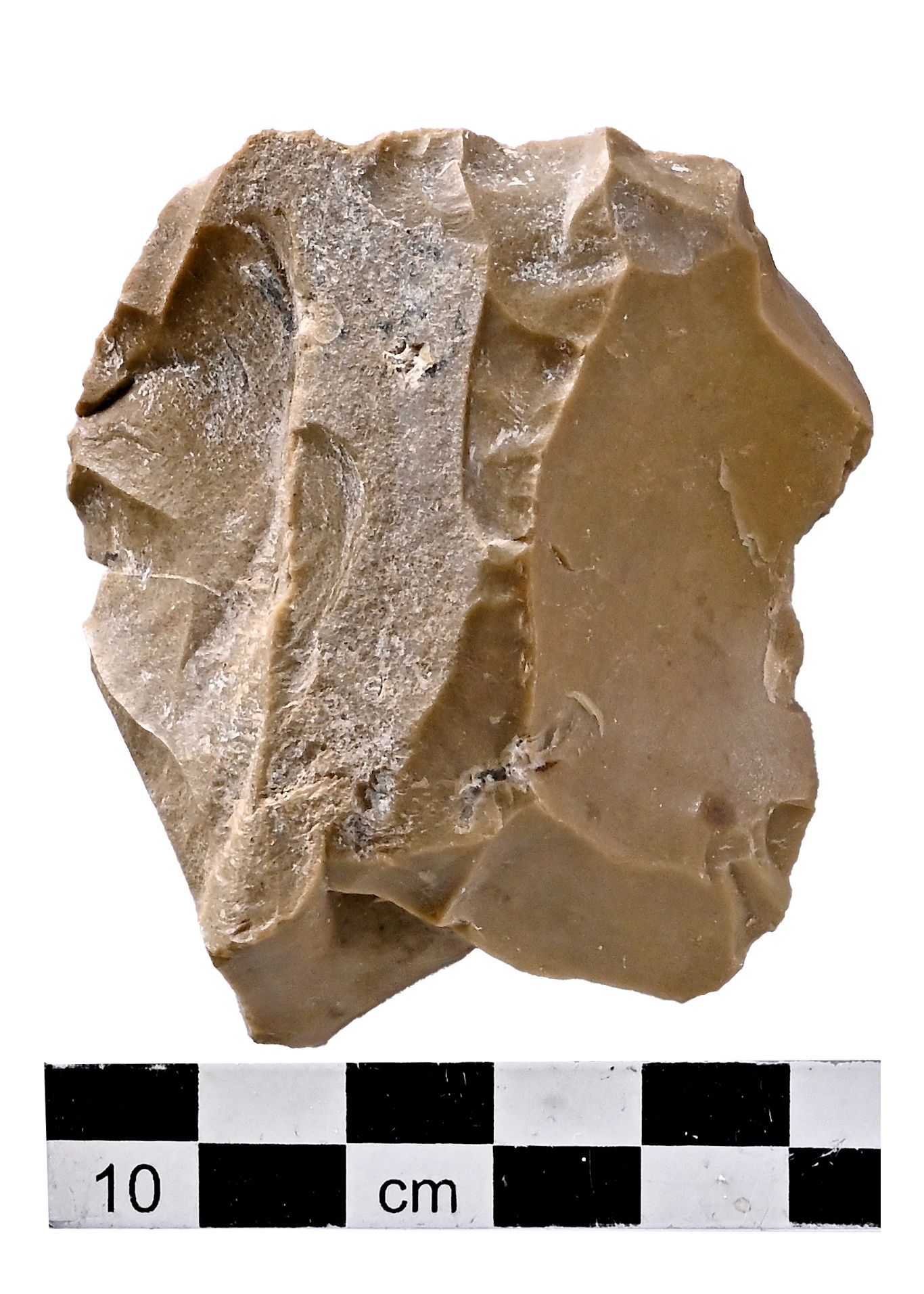
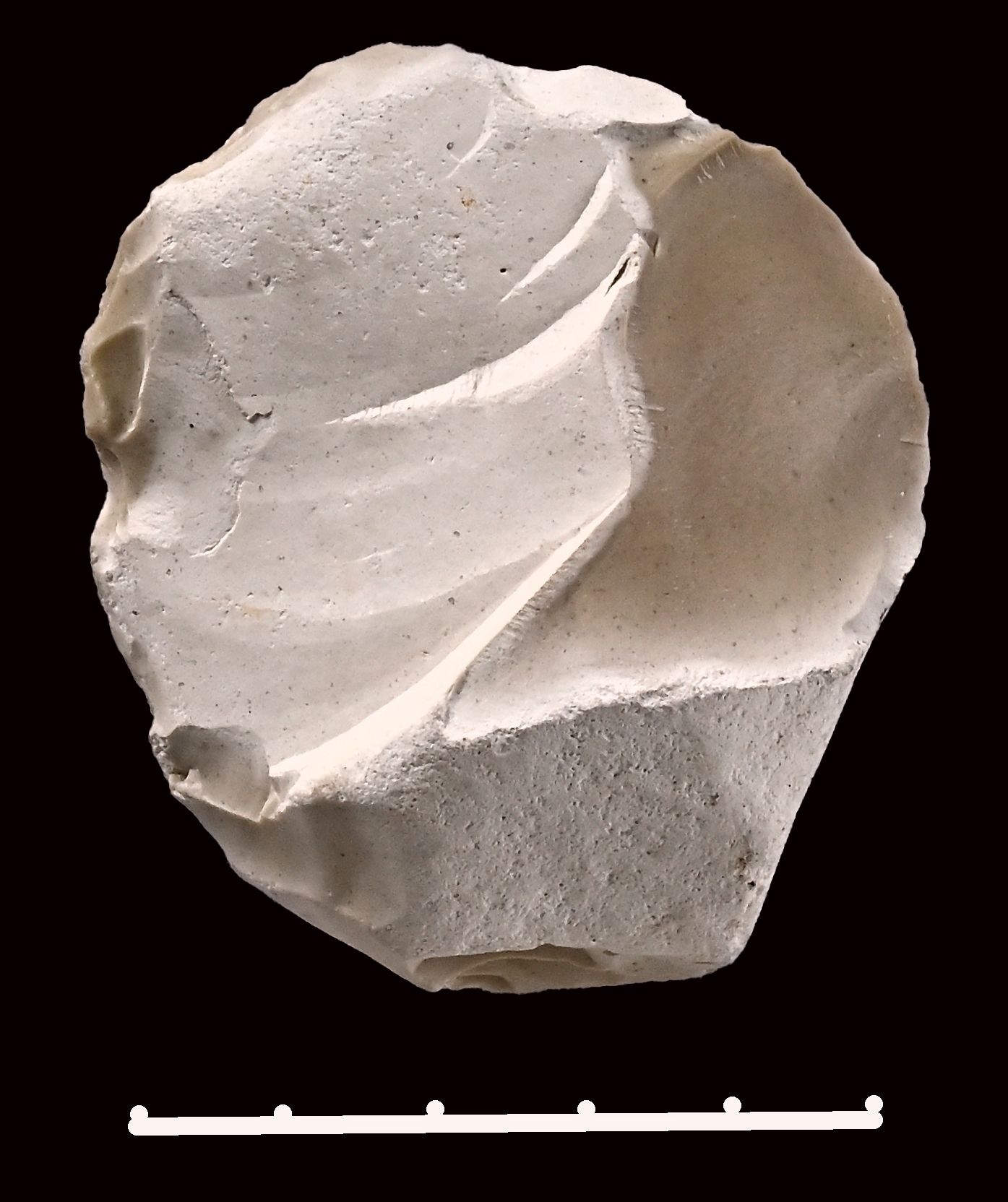
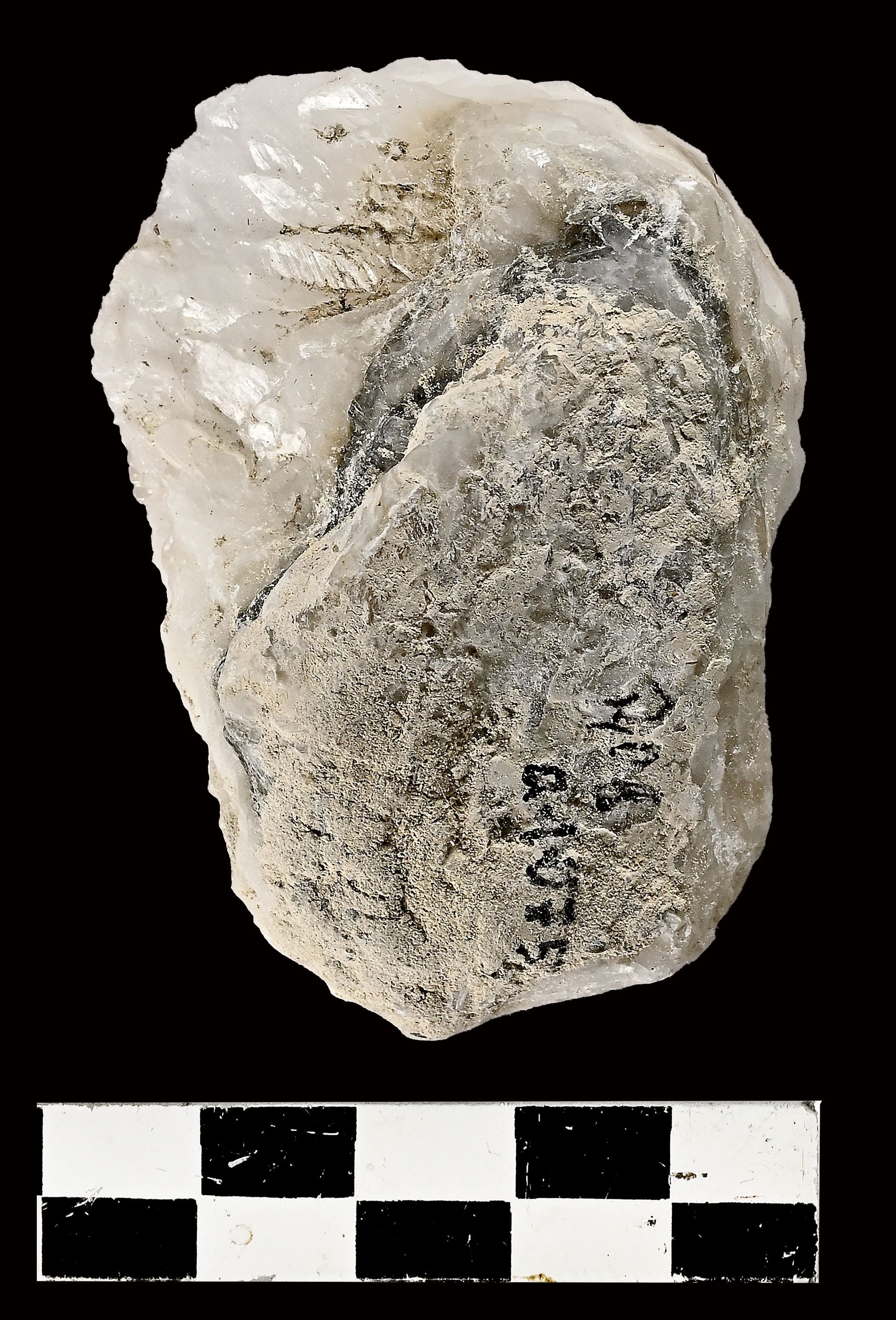
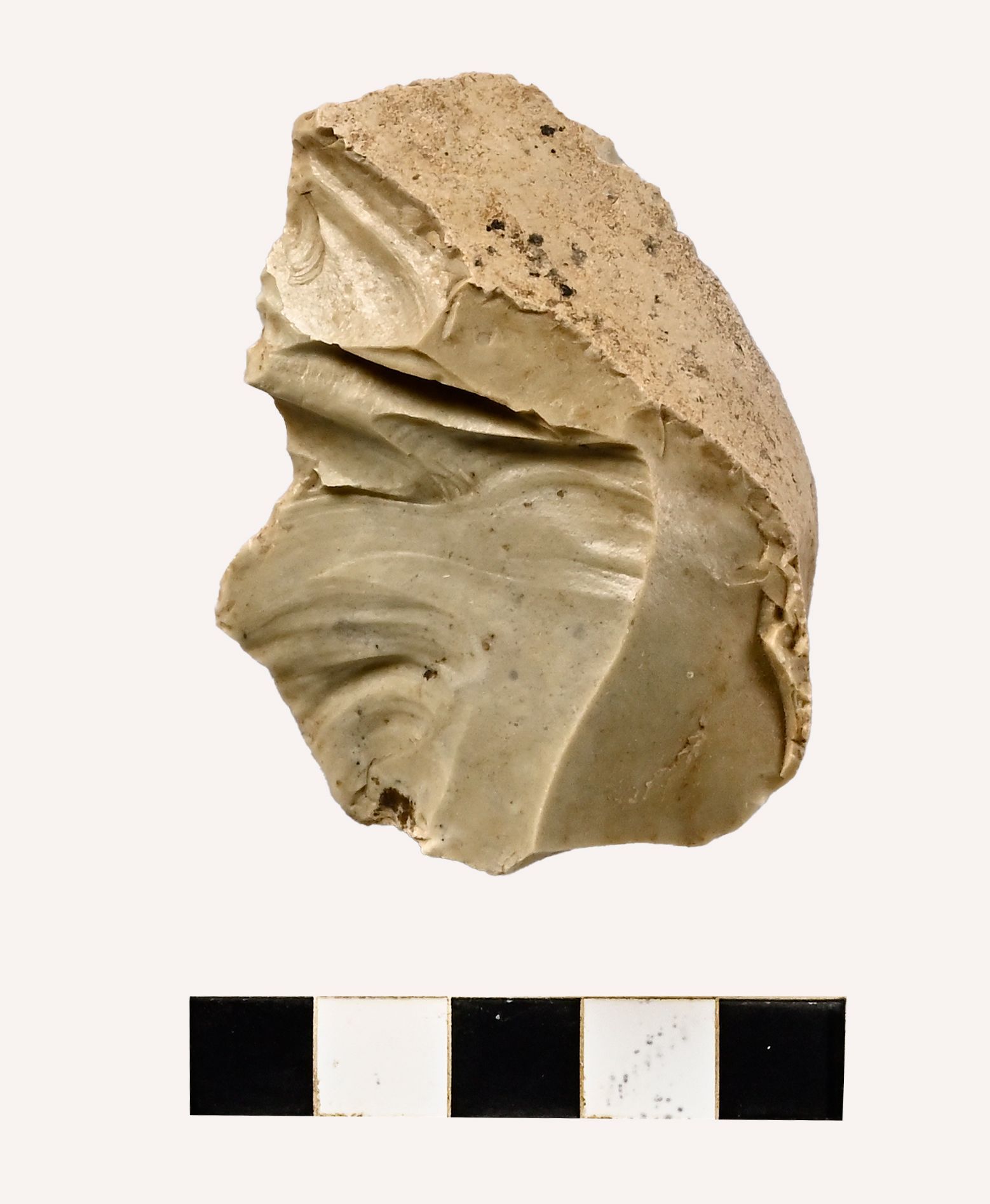
Q474 belongs to the category of massive Acheulean scrapers spanning a broad time scale, with examples on dolomite, quartzite, and chert. The specific morphotype is characterised by a flat, convex platform with a semi peripheral rim marked by parallel, unidirectional removals. Massive bifacial hand axe (n.830) and flint scrapers n.Q472, Q128, Q463 and Q907a are also distinctive features of Acheulean industry. The original stone was skilfully shaped into a bifacial scraper, rounded with irregular edges. The tool often bears the intentional marks left by the tool used to produce it, revealing the manufacturing process and the natural striations of the stone. Among the massive Acheulean scrapers, we can include also two rare examples of quartz "rabot" scrapers (nos. 2212, Q1075) obtained from a large quartz flake with direct and precise removals on both faces.
A characteristic feature of the Late Lower Palaeolithic at Levantine sites is the production of tools belonging to the
Tayac technology (Shimelmitz, Kuhn, Bisson et al. 2021), present at Pyrgos/Mavroraki in quartzite and flint examples. At Tabun and Umm Qatafa, the Tayacian layer was found beneath the Late Acheulean, suggesting that the industry preceded the Acheulean-Yabrudian transition to the Middle Palaeolithic, linked to the introduction of new technologies such as Quina retouching and the beginning of blade production.
The Tayacian culture lacks bifaces
and hand axes, and
consists of simple, lightly or unretouched, non-standardized tools
on thick, coarsely chipped nucleoid flakes (Walker et al. 2013) with characteristic scalar, convergent, and pointed edges, including characteristic side scrapers. Some examples have also been found in the Aegean islands, giving rise to discussions and hypotheses about the chronology and possible human navigation in the Lower and Middle Palaeolithic (Carter, Contreras, Holcomb et al. 2019).
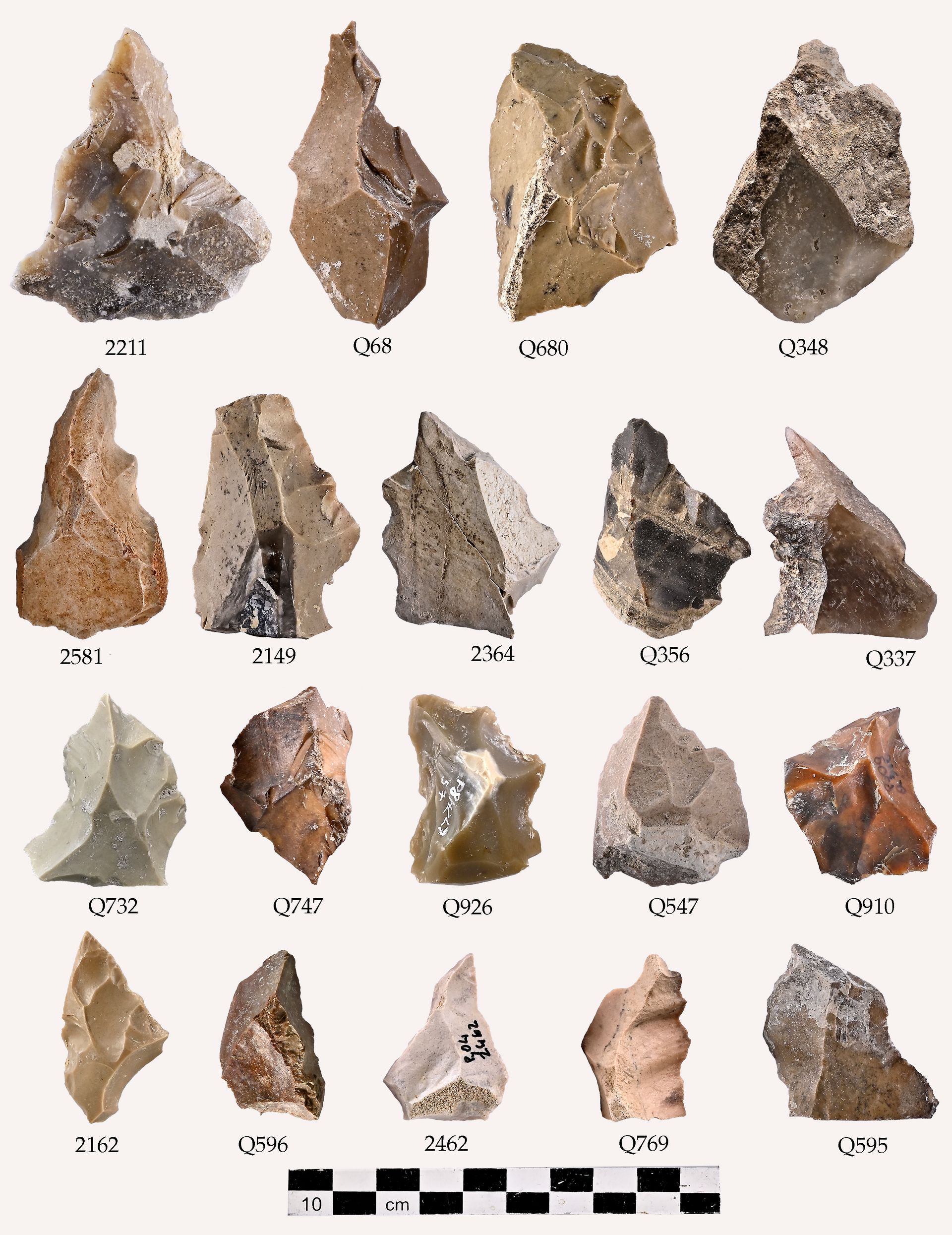
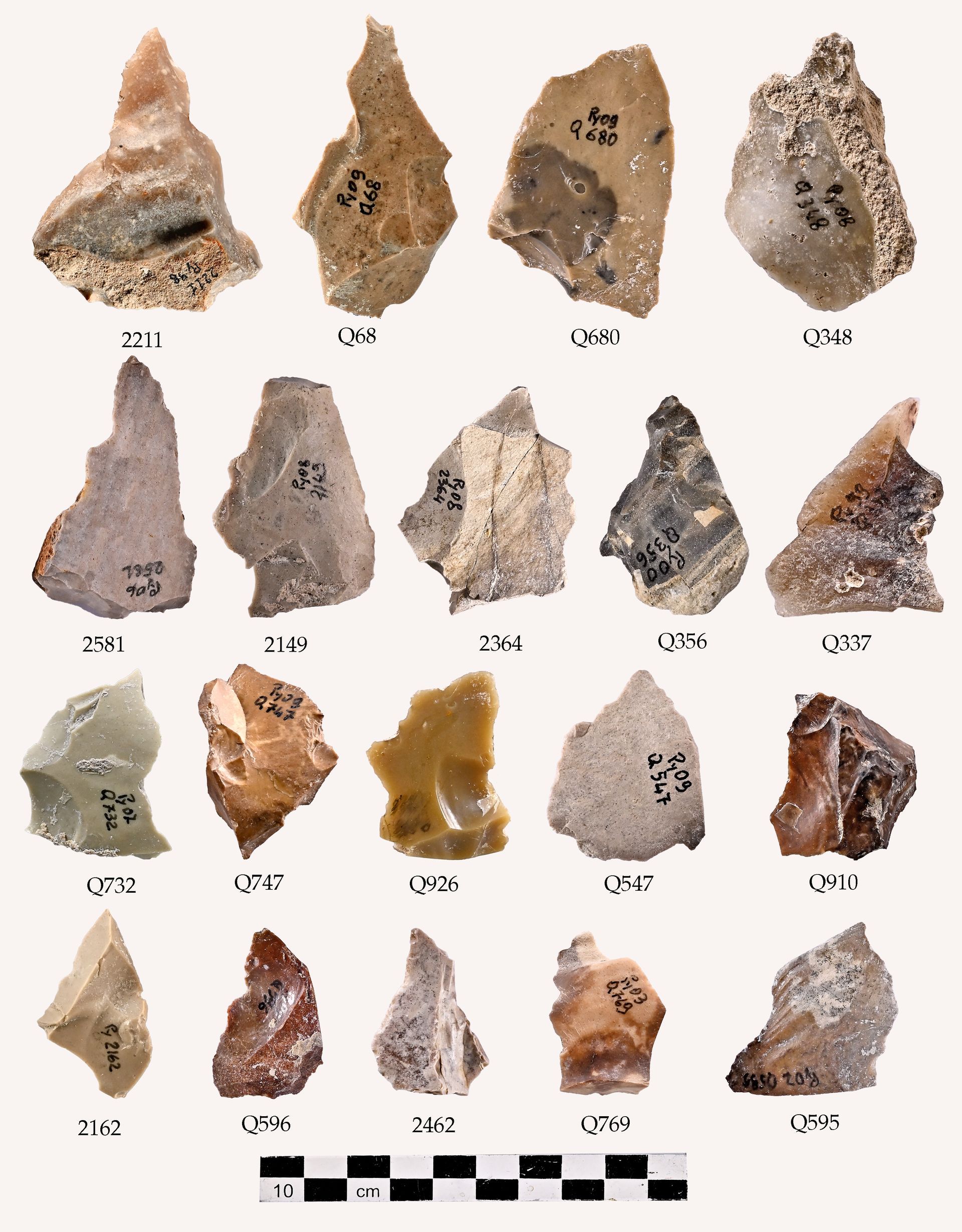
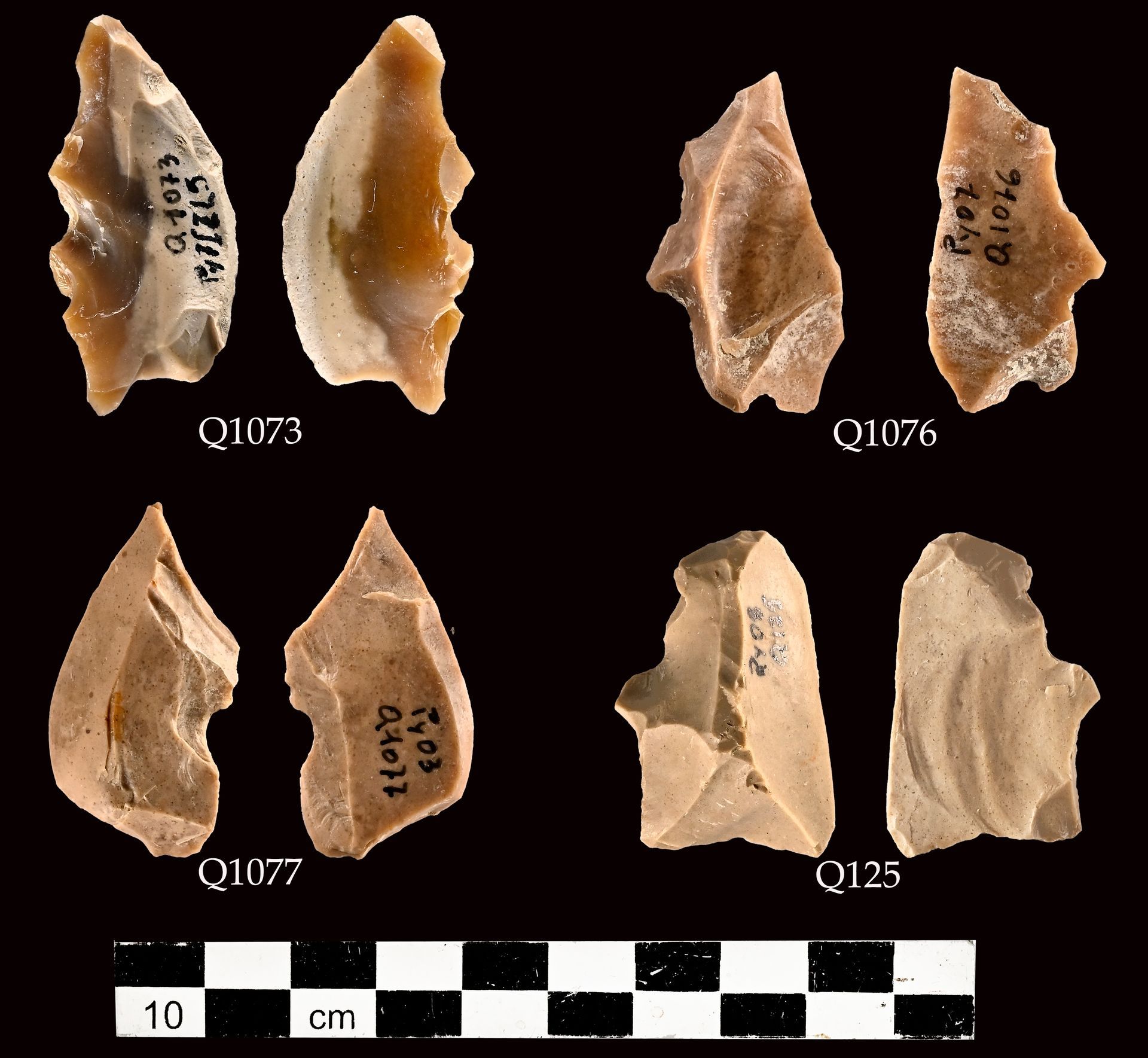
During the Acheulean-Yabrudian transitional period, the so-called
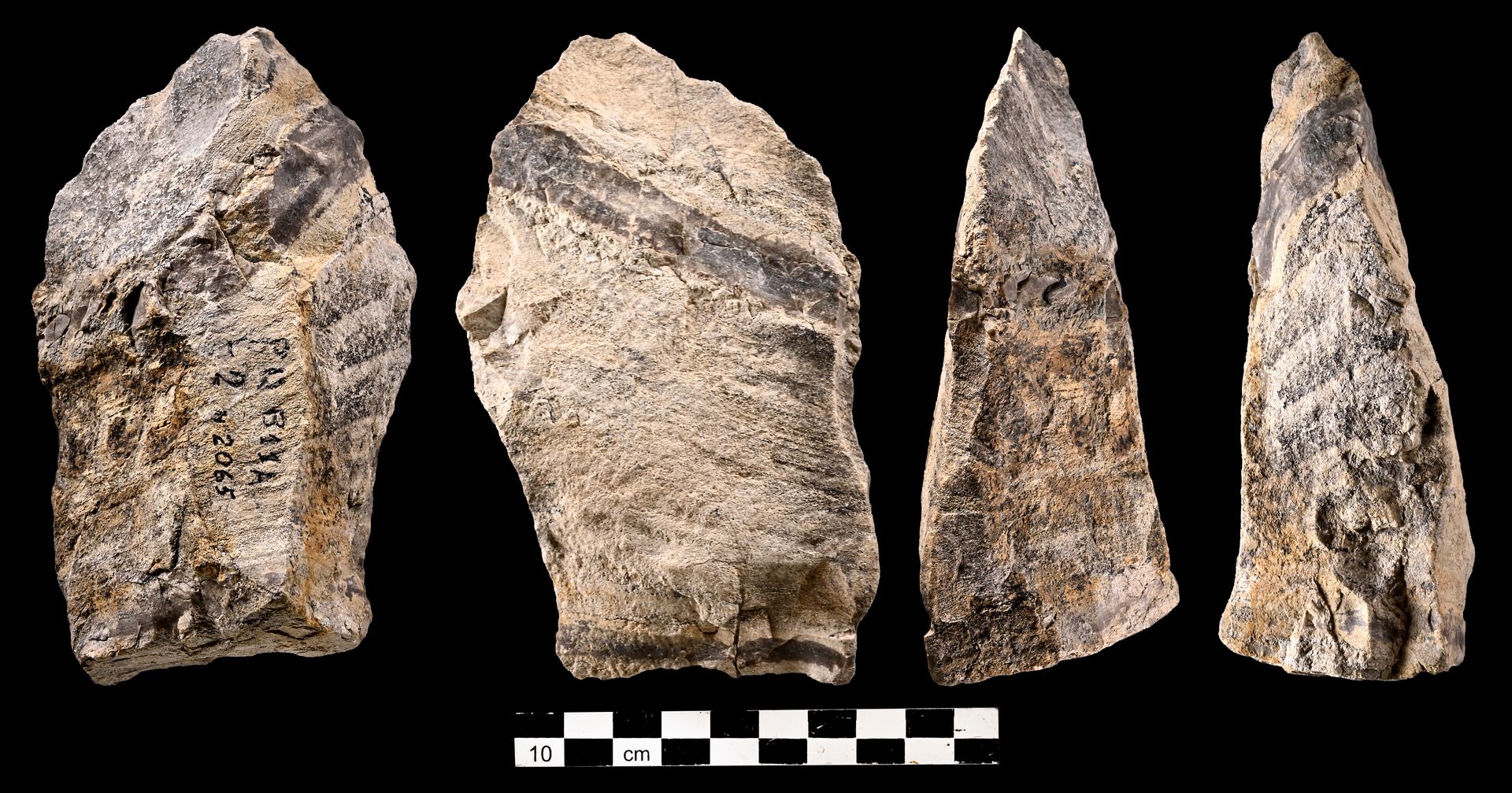
Quinson points appear to have been produced after the Tayacian period, although finds from Europe and the western Mediterranean suggest a different sequence and chronology. Most comparisons and related studies refer to the Transcaucasian Levantine coast, with preferences, as at Pyrgos/Mavroraki, for the use of quartz and quartzite pebbles with some examples of flint (Doronichev 2008). The rather repetitive repertoire is characterized by tools with a pyramidal or semi-pyramidal morphology on robust flakes with a roughly squared, prismatic, or rounded base, with only one edge of the point shaped by abrupt retouching.
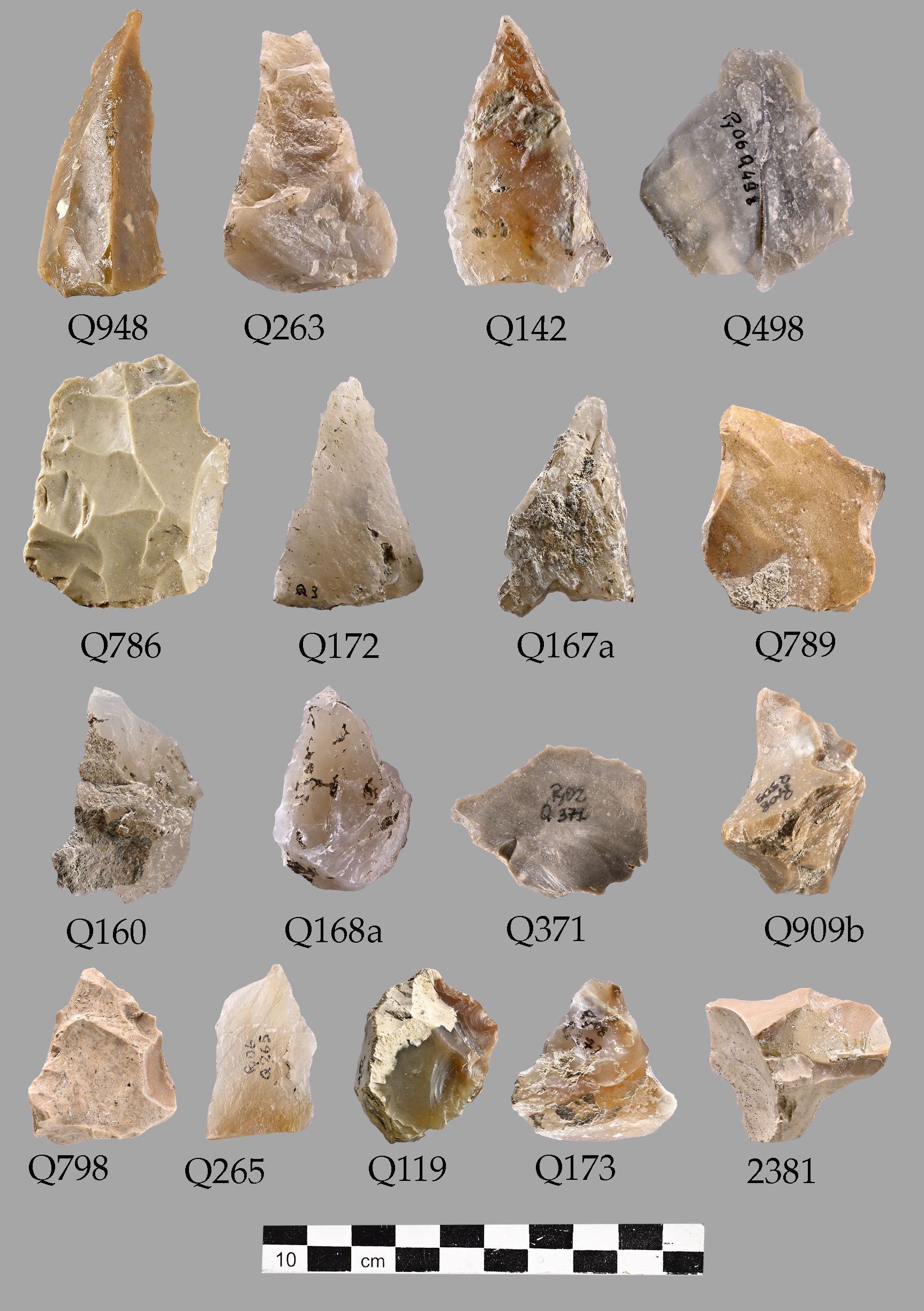
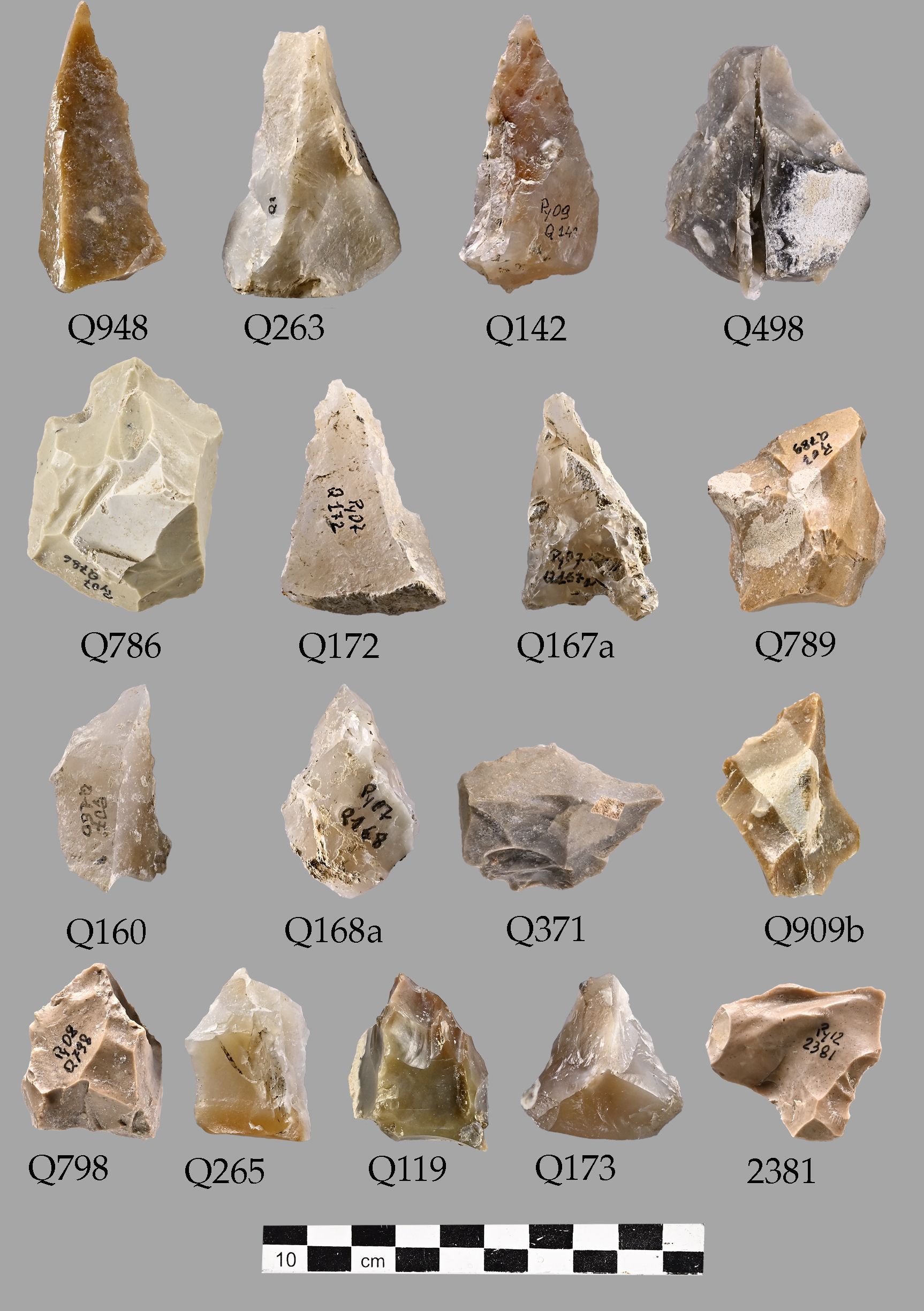
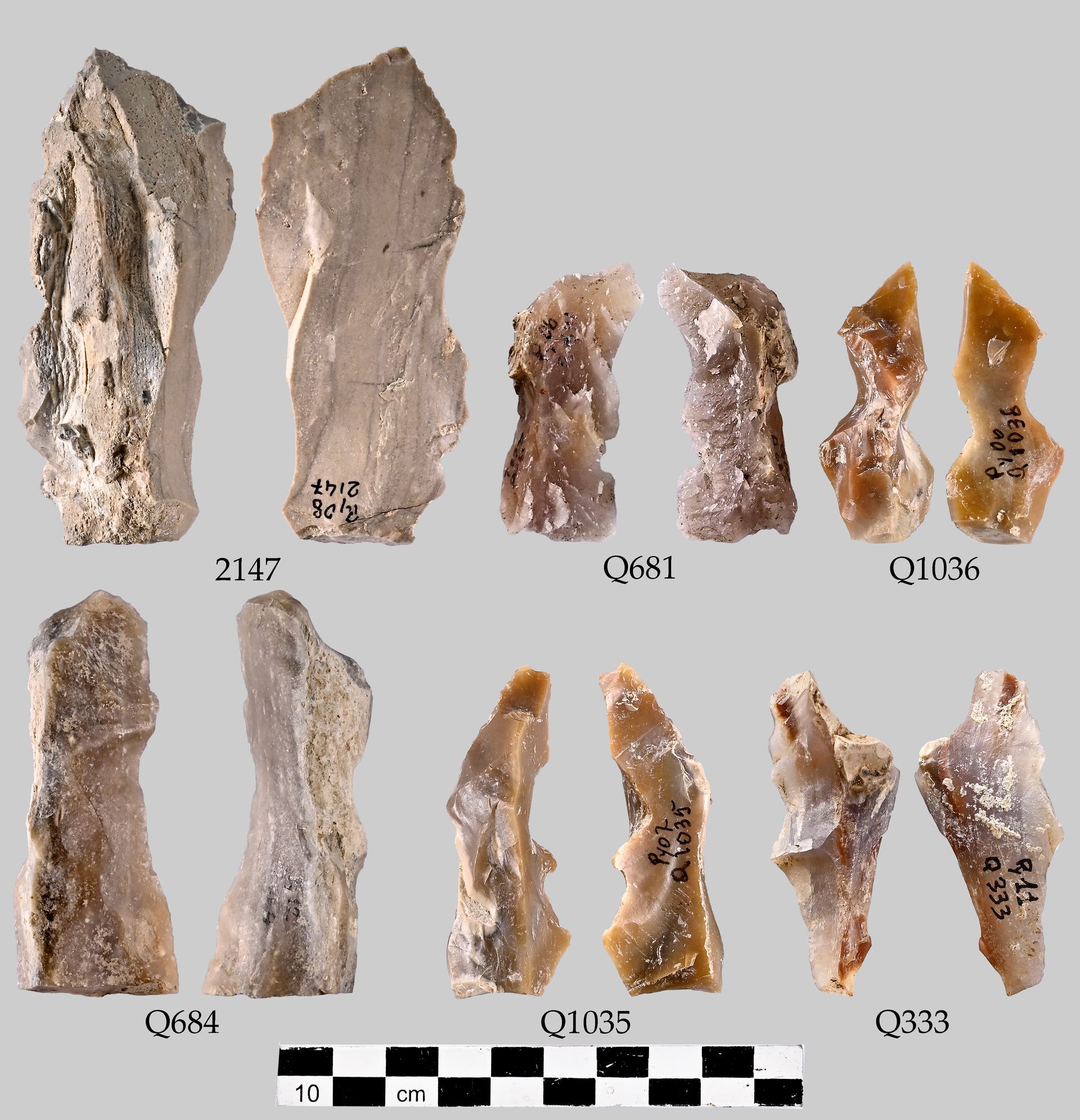
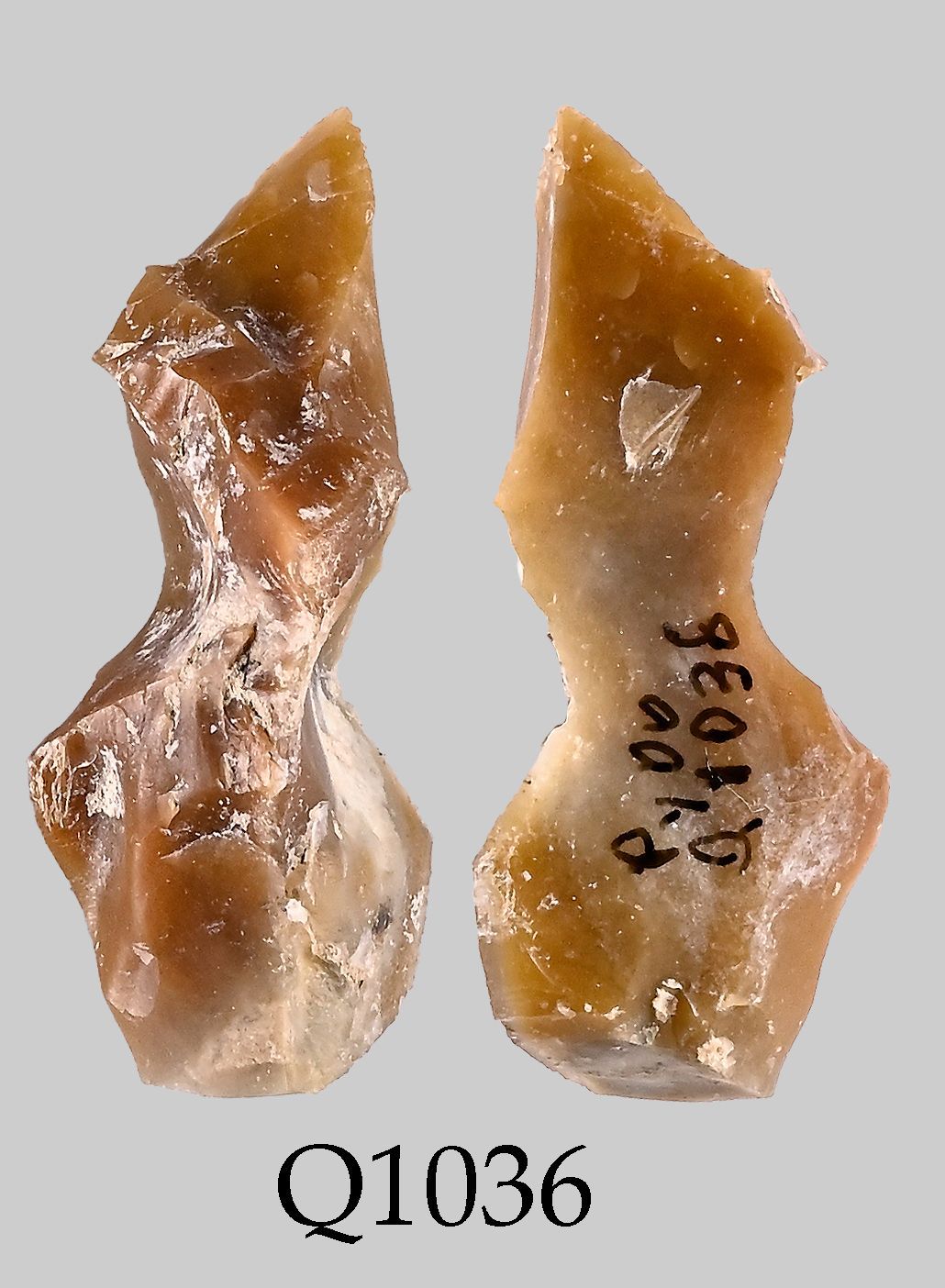
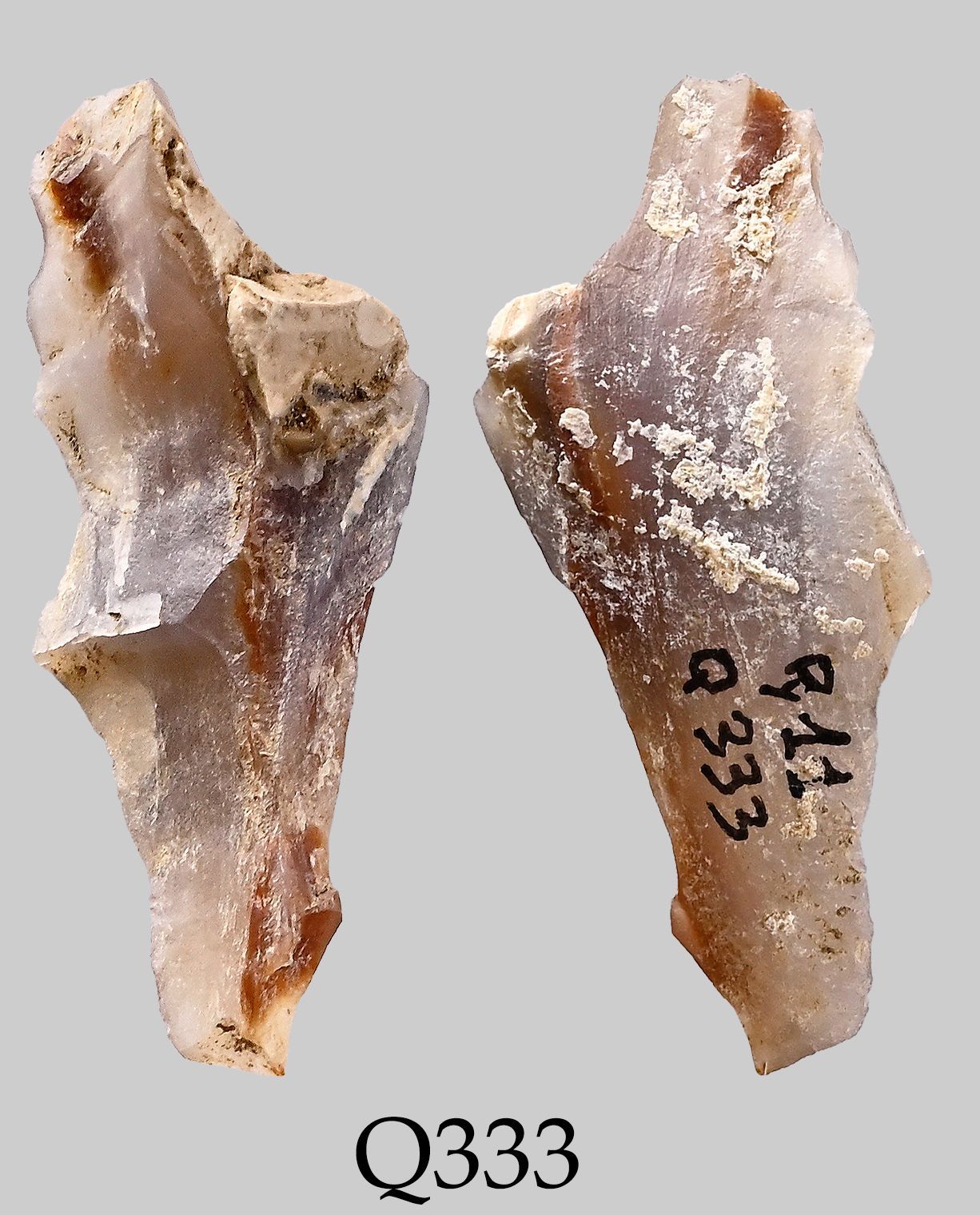
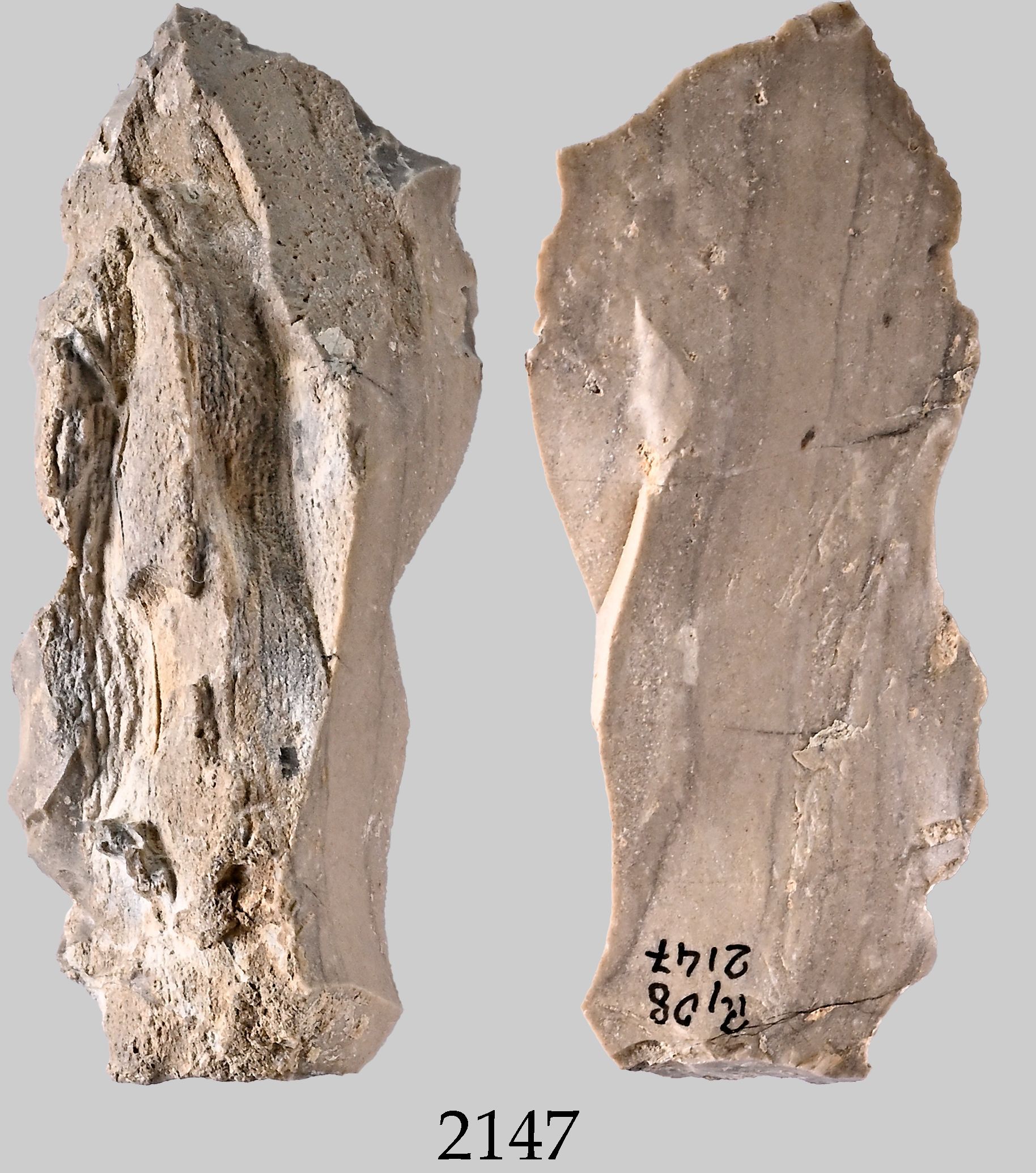
Furthermore, the end of the Lower Palaeolithic is associated with the first production of crude "overflowing blades", produced using pre-set, worked cores with a preferred hierarchical surface (Shimelmitz, Barkai, Gopher: 2016). Examples of quartz, quartzite, and flint pseudo-blades comparable to the Qesem and Tabun finds are also present in the Pyrgos/Mavroraki repertoire. They are thick, irregular, with a jagged profile, sometimes with intentionally preserved natural cortical support. Although approximate, the typology is quite defined, well-recognizable (Shimelmitz, Barkai, Gopher: 2011), and occupies an important position in the evolutionary sequence of blade invention, marking the end of the Lower Palaeolithic in the Levant (Gopher, Barkai: 2017).