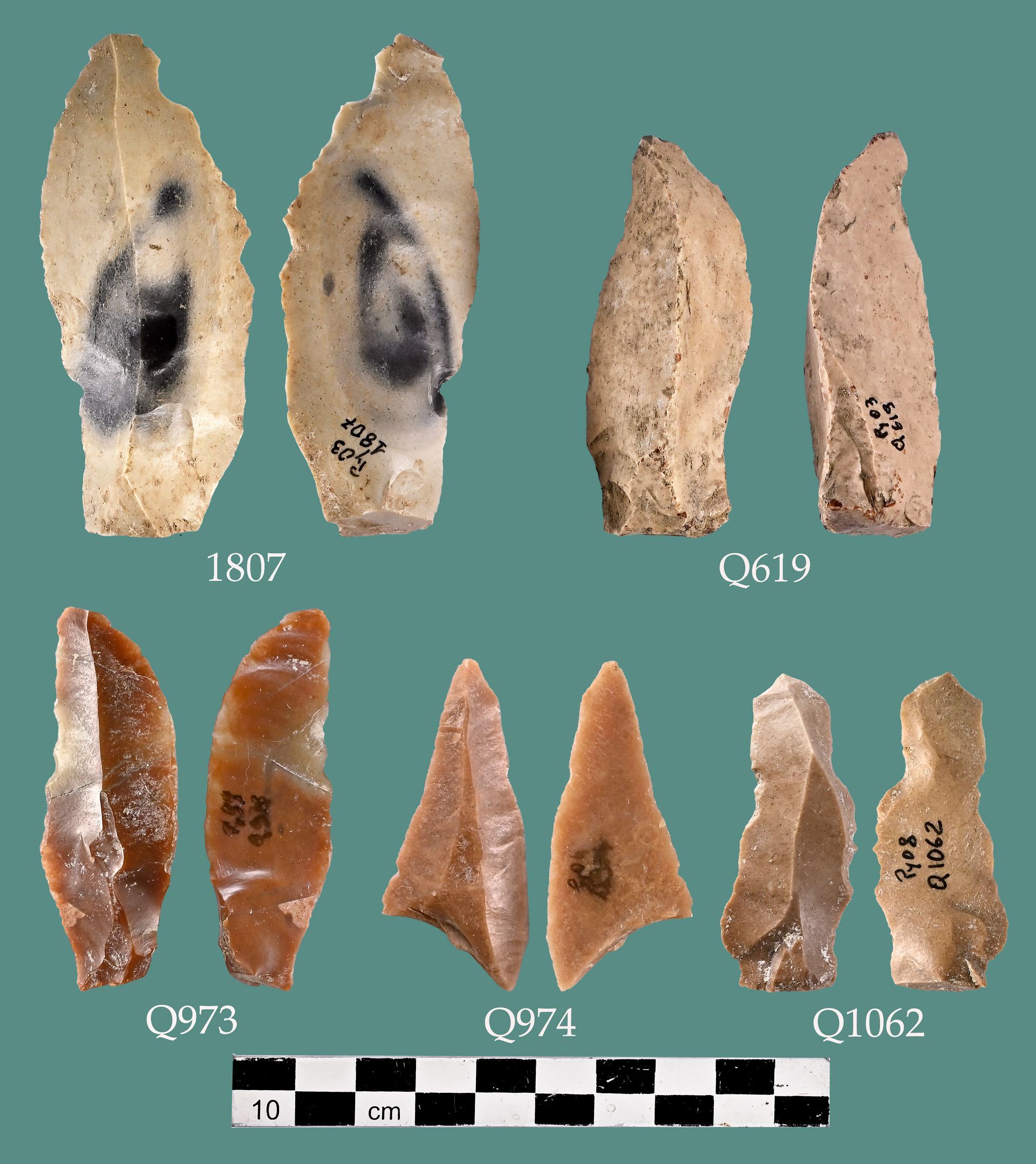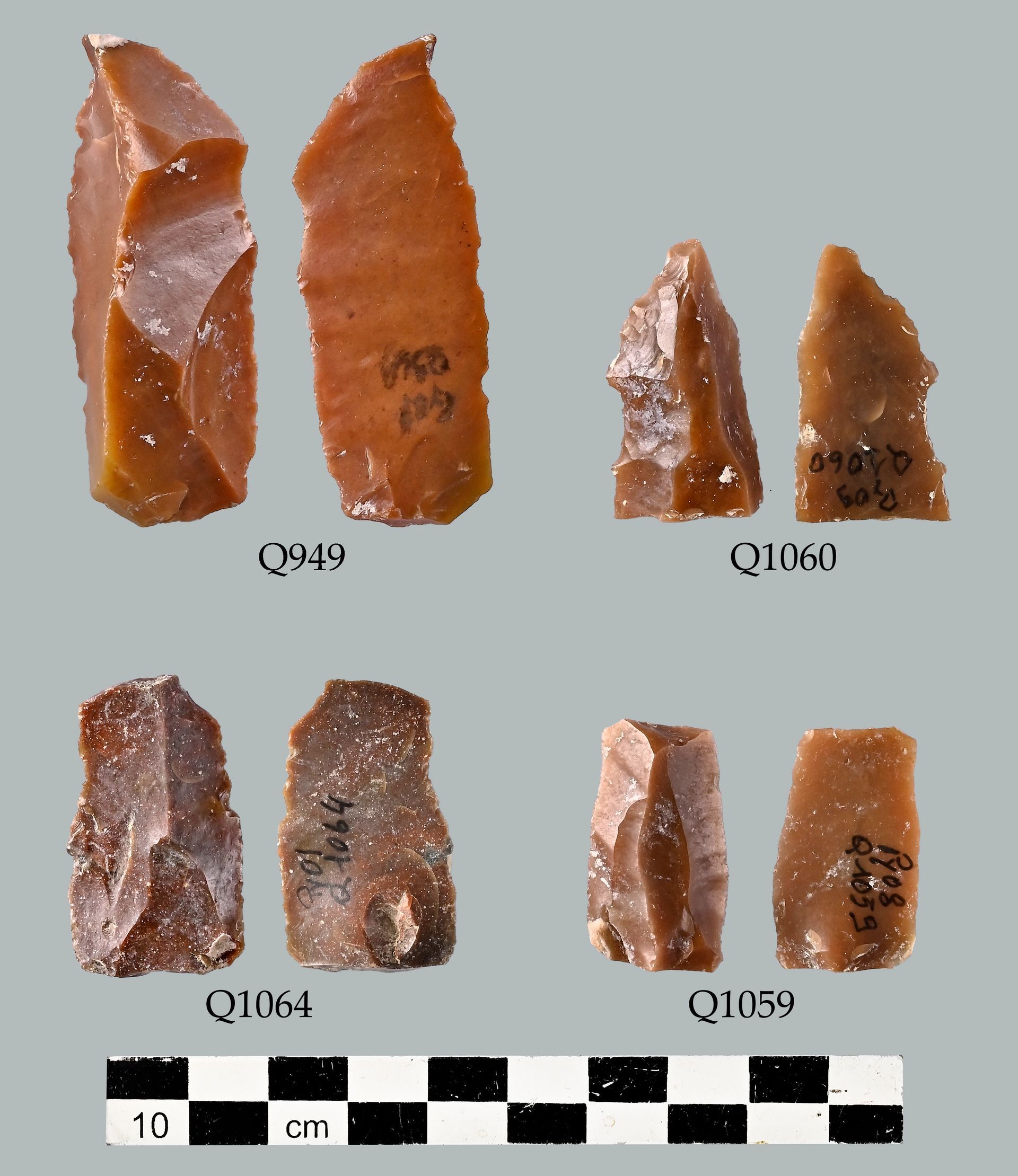
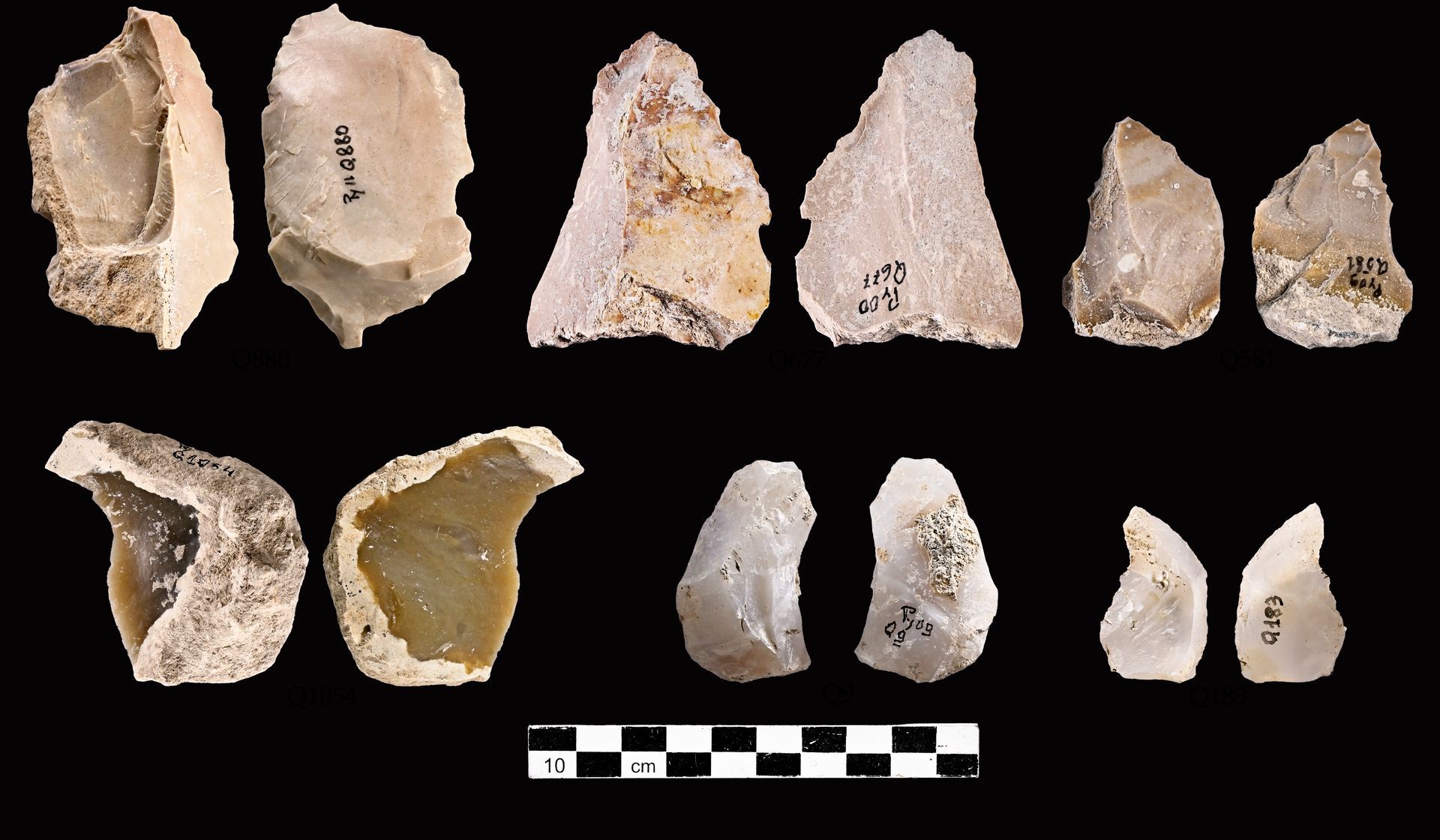
The Levallois technique is traditionally believed to have been invented by archaic humans in Africa around 300,000 years ago, then transferred to Europe and refined during the Mousterian period, around 100,000 years ago. This is because Levallois is considered a logical evolution of the bifacial tool making that spread with the migration of human groups from Africa to the Levant. However, there are numerous controversial sites in Europe and Asia whose dating is uncertain, while recent discoveries and research suggest a potentially independent origin from Africa. For example, in Armenia, the coexistence with Acheulean bifacial technology suggests a direct transition to Levallois, as well as a more direct diffusion into the Levantine regions.
During the transition from the Lower Palaeolithic to the Middle Palaeolithic, a succession of different technologies gradually transformed and reworked the Acheulean bifacial tradition, leading to a significant shift not only in technological history but also in the behavioural instinct toward experimentation and the search for new solutions to improve the production of tools essential to human survival. The reduction in the weight and size of artefacts also led to the recycling and reuse of old tools to meet new needs, producing thinner flakes and multifunctional edges. From this scenario, the Levallois technology emerged, a different concept of standardised production based on the study and preliminary chipping of pebbles or blocks of rock to create cores with hierarchical surfaces from which predetermined products such as flakes, blades, or points could be obtained.
Misliya and Tabun caves in Israel document the emergence of Levallois technology in the Levant. Misliya represents a key site for understanding this technological transition and the evolution of Levallois technology (Zaidner, Weistein-Evron 2020), given the discovery of a Homo sapiens jawbone of the Early Middle Palaeolithic level, which may indicate the African provenance of Levallois technology.
From Clactonian to Levallois. Some distinctive Clactonian tools found at Pyrgos/Mavroraki may support the possibility of a technological transition from the Clactonian Late Lower Palaeolithic to the Levallois Early Middle Paleolithic, demonstrating a shift from simple, opportunistic flake production to preconceived, highly controlled tool shaping (F. Audouze,1999; G. Monnier, 2006). The theory is based on the hypothesis that the Clactonian production of irregular tools, obtained by strong percussions of wide-angle striking platforms, could have suggested the invention of the Levallois industry, starting a technological evolution towards cognitive leap in artefact production, allowing for the creation of diverse and specialised tools usable in different environments.
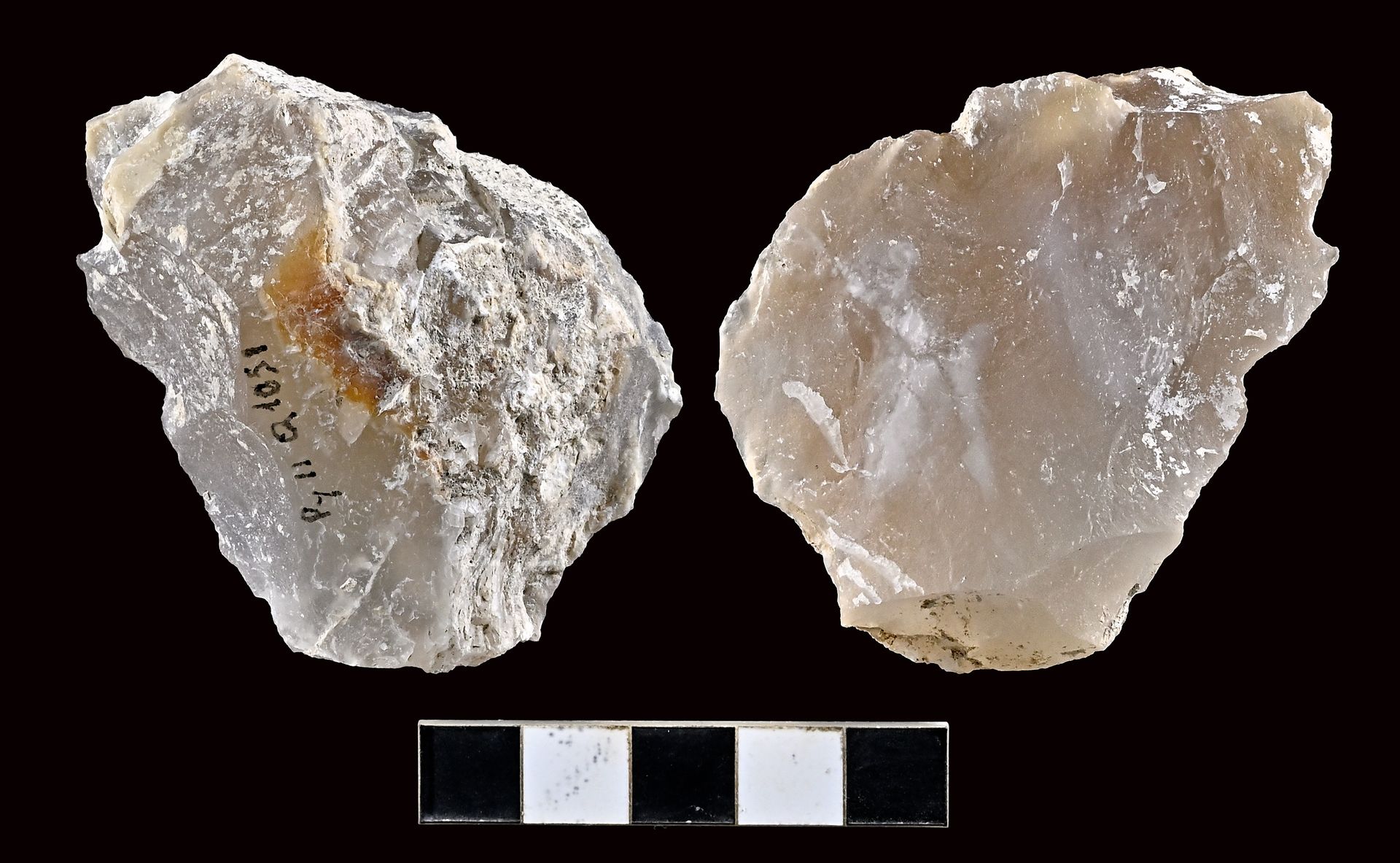
The gradual abandonment of bifaces characterizes the transition between the Lower Palaeolithic and the Middle Palaeolithic with the introduction of the hierarchical choice of cores and detachment points. A typical example is the dejetè quartz scraper no. Q1051, which blends the legacy of bifaces with the first hints of Levallois and the Quina retouch (Adler, Wilkinson et al. 2014), has strict comparisons with debordant examples from Tabun cave (Shimelmitz, Mina, Ronen, Kuhn, 2016 Fig. 2, 1)
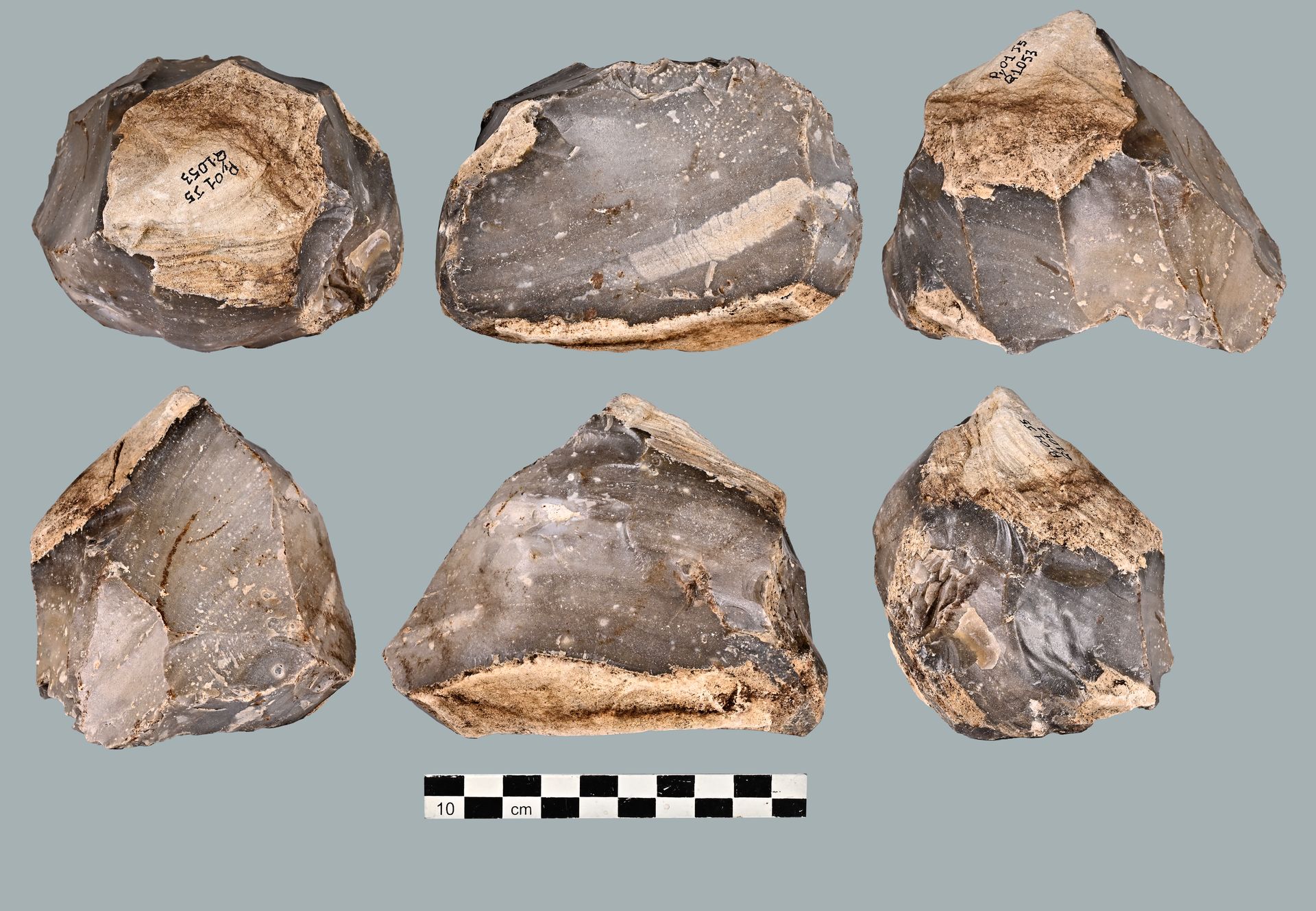
The exploited cores provide a complete history of Levallois production. Their presence at Pyrgos/Mavroraki testifies to the existence of a Middle Palaeolithic rest station, where tools were produced using cobble stones collected nearby.
- Core no. Q1053, weighing 890 grammes, is the largest flint specimen discovered in the site, providing educational information on the entire core preparation process and its subsequent circular exploitation in the production of flakes used as points, scrapers, blades, and backed knives. The two opposing, almost parallel platforms both preserve the cortex in the central portion corresponding to the distal and proximal parts of the core, while in the proximal area opposite the pyramidal apex, a large convex detachment of a preferential flake with a cortical back and a naturally serrated edge is evident. Furthermore, the perfectly preserved patina suggests that the core was not reused in later periods.
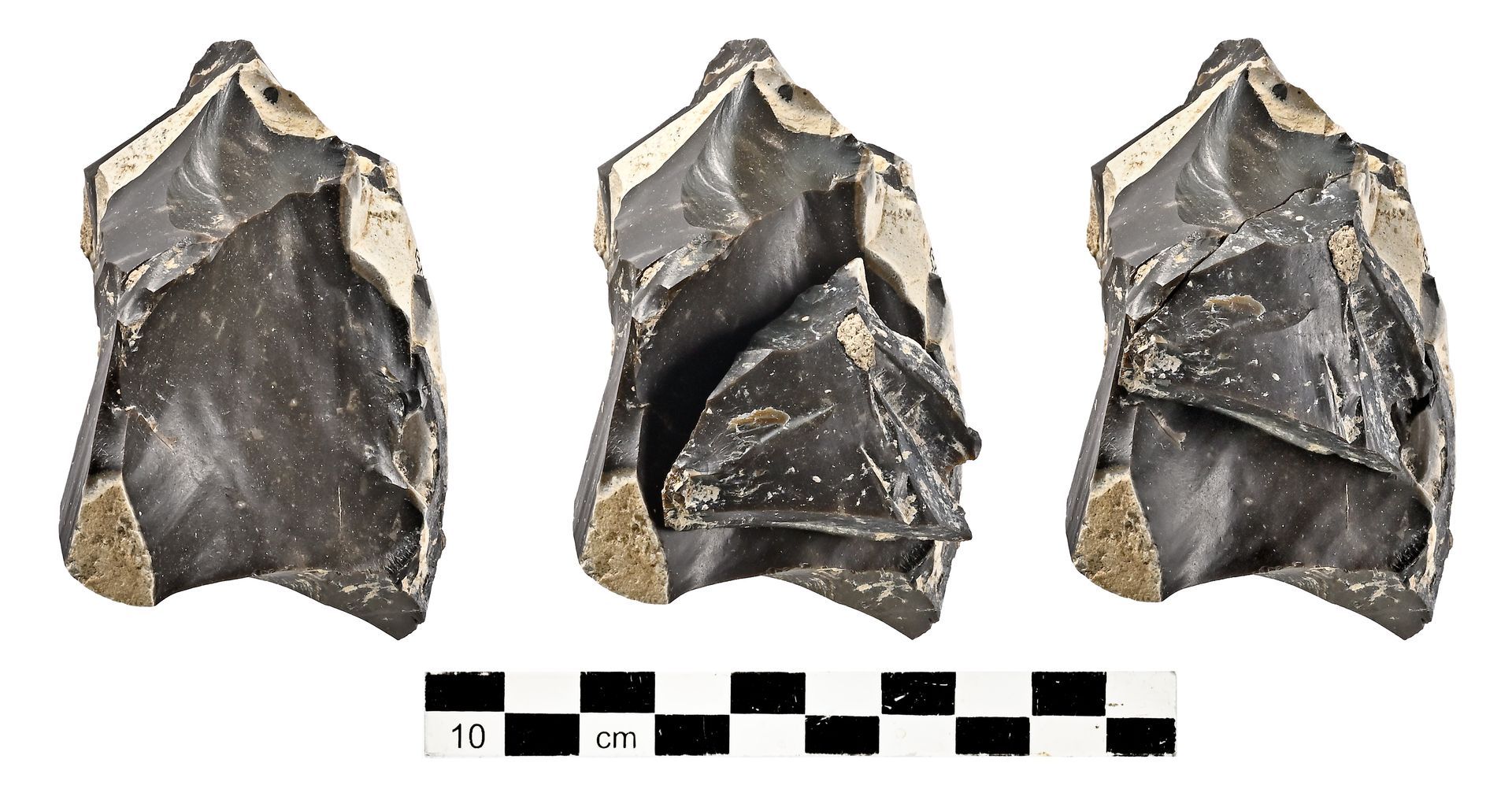
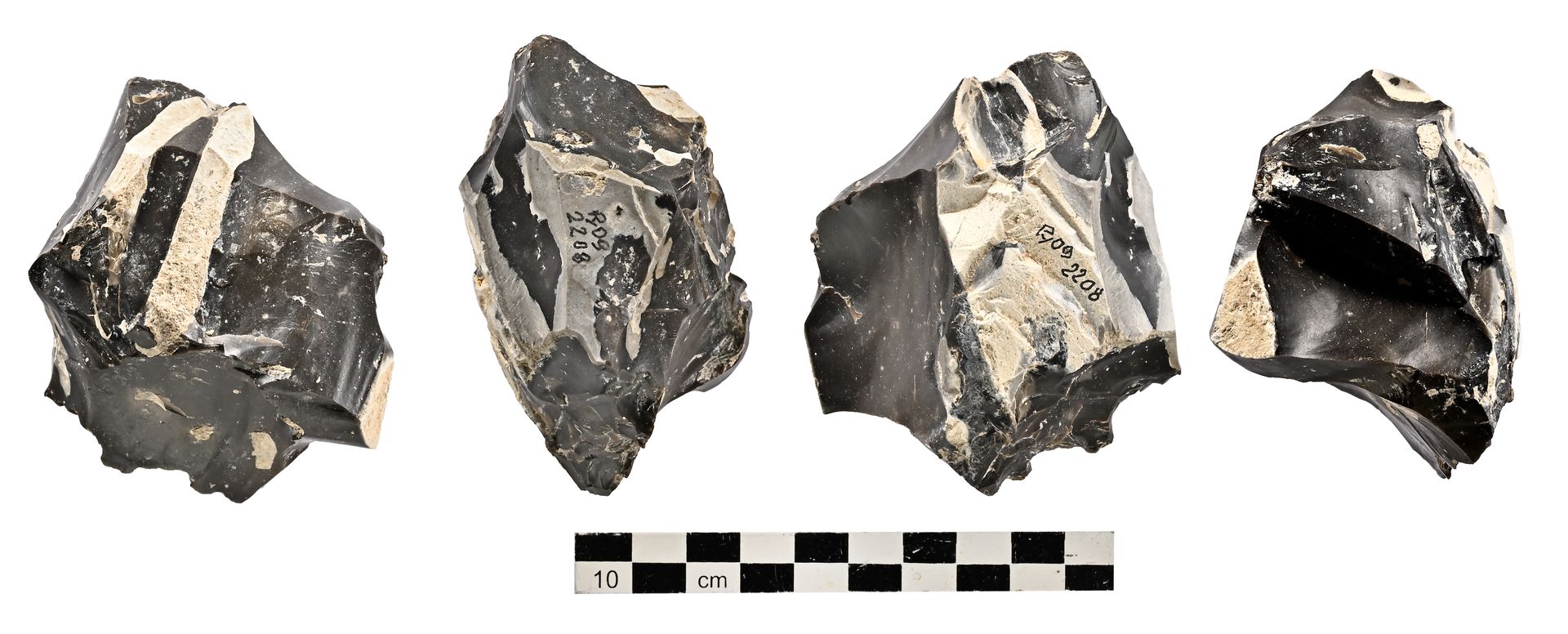
Core no. 2208 (198 gr.) is what remains of another large, prepared core with evident scars from the detachment of flakes and Levallois points, which shows an episode of refitting with flake no. Q524.
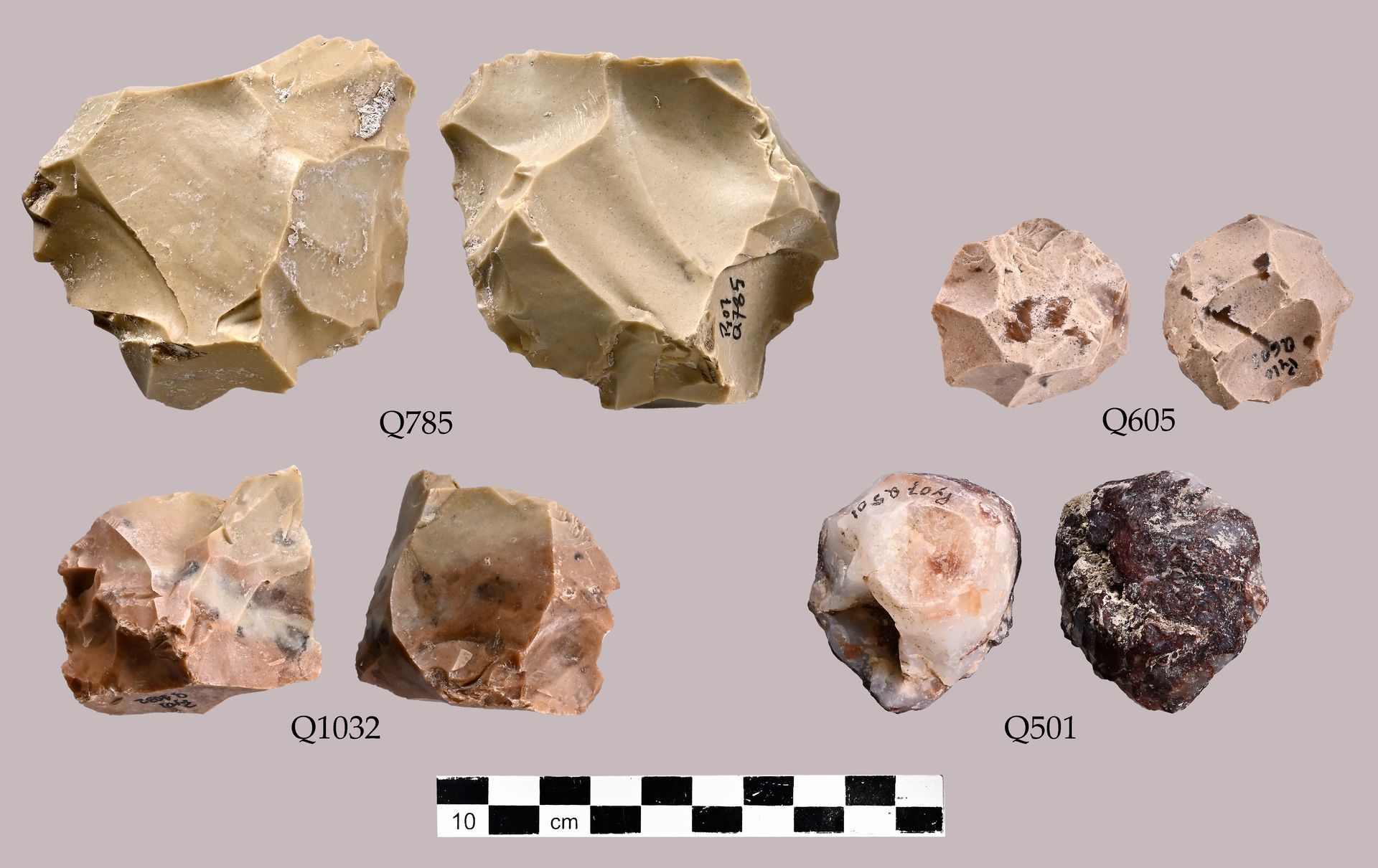
The most exploited and exhausted nuclei, typologically called "turtle nuclei", such as no. Q785, no. Q605, no. Q1032, and no. Q501, illustrate the progressive exploitation of the nucleus down to the smallest splinters.
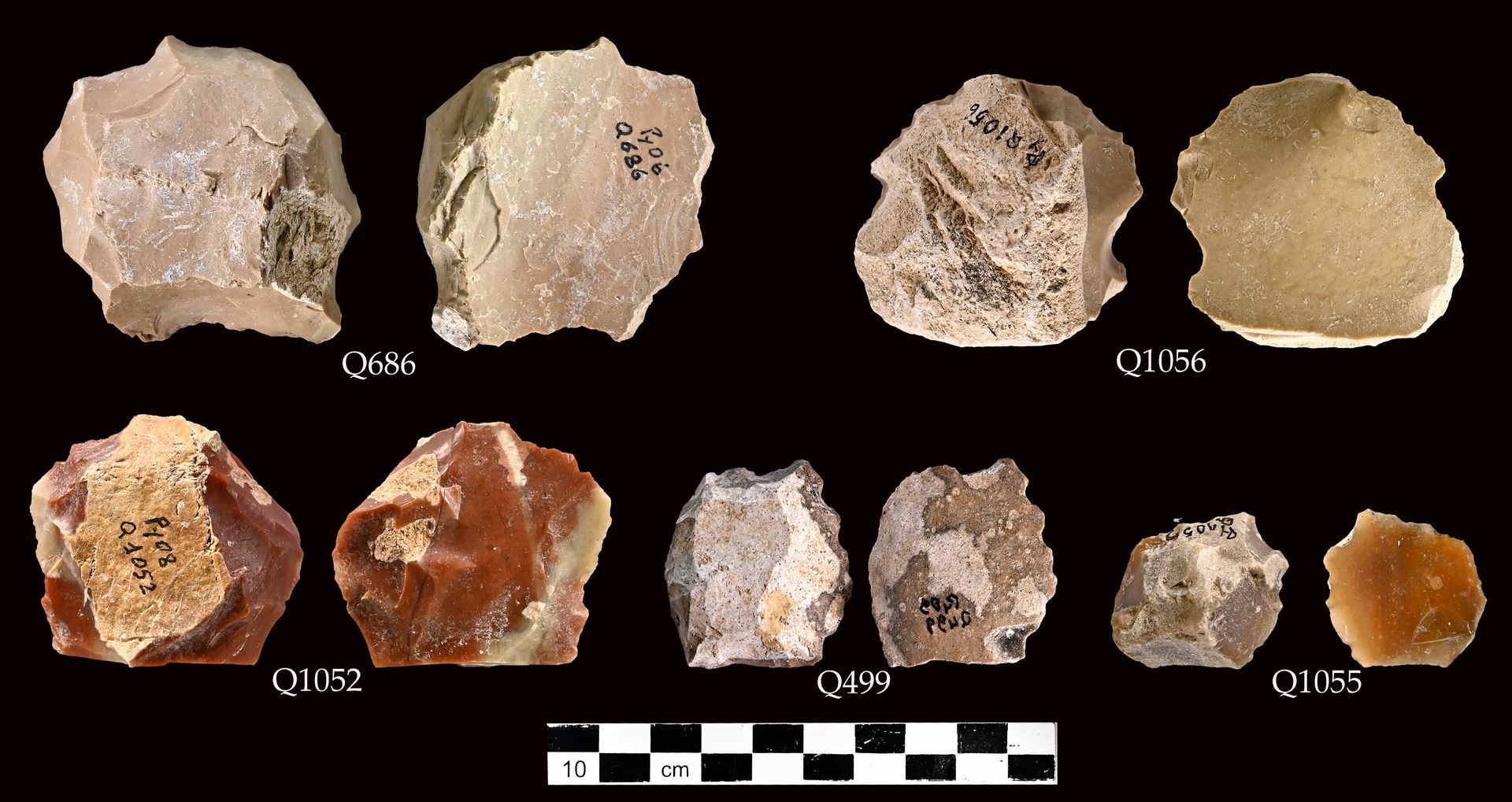
Another recurring evidence of the Levallois exploitation system is the detachment of a preferential cortical core flake, that, like nos. Q686, Q1056, Q1052, Q499, e Q1055, was often reused as centripetal scraper thanks to the jagged and denticulate edges left by the progressive around detachment.
Similarly, the exploited quartz cores highlight the bipolar system of reduction and detachment of the flakes through a systematic strategy like that adopted for flint.
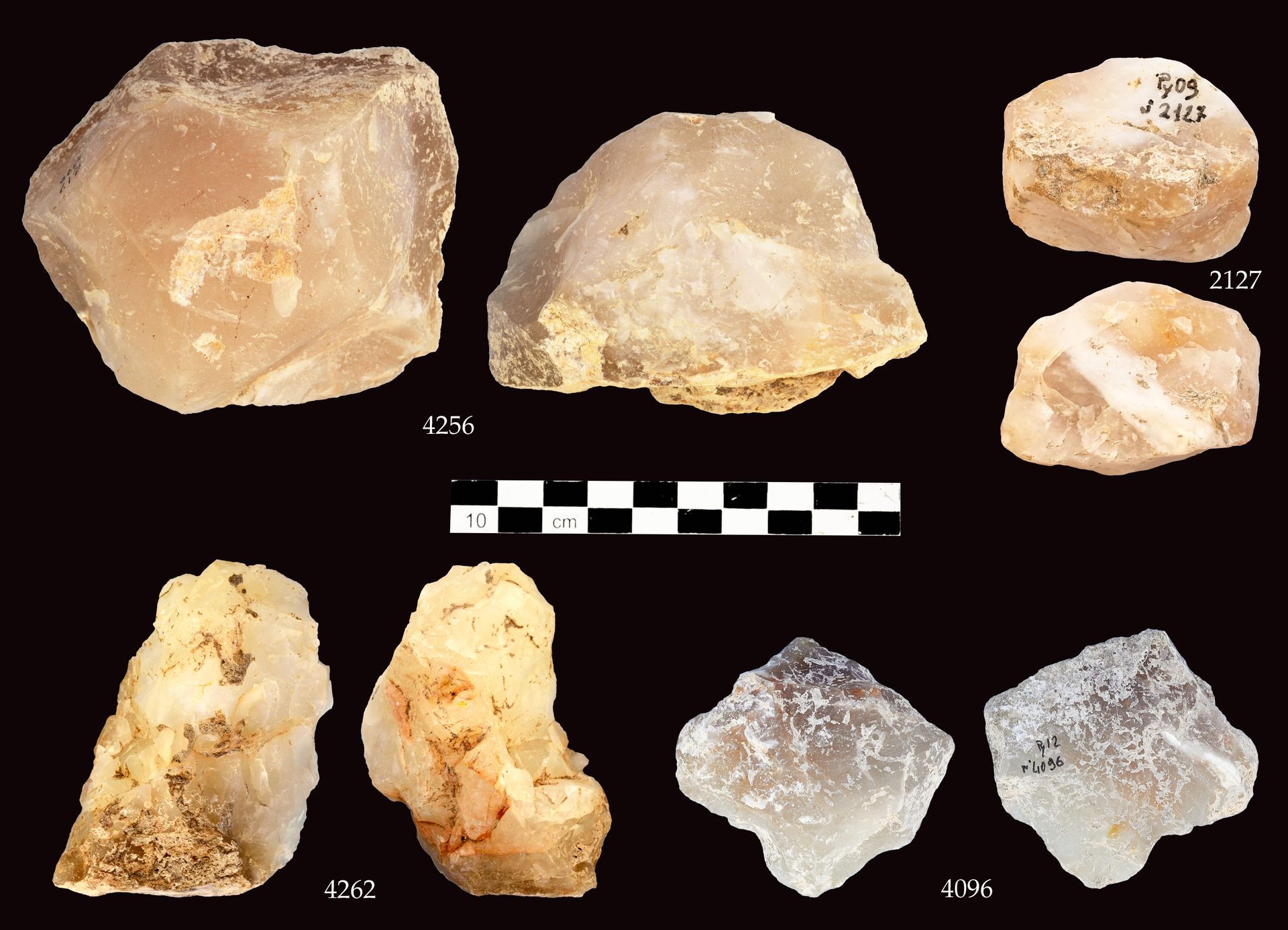
Quartz Levallois tools. Regarding the use of quartz as a material for the manufacture of sharp tools, since flint is the primary rock used at Levantine sites, while quartz is absent, we hypothesised that at Pyrgos/Mavroraki, the use and knowledge acquired in the processing of spheroids influenced the creation of smaller tools up to the Middle Palaeolithic, including the Levallois industry. The production of quartz tools is, in fact, part of a distinguishable complex that highlights a systematic and deliberate flaking strategy that continues uninterrupted from the Acheulo-Yabrudian period to the Levallois industry.
The first production comprises cortical and subcortical flakes, with a predominance of irregular prismatic shapes and roughly set morphologies with elongated, discoidal, and triangular flakes.
🔎
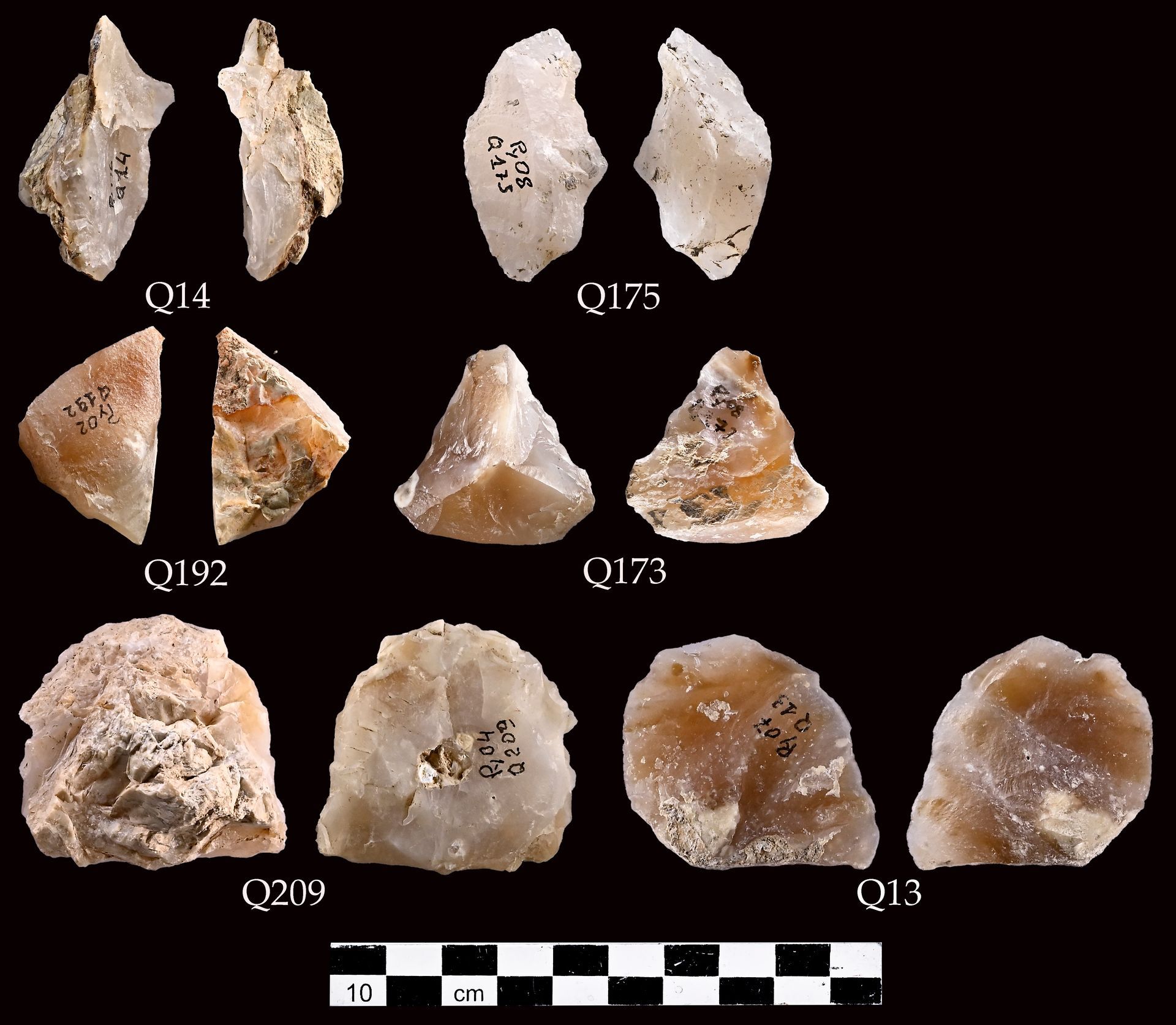
Although short-lived, the use of the Levallois technique of quartz tools demonstrates how human groups in Cyprus attempted to adapt the new technology to one of the most available and long-used local stones. Given the crystalline nature of quartz, the typical Levallois reduction strategy applied led to the production of various tool types, which find comparison in sites of the Upper Egypt Nile Valley (Wąs: 2010), in the Aegean at Stelida, Naxos (Carter et al.: 2016) and at Gökçeada (Erdoğu, Yücel, Demir: 2021). The most characteristic are the side scraper with cortex residues and the foliate with rarely retouched edges.
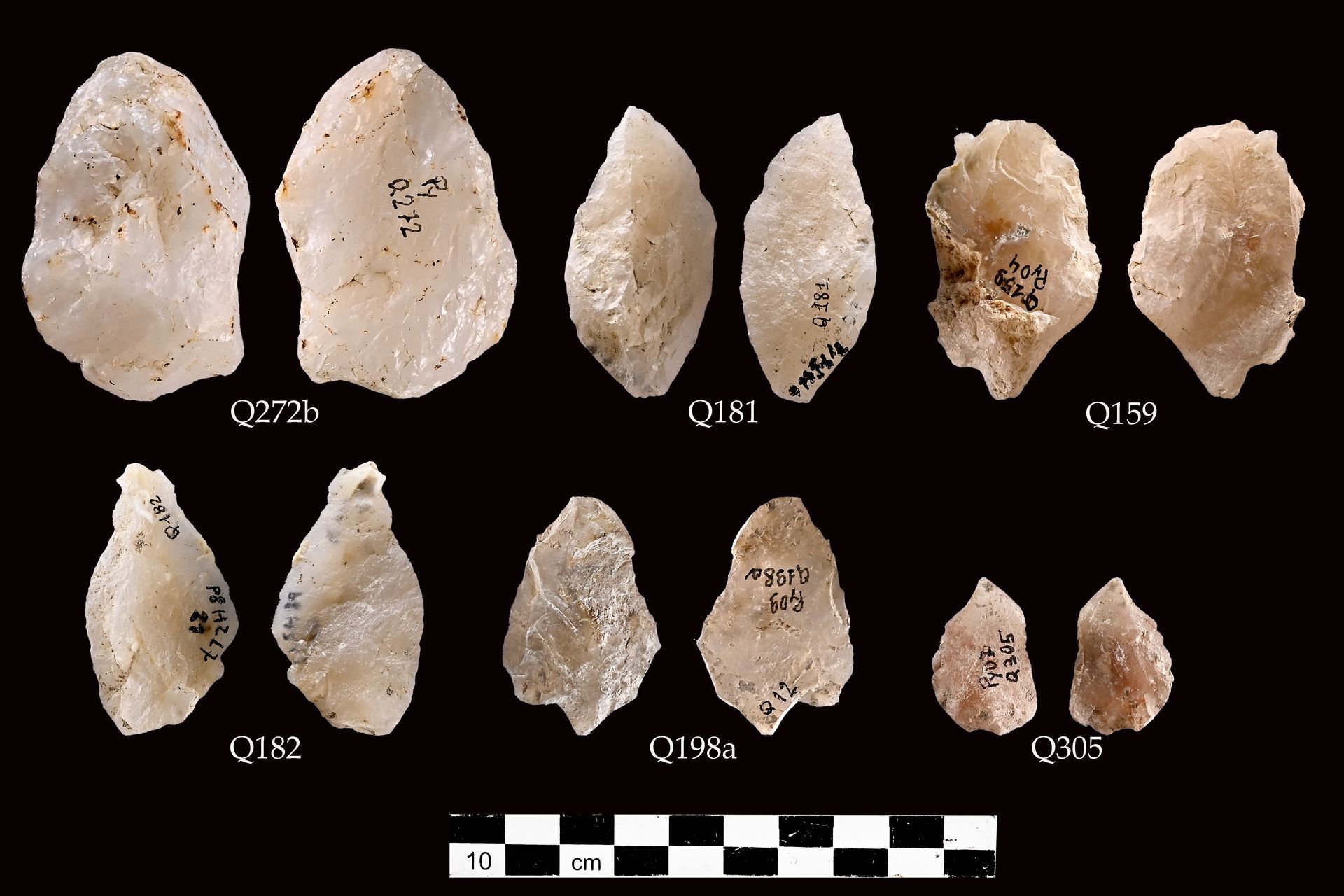
Triangular Levallois points obtained by detaching them from the core usually have a thicker side, opposite to the naturally sharpened one. Alternatively, they may have a natural side opposite to the modified one, with small adjustments to create a sharp edge or lateral serrations.
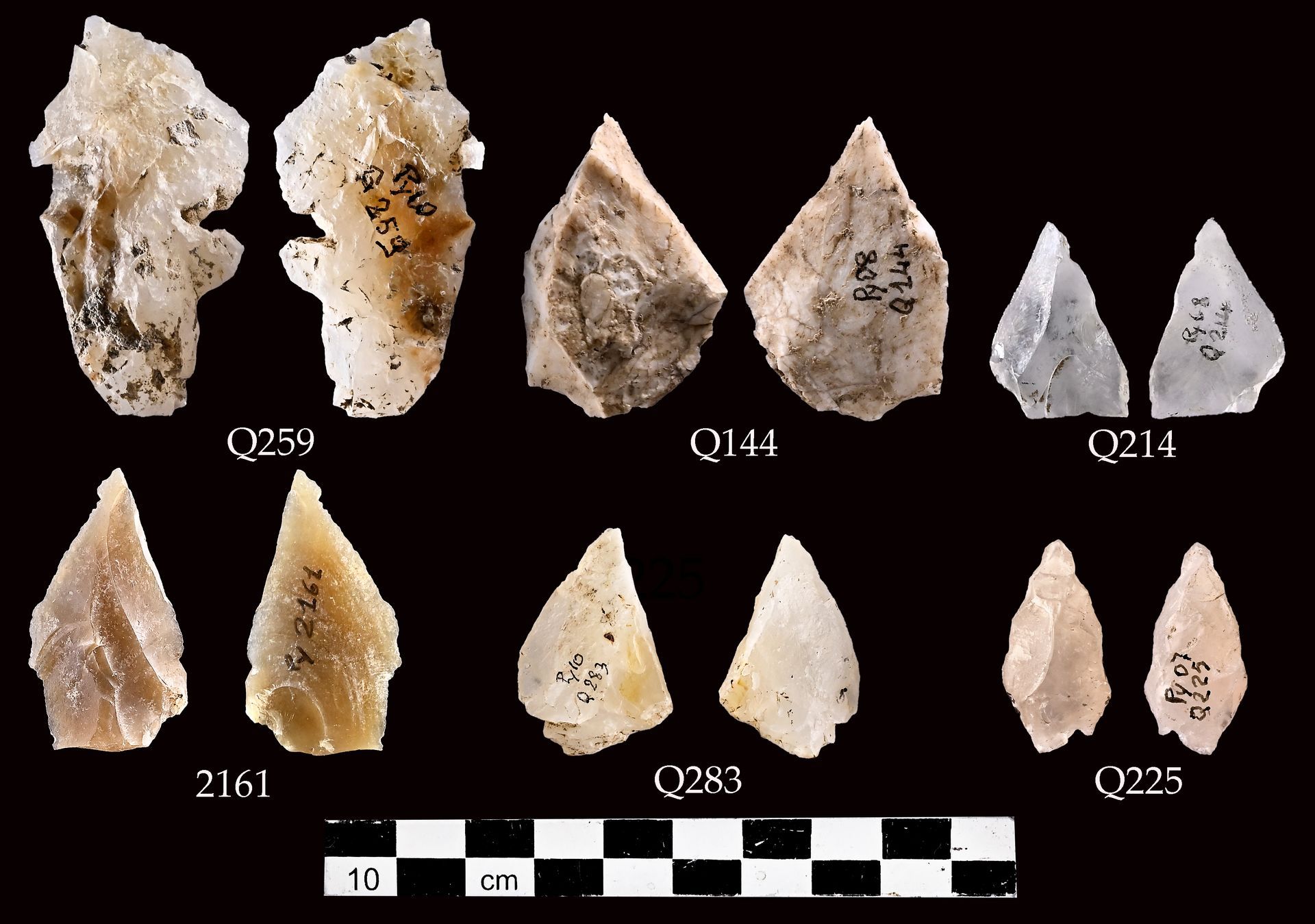
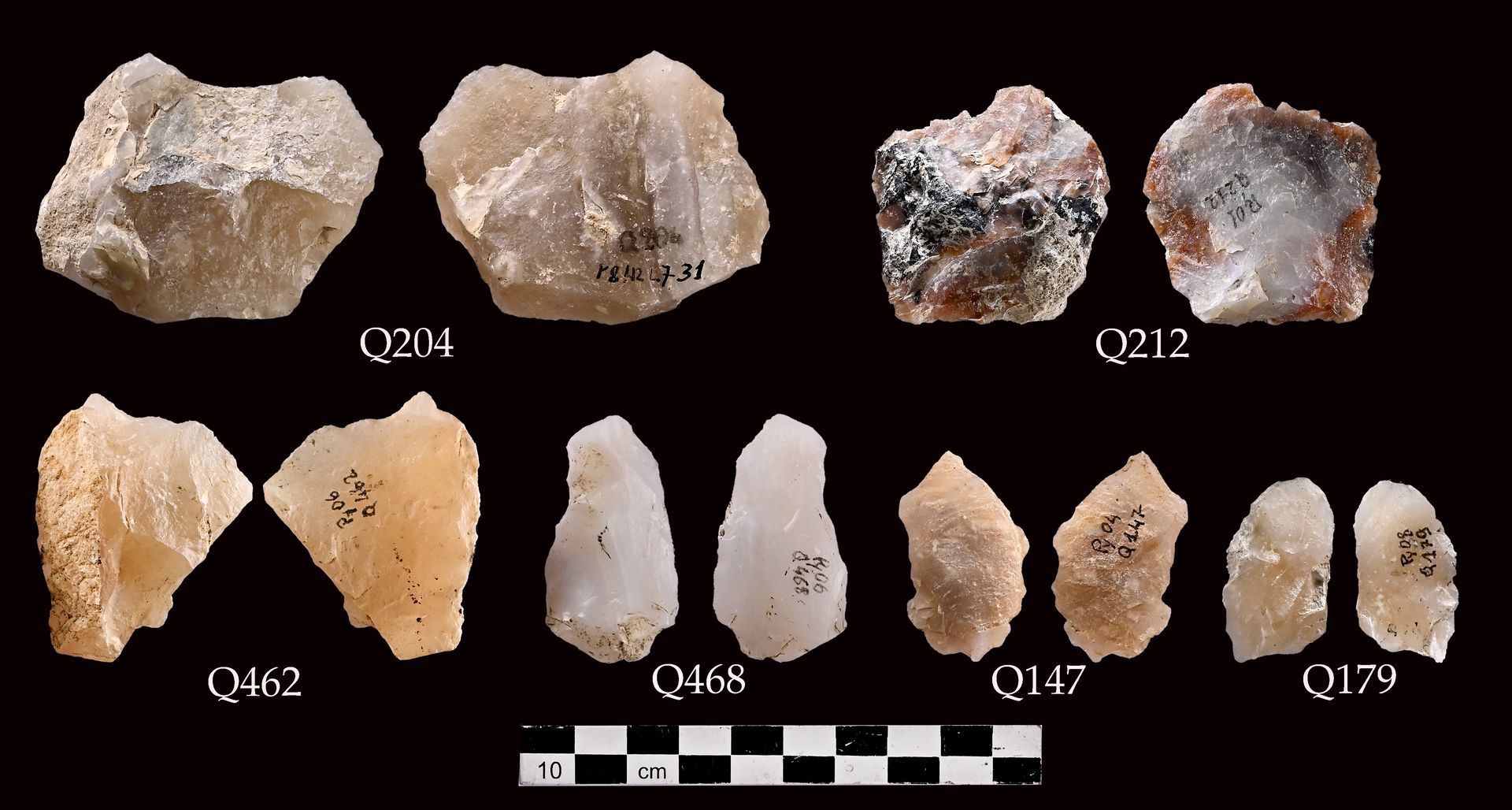
Quartzite Levallois tools. Starting from the examination of the Levallois cores found at Pyrgos/Mavroraki, we first noted the absence of quartzite cores in the material, which leads us to suspect that the quartzite artefacts were not worked on site, but rather where the lithic material was found (Agam, Finkel: 2024; Finkel, Barkai: 2024).
We also noted that the quartzite flakes obtained with the Levallois technique were thicker and heavier than the quartz and flint ones, resulting in rougher and less retouched artefacts, with overlapping areas and naturally sharp points and edges. These qualities are likely related to the texture and metamorphic nature of the quartzite, composed of sandstone mixed with quartz grains, involved in the same ophiolitic geological process that gave rise to the Troodos Mountains. Indeed, quartzite, like most of Cyprus' mineral blocks, is found on the fluvial terraces and streambeds that shape the island's distinctive geological landscape. In the Levant, however, the situation seems more complex, as quartzite is virtually unknown and the regions where its use is attested are the Negev and Syrian deserts, which have yielded only Lower Palaeolithic quartzite tools. This advises that, far from being a suggestion imported from the Levant, the alternative use of different rocks is a peculiarity of the human groups who frequented the Pyrgos/Mavroraki site in the late Lower and Middle Palaeolithic. The difference from Levantine sites is most evident in the employ of the Levallois technique, commonly used to work flint, while at Pyrgos/Mavroraki it is used interchangeably to make quartz, quartzite, and flint tools. This evidence suggests that the choice of materials and flaking techniques at Pyrgos/Mavroraki is a rare evidence of behavioural flexibility combined with a thorough understanding of the different properties of materials.
Quartzite objects produced by the Levallois technique are logically less fragile and have a different structure than those made of quartz and flint.
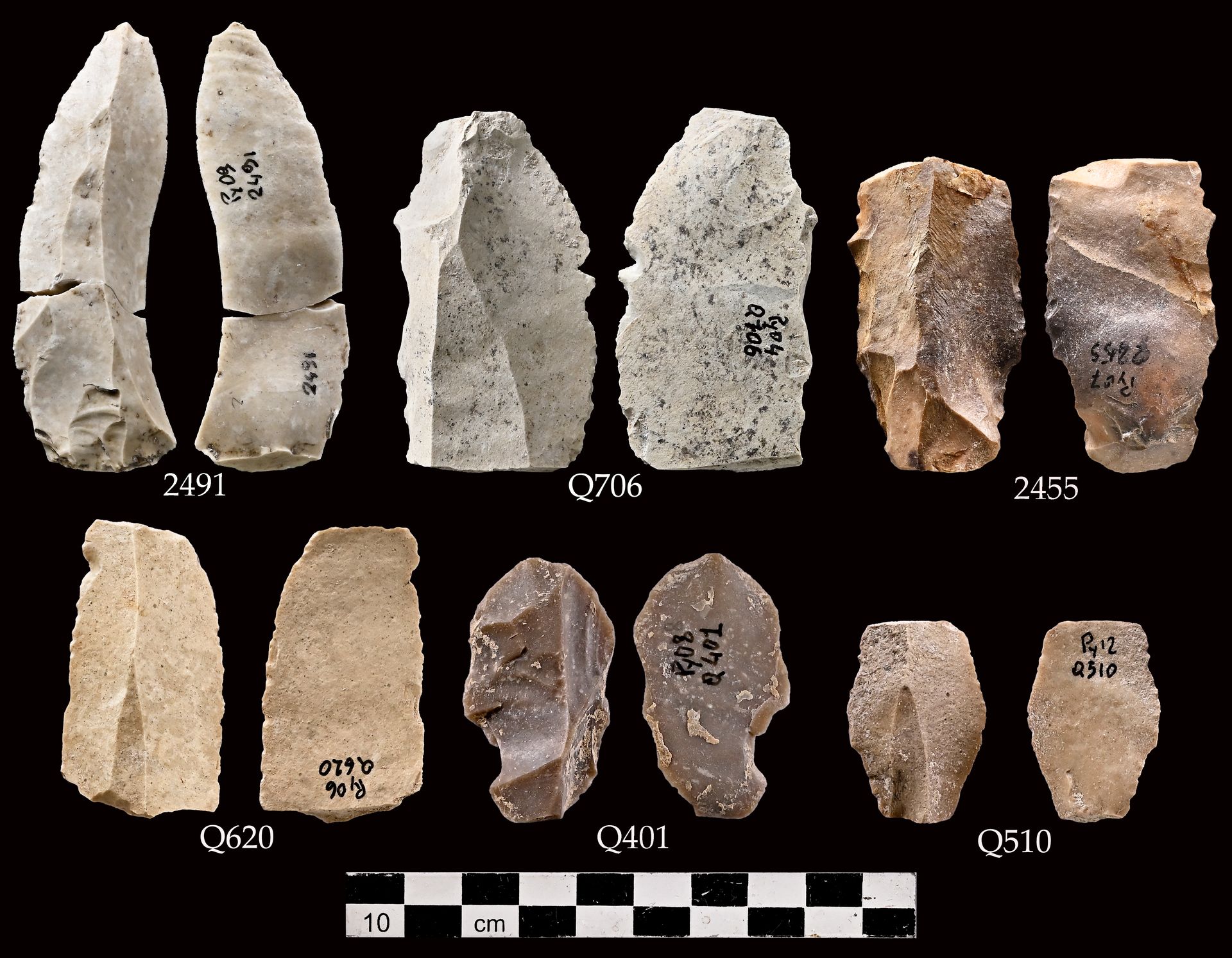
The presence of multiple types of scrapers (nos. Q31, Q27, Q858, 2279, Q517, Q363, Q367), as well as other tools such as points (nos. Q714, Q332, Q809, 2342, Q535, Q405, 2234)and blades (nos. 2491, Q706, 2455, Q620, Q401, Q510), demonstrate a complex and diverse tool set, even in the quartzite production.
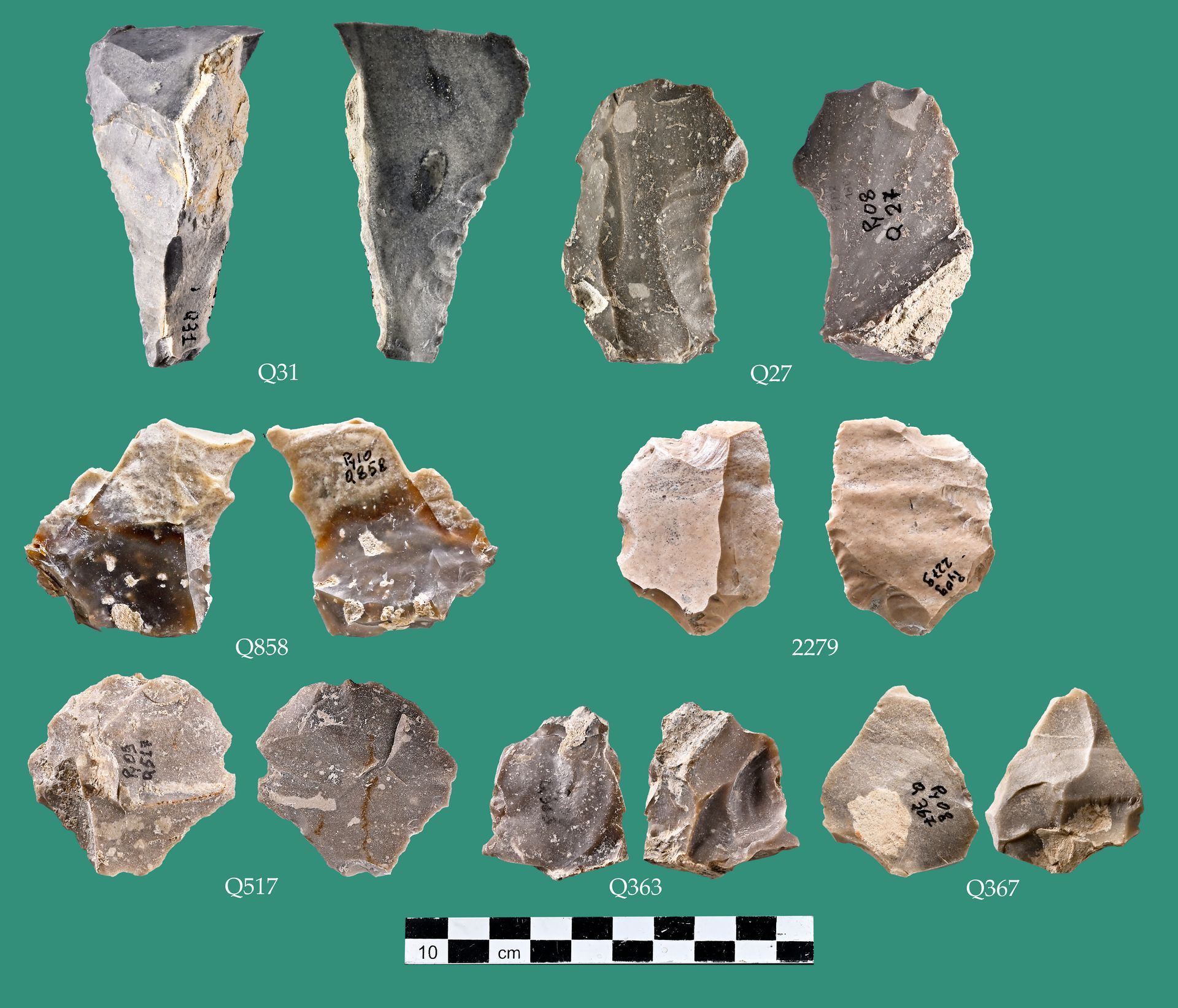
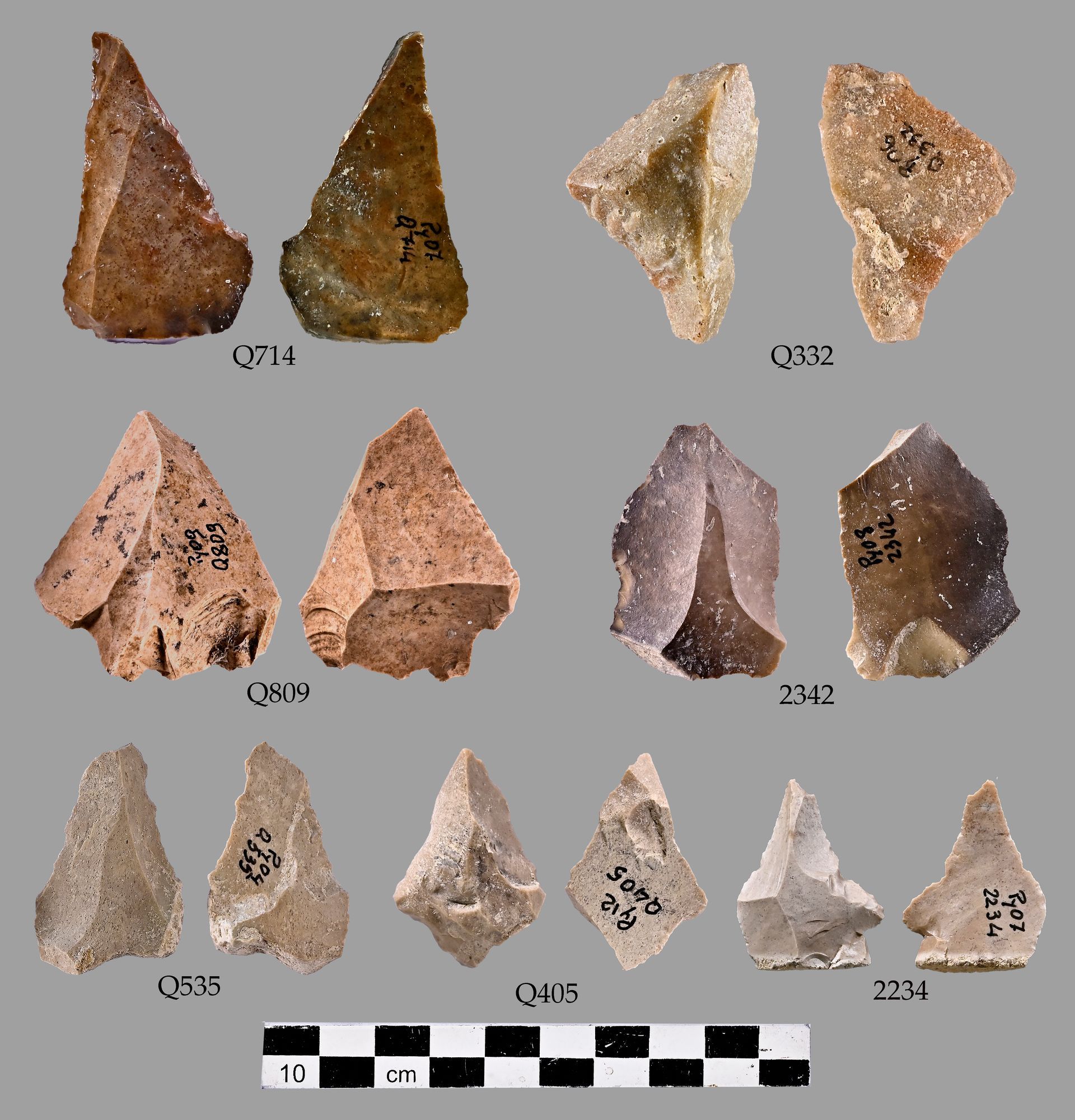
Flint Levallois tools. Although flint was one of the most used rocks for toolmaking in the Late and Middle Palaeolithic, we know that the first tools were made from a variety of available rocks, such as quartz, chalcedony, quartzite, and basalt, before flint became the dominant material in lithic assemblages.
The presence of a large repertoire of quartz and quartzite tools at Pyrgos/Mavroraki during the Acheulean-Yabrudian transitional period suggests that the preferred choice for flint occurred gradually during the first half of the Middle Palaeolithic, becoming consolidated with the adoption of the Levalloisian industry.
The study of Tabun Cave Unit IX offers an ideal comparative framework for the Pyrgos-Mavroraki flaked flint assemblage, providing one of the clearest reconstruction of Lower Middle Palaeolithic Levallois point production in the Levant (Shimelmitz & Kuhn 2013). Tabun IX is dominated by a recurrent unidirectional-convergent Levallois system, specifically geared toward the production of triangular Levallois flakes and points with a well-defined Y-shaped scar pattern. These points exhibit extremely low cortical coverage (96.3% cortex-free), indicating intensive preparation of the core surfaces prior to removal. Their triangular cross-sections (64.8% of samples) reflect highly standardised knapping within a single reduction sequence that simultaneously generated flakes, blades, and elongated points using different core sectors. This demonstrates a flexible yet controlled operational chain, in which the convexities of the core were maintained through the removal of protrusions and lateral shaping, rather than through lateral preparation alone. The resulting products therefore exhibit a broad predetermination and uniformity, with repeated cycles of rejuvenation that appear characteristic of the Early Levallois industry of the Middle Palaeolithic and suggest a shared technological background with sites in the Levant, which had already achieved a high degree of standardization, recognizable in the dorsal scar and tip morphology, supporting the hypothesis of a direct connection between Cyprus and the Levant.
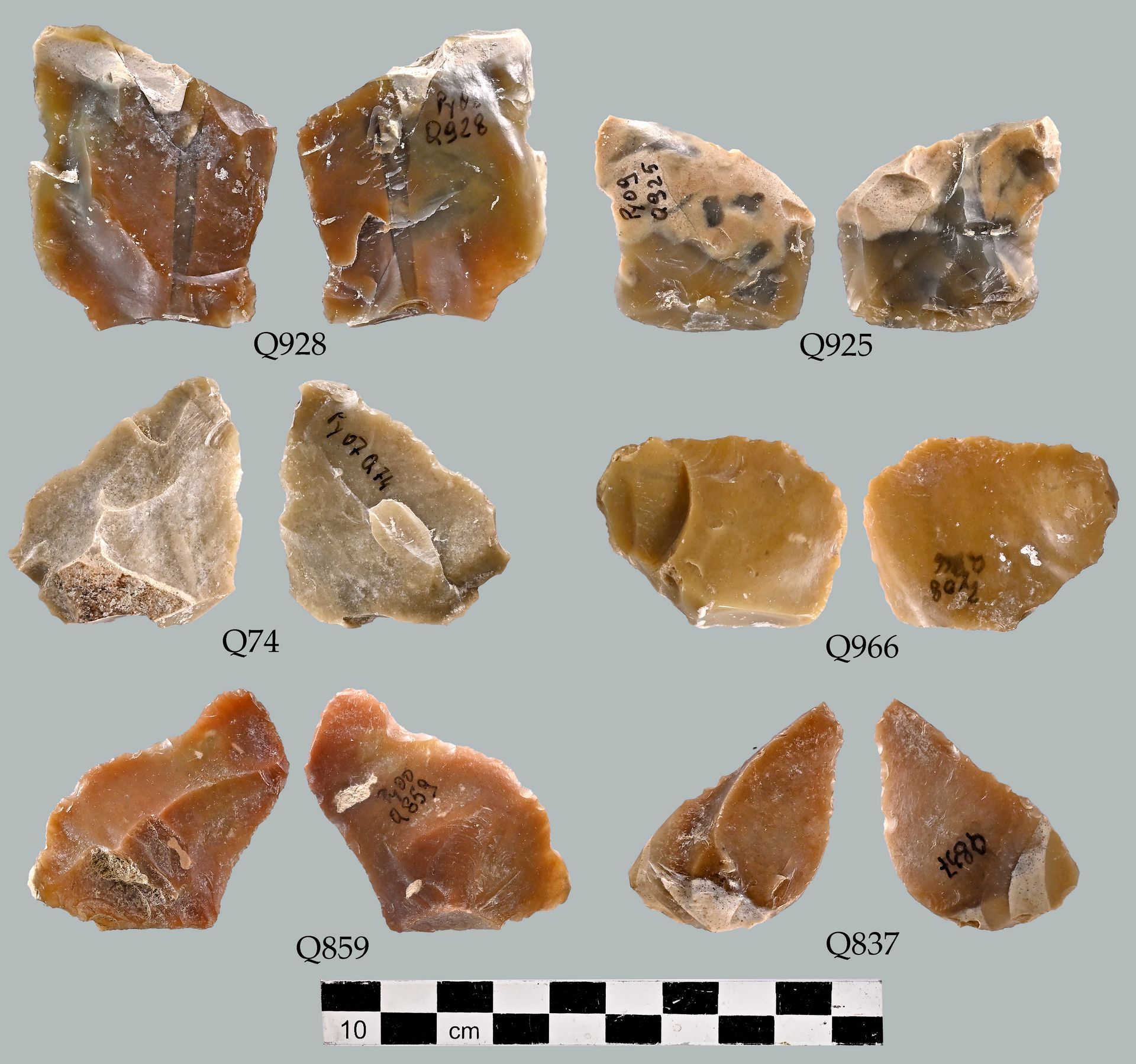
The repertoire includes:
Dejetè scrapers such as nos. Q928, Q925, Q966, Q74, Q859, Q837
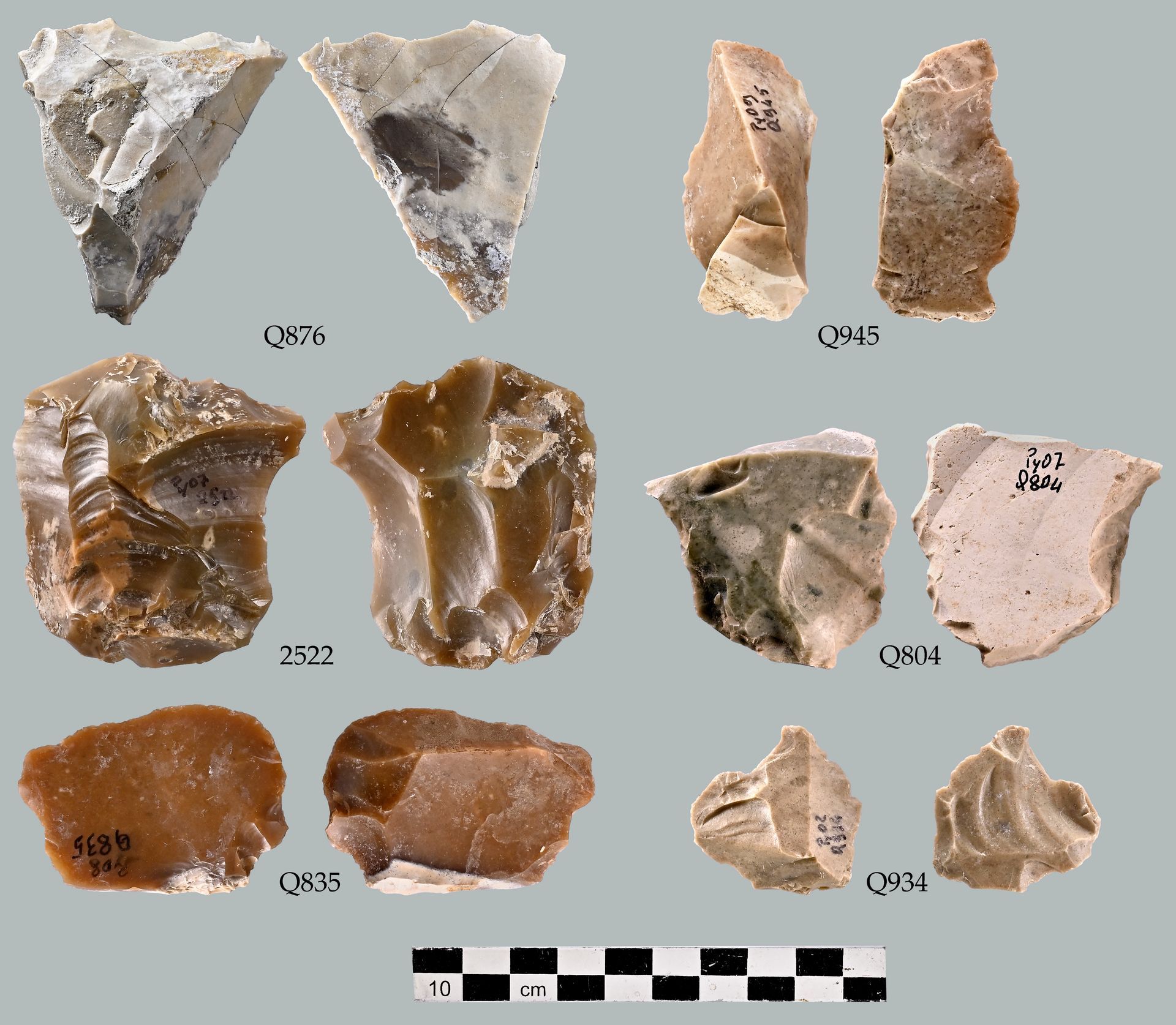
Heterogeneous combined scrapers such as nos. Q876, Q945, 2522, Q804, Q835, Q934.
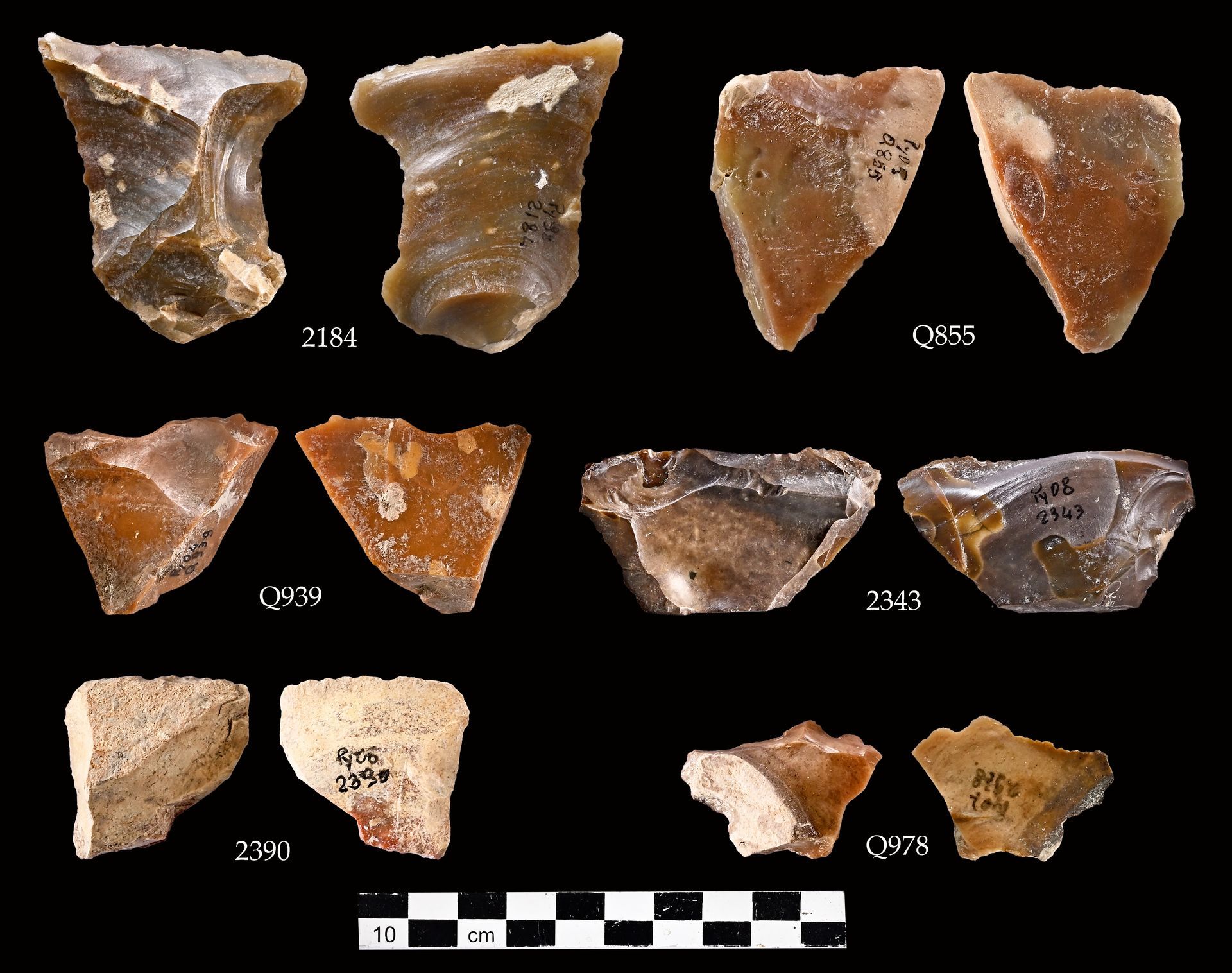
Transverse scrapers are robust, often triangular in shape, with a convex dorsal surface opposite a flattened ventral surface with a sharp distal edge and direct, secondary retouches to enhance scraping and cutting ability.
Some examples such as nos. 2184, Q855, Q939, 2343, 2390, Q978.
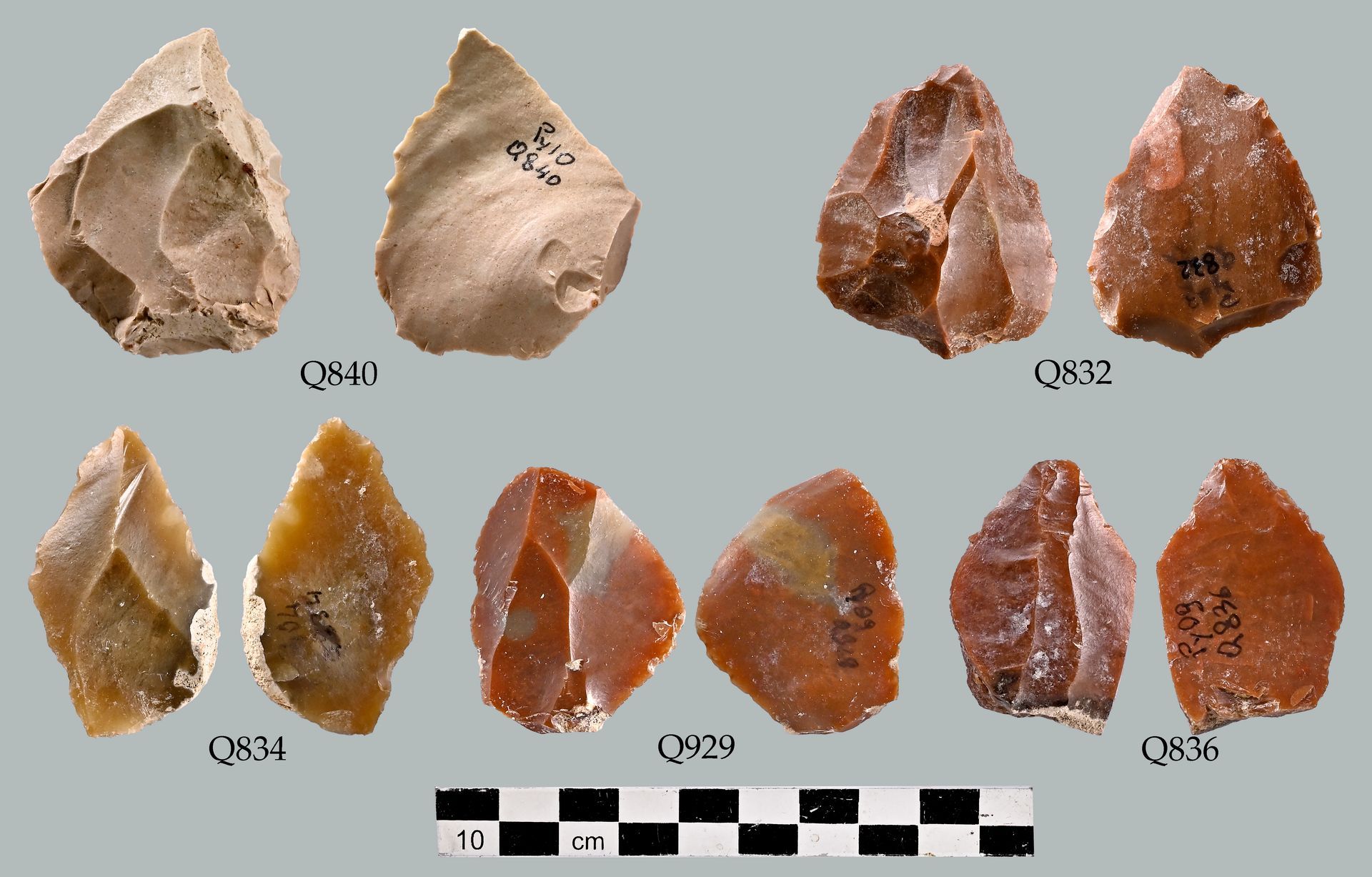
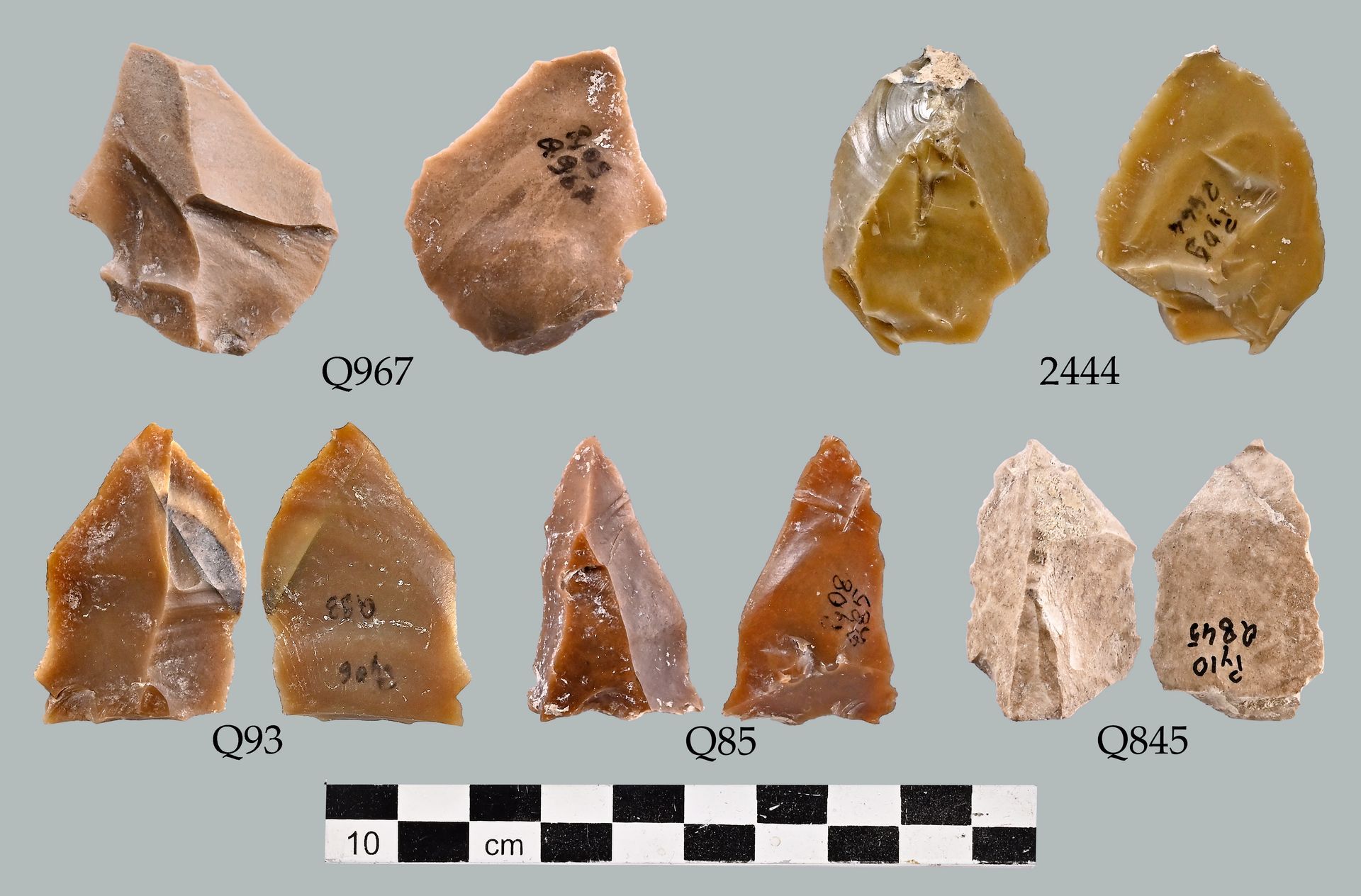
Points. The disappearance of bifacial points and Quina technology clearly distinguishes the final part of the Early Middle Palaeolithic in the Levant from the preceding intermediate Acheulo-Yabrudian period, indicating a break rather than continuity in the production of flaked lithics with the emergence of the Levallois technique, which marks a major conceptual shift in flaking strategies.
In the repertoire of this period, Levallois points, made using the new core preparation strategy, become a dominant tool, initially squatter and more rounded, with retouching concentrated on the tip, later elongating to take on the characteristic triangular morphology. In the earliest Levallois phase, the unipolar and convergent technology is particularly evident and reflects the new technological approach.
Some examples such as nos. Q840, Q832, Q834, Q929, Q836 and Q967, 2444, Q93, Q85, Q845
Blades. As discussed in
section b (Home), the first blade production appears to have occurred in the Acheulo-Yabrudian industry, which developed between Syria and the Sinai Peninsula at the end of the Lower Palaeolithic. The largest number of long, thin blades come from the Qesem Cave (Gopher, Barkai, Shimelmitz: 2016), effectively erasing the chronology of the first blade production, as they are the product of a sophisticated mass production system that predates that of the Upper Palaeolithic by hundreds of thousands of years. The flint blades obtained using the Levallois method found at Pyrgos/Mavroraki are, in effect, a continuation of the experience already acquired in the production of Acheulo-Yabrudian blades.