
Diagnostic elements: chronology, recycling and behaviours
Patina
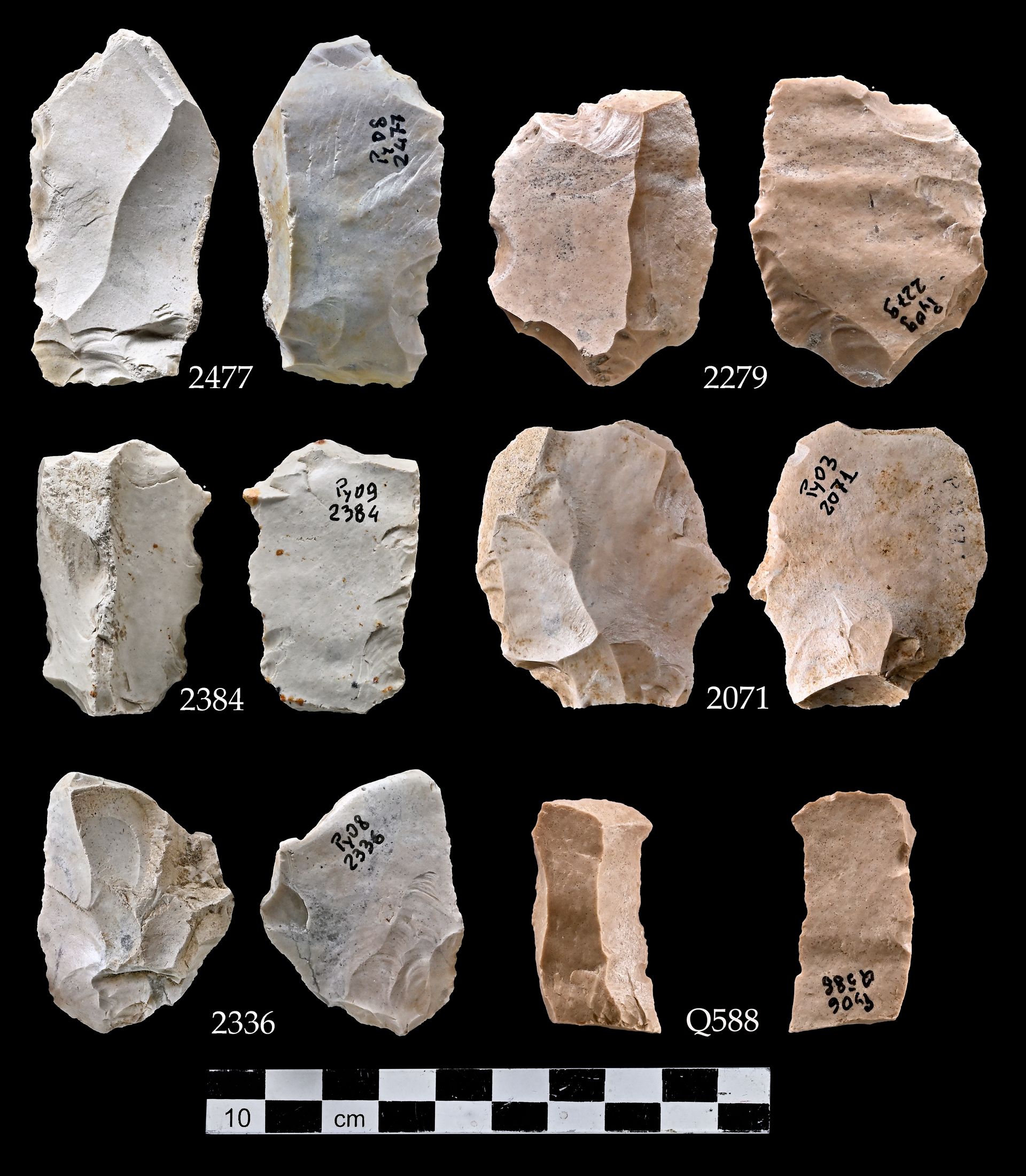
Patina on Lower and Middle Palaeolithic tools, particularly flint, is a form of chemical and physical weathering: a surface modification that developed due to variable exposure to heat, humidity, and the presence of various chemical compounds in the soil in which the tool was abandoned. Its formation can take thousands of years. For flint, some studies suggest a period between 20,000 and 50,000 years, although in some cases it can form in shorter periods. This phenomenon is particularly visible on Lower and Middle Palaeolithic tools, often covered by a smooth, shiny, compact, and waxy layer of changing thickness, with varying hues or discolouration ranging from chalky white to dark brown, with all possible shades in between. The process is irreversible although the presence of patina, which completely covers the original surface of the object, is an important diagnostic tool used to easily distinguish tools modified, reused and recycled after thousands of years, highlighting subsequent reprocess episodes through the differences in colour and thickness. The porcelain patina is generally compact, white or pink (nos. 2477, 2384, 2336, 2279, 2071, Q588).
- The thickness and colour of the patina covering the Pyrgos/Mavroraki items also derive from the diverse nature and composition of the polymorphic and metamorphic rocks, which can simultaneously contain variable amounts of quartz mixed with limestone, clay, sandstone, and silica. These molecules behaved differently in the face of intense climatic fluctuations that occurred during the Middle Palaeolithic. We are referring primarily to the temperature fluctuations that occurred between glacial and interglacial periods, likely accompanied by significant variations in humidity and ice formation, which affected the surfaces of the quartzite and flint, creating micro fractures and displacing quartz crystals, which thus became a receptacle for mixed mineral deposits and organic micro deposits. In particular, the acidity or alkalinity of the soil, influenced by climate, may have played a crucial role in the formation of the patina (Efrati, Barkai, Cesaro et al.: 2022; Schmalz: 1960). Indeed, acidity can cause silica to leach from flint, while alkalinity can lead to the formation of new surface layers (Rios-Garaizar, Eixea: 2021). While alternating temperatures, with substantial differences between maximum and minimum, influenced the rate of chemical reactions and the actual depositional rate of the patina.
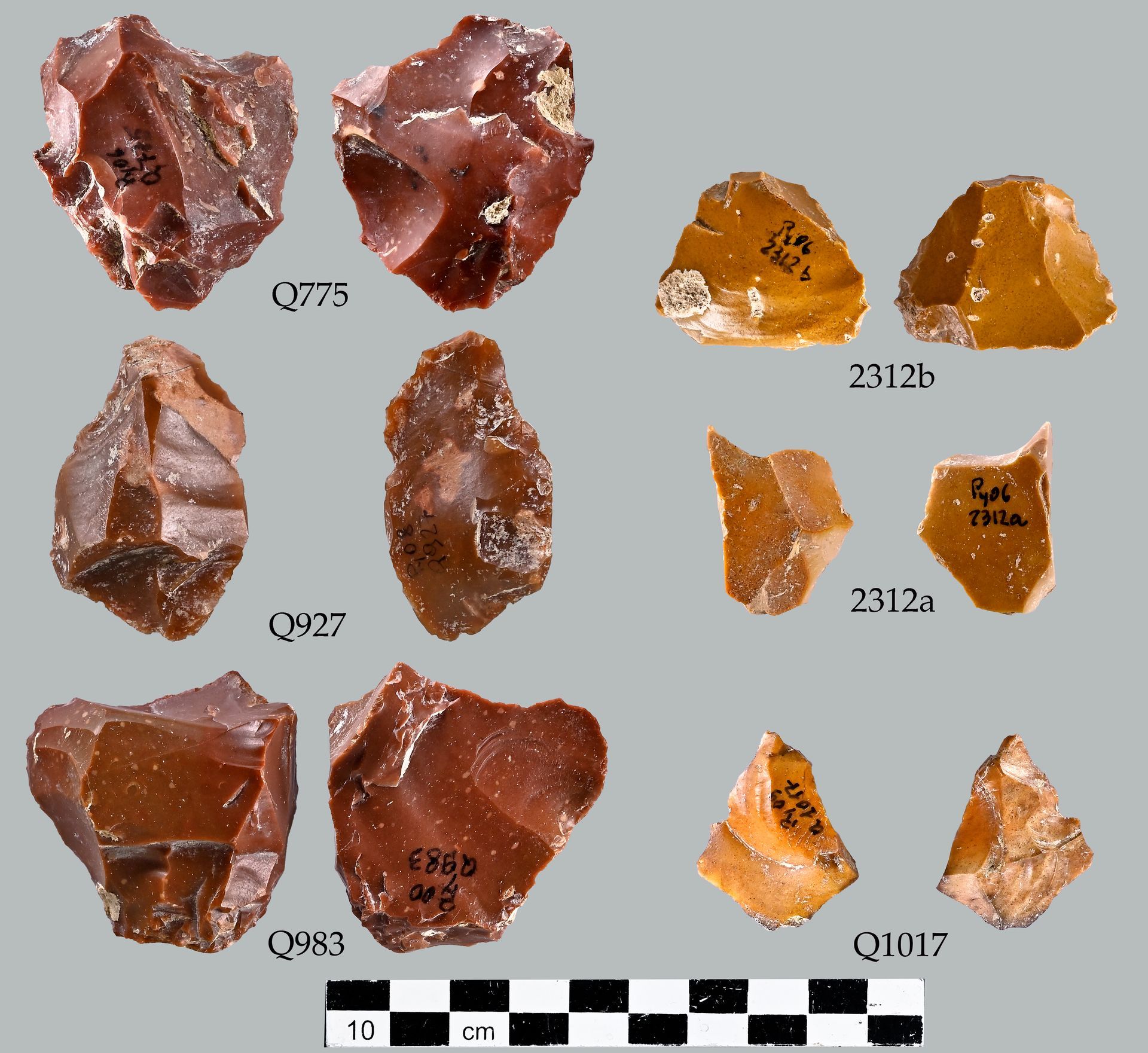
- Different colours and consistencies of patina. The types of patina found on quartz, quartzite, and flint artefacts from Pyrgos/Mavroraki differ primarily depending on the material used to produce the tool. The colour ranges from porcelain white and pink to absolute black, through grey, green, orange-brown, and various shades of red that often bear no relation to the original colour of the stone they cover. The varying consistencies of the patina alter the original appearance of the surface, which takes on a matte or glossy look, rarely shiny, more often dull and waxy. Further surface colour changes are possible, such as orange rust stains and dendritic inclusions that form the so-called “vermiculé” patina.
under construction
